





For years, the Jeffrey Epstein case has been treated like entertainment in this country. A spectacle, a conspiracy theory, an endless cycle of headlines. Republicans versus Democrats. Left versus right.
The release of the Epstein files has given the public an extraordinary look at the scale of what happened. But more than 2 million pages remain unreleased. There are still questions about what happened, who knew, what was missed and what still needs to be investigated.
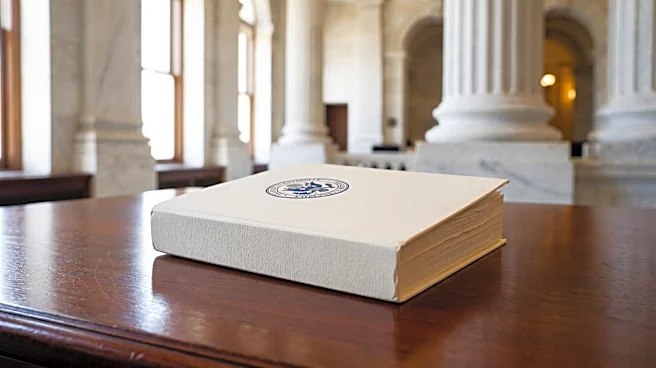
In recent weeks, I have been hitting the road with The Donald J. Trump and Jeffrey Epstein Memorial Reading Room, traveling across the country to make Americans aware of the scope of evidence in this case. We’ve brought 3.5 million pages, 17,000 pounds of paper, bound within 3,437
volumes of publicly released Epstein files into communities, urban and rural, big and small.
These records are fundamental to understanding the breadth of the crimes committed and the apparent cover-up that still exists. At its core, the Epstein case is about the crime of sex trafficking. More than a thousand vulnerable girls and young women were groomed, trafficked and/or abused in a system Epstein and his conspirators built around power, coercion, exploitation, and access to wealth and influence.
I know, because I was one of them.
Epstein's survivors aren't playing politics

For survivors, this has never been about politics. It is about seeking justice for crimes committed against us. As a survivor of Epstein’s abuse, I think many Americans still do not fully understand what sex trafficking is or what accountability for these crimes looks like. If they did, they would not be able to stand for what is happening in this case.
We must ask: What happens when institutions fail to act, when opportunities to investigate are missed and when survivors are left fighting for accountability?
We’ve seen victim blaming and cultural attitudes that normalize male sexual entitlement, shifting attention away from the conduct of those accused and onto the survivors who come forward. This begs another essential question: When survivors come forward, will the institutions entrusted with protecting them pursue the truth, or will survivors have to fight those institutions to even be heard?
The Epstein case is also not an isolated failure; it's an opportunity to confront the cultural attitudes that allow sexual violence to persist. These high-profile cases give us an opportunity to do more than demand accountability.
We must change the cultural narrative surrounding sexual assault, challenge the attitudes that enable exploitation, and educate the public about consent, coercion and the responsibility of institutions to protect survivors across this country.
The Epstein Files Transparency Act (EFTA), which was unanimously passed by the Senate and passed almost unanimously by the House nearly a year ago, mandated that the Department of Justice (DOJ) publish all of the files related to Epstein and Ghislaine Maxwell within 30 days of the enactment of the act.
The law explicitly stated that records could not be withheld to avoid political sensitivity, embarrassment or reputational harm.
Documents alone do not create accountability

Over the past year, I’ve walked the halls of Congress with my fellow survivor sisters (a term we as Epstein survivors call ourselves), talking to lawmakers about how the Department of Justice has mishandled this case under Attorney General Todd Blanche and former Attorney General Pam Bondi.
Despite the provisions in the EFTA to protect survivors’ privacy, the DOJ exposed survivors’ identities while redacting many potential perpetrators’ names. The DOJ has previously asserted there was no evidence supporting additional investigations and signaled to us that the matter was complete.
When survivors, including myself, finally met with Blanche, he dismissed our questions, provided what we believe to be inaccurate and misleading information, and gave us no real indication that he believes there are investigative leads in the files.
Under the leadership of Bondi and Blanche, the DOJ has failed survivors. Its obligation was to safeguard the victims of these crimes, pursue investigative leads, ensure transparency and provide justice. Instead, the files were released at the expense of the very survivors the DOJ is meant to protect.

As we continue to bring the entirety of the millions of pages, 17,000 pounds, and 3,437 volumes of the Epstein files across the country, I urge Americans to demand that the DOJ comply with the EFTA, release the remaining files, open criminal investigations into Epstein’s potential conspirators and pursue accountability wherever the evidence leads – no matter how inconvenient.
Documents alone do not create accountability. People do.
We must ask our elected officials where they stand on transparency, accountability and the protection of survivors. We must demand clarity about what remains unreleased, what still needs to be investigated and why survivors have been left to fight for justice.
The truth must come out because survivors deserve answers. And the American public does, too.
Because if the law only applies selectively, it is liberty for some. But not justice at all.
Elizabeth (Liz) Stein is a human trafficking specialist and survivor advocate focused on accountability, transparency and survivor-centered policy reform.
This article originally appeared on USA TODAY: I survived Epstein's abuse. The government is failing us | Opinion