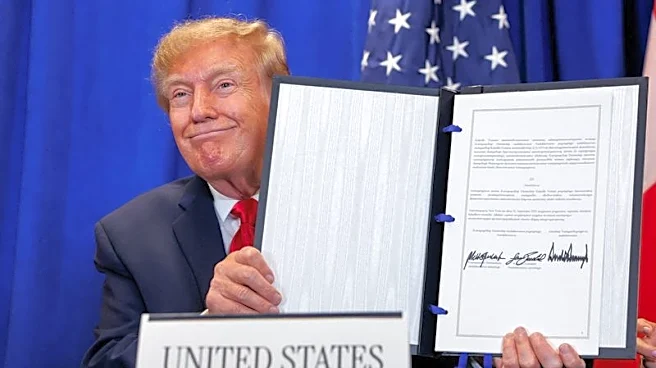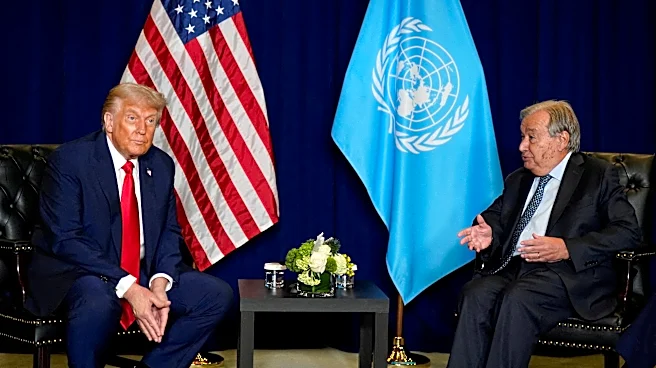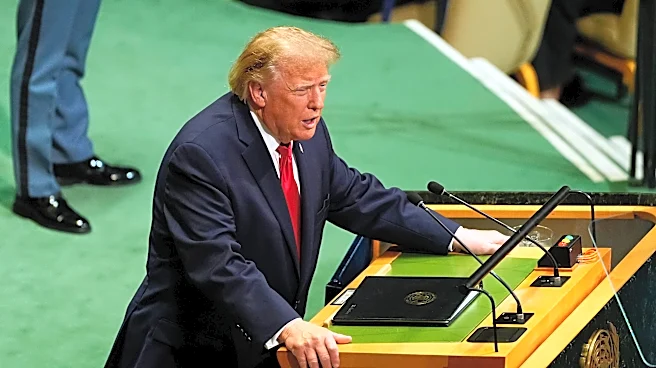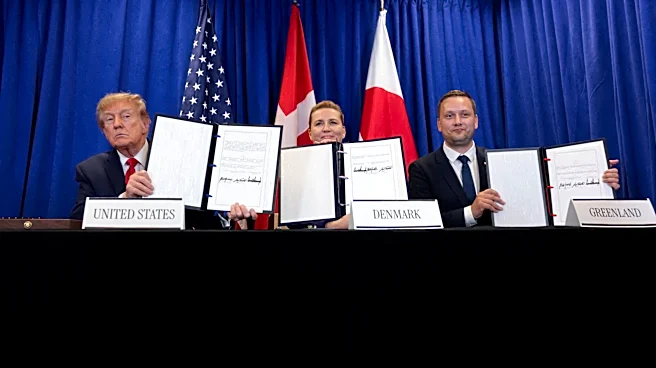



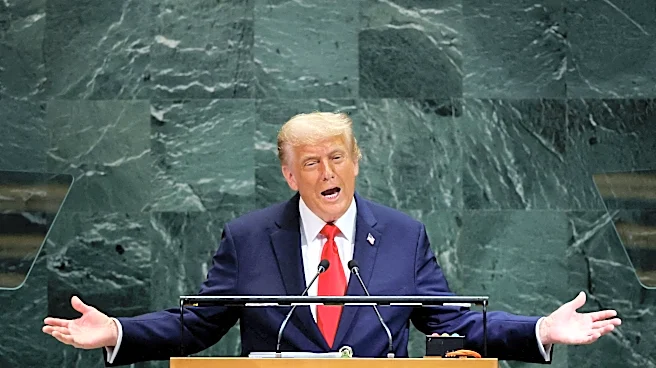
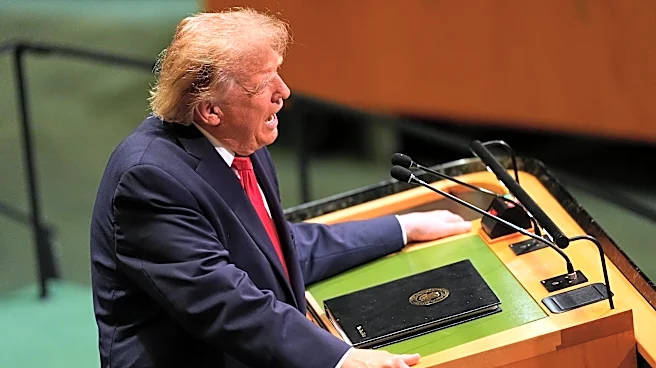
President Donald Trump has struck a security deal with Greenland.
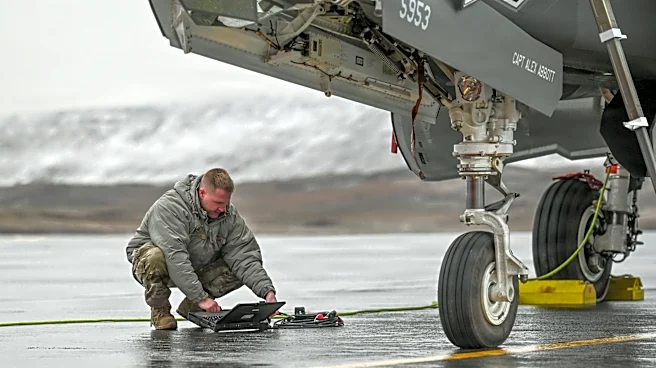
It hands the U.S. two new military bases, expanded access to the island's land, air and sea routes, a "Golden Dome" missile shield component, and a clause locking out non-NATO powers.
Whether it's a win for Trump and the U.S. is debatable. But Greenlanders may be the biggest winners – not just because of the deal itself, but because of what nearly two years of bluster and threats did for Greenland's leverage with Denmark, which still oversees the territory's defense and foreign affairs, and for its standing in the world.

Let's start with the agreement itself. For the first time, Greenland is a direct signatory alongside Denmark and the United States – not merely a territory whose
fate others negotiated.
"This is the first time we have actually had a seat at the table," Naaja Nathanielsen, one of Greenland's two representatives in the Danish Parliament and a member of the pro-autonomy Inuit Ataqatigiit party, told the New York Times. She believes the deal will set a precedent and give Greenlanders greater autonomy over their own foreign policy.
The relationship that mattered

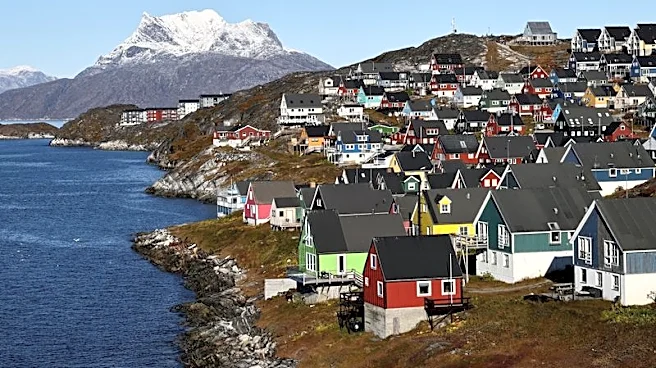
In April 2025, I traveled to Greenland to find out how people there were responding to Trump's threats to annex the country. As I spoke with locals, it became clear I was asking the wrong question. The relationship that mattered more was with Denmark.
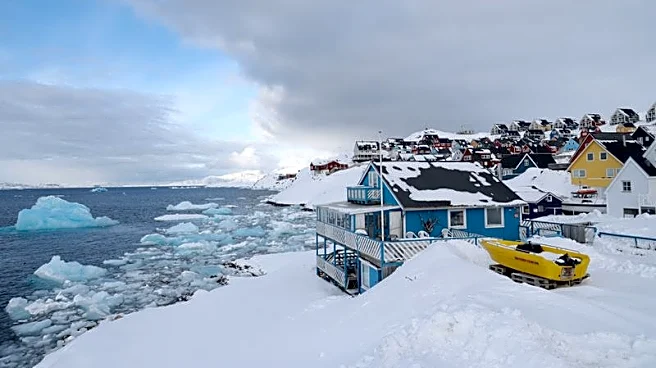
One morning, I found myself waist-deep in the Arctic Ocean off Nuuk, Greenland's capital, joining a couple dozen Danes in a weekly polar plunge ritual. Most were in Greenland on short postings in the territory's parliament, the European Union's Nuuk office or the Danish Joint Arctic Command.
Afterward, over coffee, one woman visiting from Denmark mentioned that King Frederik X was arriving in two days for a kaffemik – an open house in town. "It's because of Trump," she said. Her friend, who had been living and working in Greenland since June, wasn't so sure. "Are you sure?" she asked. The first woman didn't hesitate: yes, she was.
Other Danish plungers I spoke with seemed to agree: Trump's provocations had, however inadvertently, put Greenland higher on Denmark's agenda.

Kuno Fencker, a member of Greenland's parliament, put it to me directly: Has Denmark been more attentive to Greenland since Trump started making his remarks? "Yeah, yeah, they have," he said.
The attention wasn't just political. In Nuuk, a potter named Nuuna Papis Chemnitz told me business at her shop had picked up – a line of customers was waiting when she arrived to open one morning. She credited the new airport, but also the spotlight Trump's comments had put on her country.
Later, in Ilulissat, I met a polar bear hunter named Mads Ole Kristiansen, in town visiting family from Qaanaaq, in the island's far north. He mentioned, almost in passing, that Pituffik Space Base – the installation Trump wants to expand – holds an annual open house. It's called Greenlandic Heritage Week, when local families are welcomed in, and his kids go for the dog sledding.
But when I asked about Denmark, his answer was more guarded. The relationship, he said, was "strong from Ilulissat to the south." Farther north, where the population is almost entirely Inuit, it wasn't. He couldn't say why.
What changed in Copenhagen

For years, many Greenlanders complained that Copenhagen treated the relationship less like a partnership than a financial arrangement – an annual block grant of roughly half a billion dollars. Fencker called it "the fentanyl injection we get from Denmark."
"The Danish elite control everything," he said.
Some of that started to shift once Trump made clear he was serious. Denmark's broader military buildup has multiple causes (Russia's war in Ukraine and mounting NATO pressure chief among them), but Greenland specifically became a more urgent line item.
In October 2025, Denmark committed 27.4 billion kroner, about $4.2 billion, to new Arctic and North Atlantic defense investments, including in Greenland. That followed a $250 million infrastructure and health care package announced the previous month, the kind of spending Greenlandic officials had sought for years with little success. The EU joined in too, with Commission President Ursula von der Leyen unveiling a €200 million investment package in September.
"Traditionally, before the situation now with Trump, the EU and Denmark itself have been accused of not paying quite enough attention to Greenland, especially not enough to genuinely support economic development there," Katja Bego, a senior research fellow at Chatham House, told TIME.
You can bristle at Trump's tactics, but they accomplished something decades of polite, low-pressure diplomacy hadn't: they pushed Copenhagen and Brussels to compete harder for Greenland's loyalty.
Those tactics came at a price. Trump threatened Denmark and seven other European countries with an additional 10% tariff, rising to 25%, and refused for months to rule out taking Greenland by force – rhetoric that alarmed a NATO ally and, by some accounts, shook European confidence in Washington more broadly.
But Trump's pressure campaign left Greenlanders with something they didn't have when it began: greater leverage with Copenhagen and Brussels, and a seat at the table with Washington.
Daniel Allott, USA TODAY’s conservative opinion editor, is the author of the book “On the Road in Trump’s America: A Journey Into the Heart of a Divided Nation.” Bethany Williams, a photographer who reported alongside Allott on his original trip to Greenland, contributed reporting to this column.
This article originally appeared on USA TODAY: Trump wanted to 'own' Greenland. He ended up empowering it. | Opinion