




In the wake of a seventh measles-related death in Pennsylvania, the United States lost its measles-elimination status because of uninterrupted transmission of the virus for more than a year.
The Pan American Health Organization revoked the U.S.' status on Nov. 13, according to Reuters, a decision made as the disease rips through communities, bringing the highest number of cases the country has seen in more than 30 years.
Since the start of 2025, there have been 7,701 confirmed cases of measles in the U.S., according to the Centers for Disease Control. While there were three deaths in 2025, the agency shows six so far this year, with states reporting additional deaths that aren't included on the CDC's website. Pennsylvania currently has the biggest
outbreak and has seen the most measles-related deaths this year, with the state reporting seven deaths since August.
The loss of the U.S.'s measles-elimination status is a "serious public health setback," said Dr. Iulia Vann, director of Allegheny County Health Department.
"We have a safe, highly effective vaccine that is 97% effective at preventing measles after two doses. This is a preventable disease, and we have the tools to protect our communities," Vann said in a statement published to the health department's social media. "The return of sustained measles transmission is a reminder that vaccination is not just an individual decision. It is a shared responsibility that protects children, families and those most vulnerable to serious illness. We cannot afford to become complacent about a disease we already know how to prevent."
Here's what to know about measles cases in the Pittsburgh area.
America lost its measles-elimination status. What does that mean?
Measles was declared eliminated in the U.S. in 2000, according to the CDC, meaning that for more than 12 months, there had been no continuous spread of the disease. But on Nov. 13, 2026, a committee for Pan American Health Organization revoked the U.S.' measles-elimination status.
According to PAHO, a country loses its measles elimination status if transmission is re-established and continues uninterrupted for at least 12 months.
Despite the change, and the outbreaks across the U.S. that have led to multiple measles-related deaths in Pennsylvania and other states in 2026, CDC Director Dr. Erica Schwartz told Reuters that the CDC won't change its response to measles outbreaks if the U.S. loses its elimination status.
How bad is Pennsylvania's measles outbreak?
At the start of 2026, there was a small handful of measles cases in Pennsylvania, with only 15 confirmed cases between Jan. 1 and April 13. But cases began to climb the next week on April 20, and the outbreak has continued growing since then.
As of Nov. 16, the state had recorded 1,561 confirmed cases of the disease, according to the state's measles dashboard, and it led the nation with the most cases of measles in 2026. More than 99% of cases happened in people who were not fully vaccinated, with just five fully vaccinated people falling ill with the virus as of Nov. 13.
Since August, Pennsylvania has reported seven measles-associated deaths, with the state reporting the most recent death on Nov. 13. Officials said the death involved an unvaccinated individual from Montour County who tested positive for measles, though they did not release any additional information about the person. The previous deaths involved individuals from Lancaster, Jefferson and Mifflin counties.
Every measles-associated death in Pennsylvania has occurred in unvaccinated people, according to the state department of health.
When Pennsylvania reported its first two measles-associated deaths, the CDC initially delayed adding the deaths to their official count for the year, with Health and Human Services Secretary Robert F. Kennedy Jr. raising questions over whether or not the deaths were really linked to measles.
On Nov. 2, New York health officials said they had their first measles-related death in more than 30 years, while on Nov. 4, Wisconsin health officials reported their first measles death since 1990.
As of Nov. 16, six deaths were counted on the CDC's website, with the agency noting that the number was subject to change as the CDC gathers additional information. It does not specify which states' deaths were and were not included in the count.
How many measles cases has Pittsburgh had?
Pittsburgh reported two cases of measles in school-aged children in early October. The two children were not from the same family but attended the same school, according to Allegheny County Health Department, meaning there was likely a previously unknown exposure at the school. While the county did not provide any information on the children's ages, vaccination status or where the children attended school, Pittsburgh's Public Source reported that the second child to test positive was a student at a private Christian school in the North Hills.
As of Nov. 16, the last day the state's measles dashboard was updated, Pennsylvania's health department had confirmed measles cases in these counties in the Pittsburgh area:
- Allegheny: 2 cases
- Armstrong: 4 cases
- Beaver: 0 cases
- Butler: 5 cases
- Fayette: 0 cases
- Lawrence: 0 cases
- Washington: 1 case
- Westmoreland: 2 cases
How does measles spread? How contagious is it?
Measles spreads through the air when a sick person breathes, coughs or sneezes, and it can remain infectious in the air for up to two hours after a person who is sick with the virus leaves the area, according to the CDC. The virus is extremely contagious and has the capability to sicken up to nine out of 10 people who come into close contact with an infected virus if they aren't protected against the virus.
Unvaccinated people have the highest risk of catching the disease. Two doses of the measles, mumps and rubella vaccine provides about 97% immunity from measles, according to the CDC. Young children typically don't get their second dose until they reach four to six years of age, leaving them with about 93% protection against the disease until then. Infants generally don't get their first dose until they're 12 to 15 months old.
The CDC notes that infants between the ages of six and 11 months can get a dose of the vaccine if they're traveling outside of the U.S., though they'll still need two doses of the vaccine at the recommended ages for long-term immunity. In Allegheny County, the health department recommends that healthcare providers administer the early dose to infants because of the local presence of the disease.
What are the symptoms of measles?
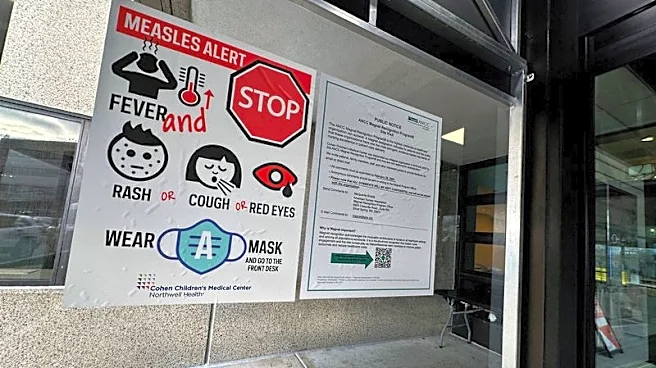
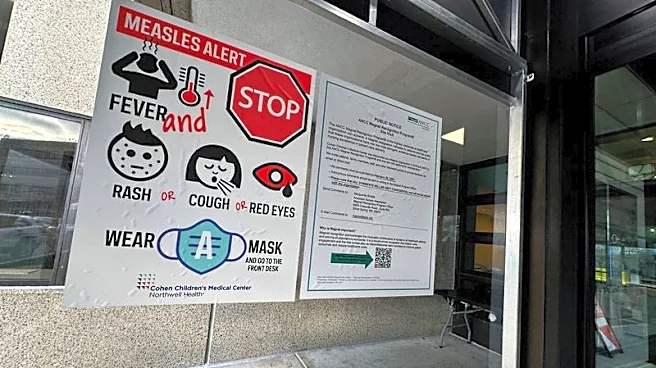
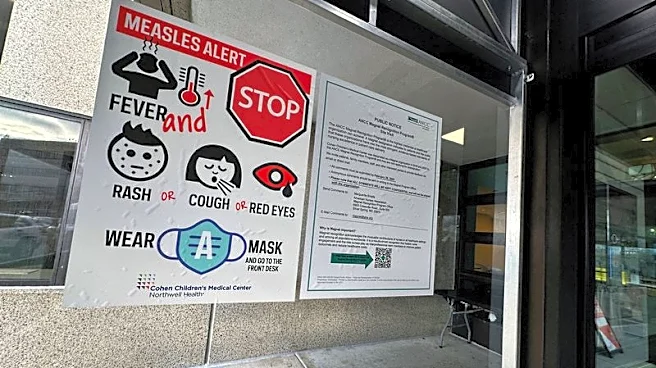
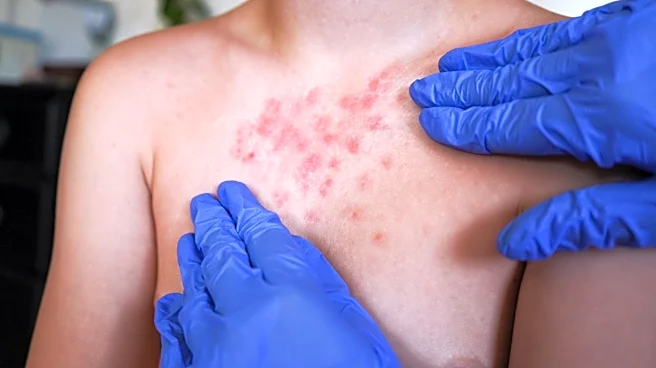
While the incubation period for measles can last up to 21 days, symptoms typically appear within seven to 14 days after exposure, according to the CDC. Symptoms may include a high fever, cough, runny nose, red/watery eyes, white spots inside the mouth and a rash that begins on the face at the hairline and moves downward on the body.
The virus can also result in numerous complications, including ear infections, diarrhea, lasting immune system damage, hospitalization, pneumonia, encephalitis, pregnancy problems and death.
If you believe you were exposed to the virus, contact your healthcare provider and Allegheny County Health Department at 412-687-2243. You can also call the Pennsylvania Department of Health's toll-free hotline at 877-PA-HEALTH.
If you are sick with suspected measles, do not go to a hospital or other healthcare facility without calling first to let them know you may have measles. That way, they can help prevent other patients and staff members from being exposed.
Pennsylvanians can access the measles dashboard, current guidance and additional information at pa.gov/measles.
Liz Freeman and Mary Walrath-Holdridge contributed to this report.
Finch Walker is the Pittsburgh Connect Reporter for the USA TODAY Network. Contact Walker at FWalker@usatodayco.com. Instagram: @finchwalker_. X: @_finchwalker.
This article originally appeared on USA TODAY: US loses measles-elimination status as Pennsylvania records 7th death