






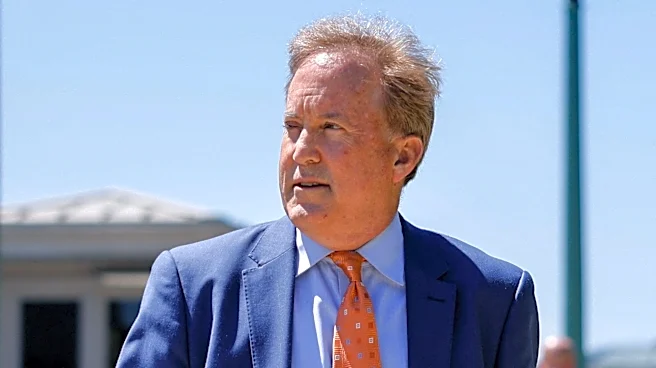
Rep. Seth Moulton was among the first Democrats after the 2024 elections to publicly question his party’s support for the inclusion of transgender athletes in sports.
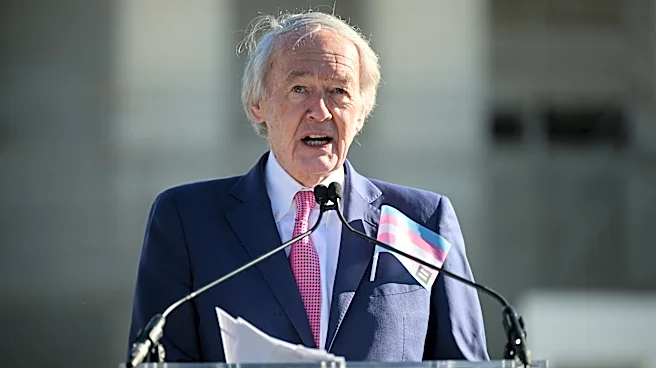
That decision, and the backlash that followed, likely contributed to his loss in Massachusetts' Sept. 1 primary against 80-year-old Sen. Ed Markey.
Two years after Republicans made transgender rights a central focus of their 2024 election attack ads, Democrats are still working through how to message on an issue that is deeply important to their base, but polls poorly with much of the electorate.
Moulton, 47, centered his campaign on generational change and the need for new blood in Congress. But Markey was able to easily fend off the challenge by emphasizing his progressive platform,
including support for transgender rights.
The senator contrasted his message with remarks Moulton made after Democrats lost up and down the ticket in the 2024 election, when Moulton told The New York Times that he didn’t want his two young daughters “getting run over on a playing field by a male or formerly male athlete,” a comment Moulton said he was supposed to be “afraid to say" as a Democrat.
While Markey's progressive politics helped him in Massachusetts, Democrats competing outside the bluest states in the country are already facing a new wave of attacks ads on transgender rights, specifically regarding girls' and women's sports.
“There's no doubt in my mind that this is going to come up in every single race at every single level, and Democrats have to be prepared to respond,” said Lanae Erickson, a senior vice president at Third Way, a center-left think tank. “What we've seen is if people think that what the Republicans are saying is true, they think that Democrats are extreme.”
Markey took on Moulton's comments on trans athletes
During the 2024 presidential election cycle, Donald Trump’s campaign spent millions of dollars on ads attacking then-Vice President Kamala Harris for her stances on transgender rights, arguing that Harris was “for they/them” and Trump was “for you.” The president and his campaign said Harris also supported taxpayer funded gender affirming care for detainees, likely referring to a 2019 ACLU questionnaire where Harris agreed to ensure medical care for transgender and nonbinary people who "rely on the state - including those in prison and immigration detention."
After the election, Moulton and a handful of other prominent Democrats sought to push their party to have a debate over its stance on transgender athletes in girls sports.
Markey made Moulton’s comments a focal point of his primary campaign. After the congressman announced his challenge, Markey appeared at a No Kings rally draped in a transgender pride flag.
Moulton sought to pivot left on the issue during the campaign.
He signed onto the Transgender Bill of Rights in the House. At a debate last month, the congressman apologized for his comments to The New York Times and said transgender athletes “should” be able to participate in sports leagues that match their gender identity, with some safety qualifications.
Markey said Moulton “threw those kids under the political bus after the election” and turned them into “political fodder.”
Transgender athletes a topic in competitive states
Democrats are still weighing how to discuss transgender athlete participation in battleground races, where public opinion is likely less favorable. A 2025 Gallup poll found that 69% of Americans oppose allowing transgender athletes to play on the teams that match their gender identity, up from 62% in 2021.
“The Democrats are never going to win on that issue,” said Whit Ayres, a Republican strategist. “This is not a close call.”
Rob Sand, Iowa's Democratic nominee for governor, has been opposed to allowing transgender girls to participate in girls sports leagues throughout his campaign. Trump won Iowa in all three of his presidential campaigns, but the nonpartisan Cook Political Report has rated the seat a Lean Democratic race.
"I have said, consistently, I think that fairness rules the day in girls' sports,” Sand told Politico last month. "I just think girls' sports are for girls, and boys' sports are for boys. And I think that that's fair and reasonable."

Democrat Amy Acton, a former public health official running for governor in Ohio, said in June she doesn’t support “boys playing in girls sports” and would enforce the state’s ban on school age transgender athletes participating in sports. Equality Ohio, an LGBTQ rights group, changed her rating from A to pending as a result of her comments.
Democrats have been most effective, Erickson said, when they say they want sports to be fair and safe, and support allowing sports associations to set the rules. Candidates have also had success noting that bans on transgender athletes can lead to invasive gender checks on children, she said.
Erickson and other Democratic strategists pointed to Abigail Spanberger’s successful 2025 Virginia gubernatorial campaign, in which she quickly responded to attacks on transgender rights from her Republican opponent and called on politicians to “trust parents and local communities” to set rules on transgender athlete participation.
Tyler Hack, the executive director of the Christopher Street Project, a transgender rights group, said that in a blue state like Massachusetts allyship looks like Markey’s “unapologetic defense” of transgender rights.
But the organization is also working with candidates in tough races on how to talk about transgender athletes and other issues in ways that resonate with voters in their districts.
“If candidates want to talk about this issue through a lens of local participation, and if that works for them, I have no problem with that. The problem is when you have candidates call transgender girls boys,” Hack said. “That is a hard line for our party, and last night should show that that's not where voters are.”
This article originally appeared on USA TODAY: Two Dems clashed on trans athletes. What does Markey's primary win reveal?