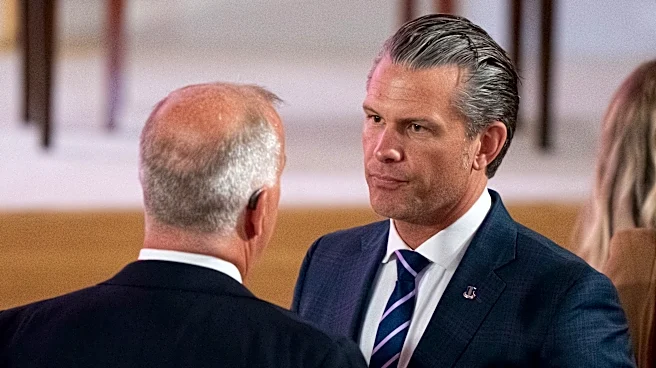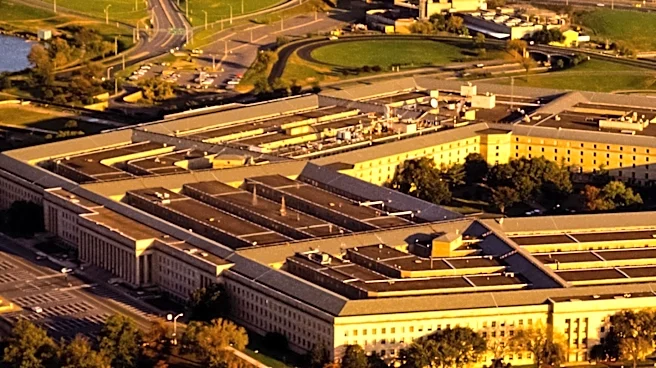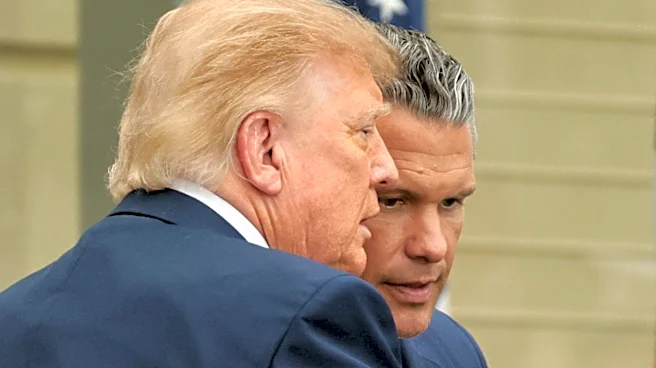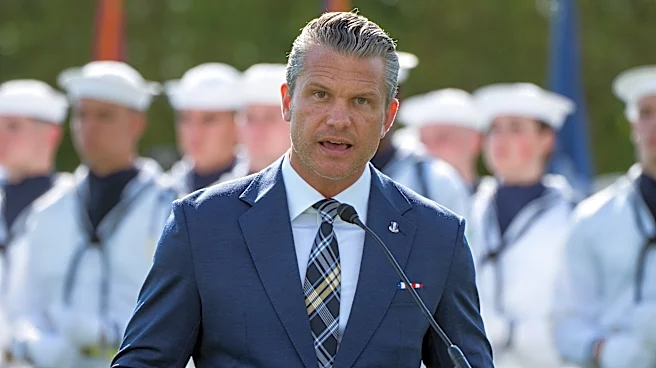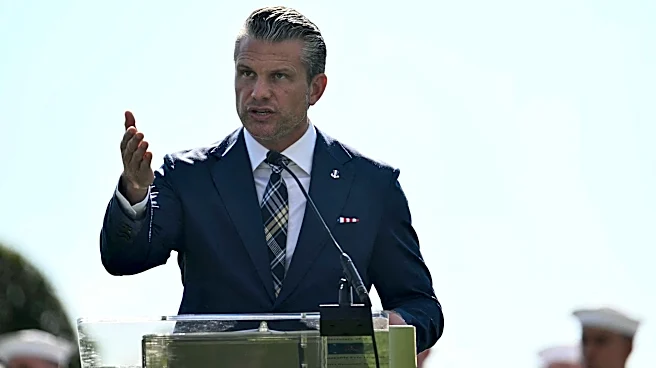





Pentagon chief Pete Hegseth, in his latest effort to boost the role of religion in military life, announced the establishment of the Office of Religious Affairs during his Sept. 30 “State of the Force” address in Quantico, Virginia.
The office will give military chaplains a “direct line” to him, he said, without “staff filters” and “bureaucratic dilution” that he characterized as an impediment to meeting service members' religious needs.
“The experts, our chaplains, will finally have an advocate at the highest levels,” he said. “Policy and resources will serve the mission, not smother the mission.”
He also framed it as a necessary move to accommodate individual service members, the vast majority of whom identify as religious.
“Accordingly, our department,
therefore, has a sacred duty – first-class religious support wherever we send our warriors,” he said.
In a Sept. 30 memo, Hegseth ordered the secretaries of each military department to submit a comprehensive report detailing "all unfunded and underfunded religious affairs requirements," such as ministry, religious facilities and support for faith-based homeschooling for military families.
It’s the latest of several changes Hegseth has made to counter what he characterizes as the military’s misguided shift over the years away from explicit religious sentiments in favor of references to broader spirituality and self-care.
Hegseth announced in March, for example, that military chaplains would no longer wear – but still retain – their rank insignia. They would “be seen among the highest ranks because of their divine calling,” he said at the time, adding that the Pentagon was “not even close to being done” in taking steps toward “restoring the esteemed position of chaplain.”
The following month, Hegseth ousted Maj. Gen. William Green Jr. as the Army’s chief of chaplains. The Pentagon did not publicly address the reasoning behind the firing.
Echoing previous remarks, Hegseth said on Sept. 30 that religion has long been treated as an “afterthought," which he said led to a lack of investment in a vital part of military life.
“Political correctness and secular humanism got a vote, chaplains did not,” Hegseth said. “Budgets were cut, resourcing and manpower needs were ignored, base chapels fell apart.”
The new office, Hegseth said, would help reverse those trends.
He referenced Psalm 33:12, “Blessed is the nation whose God is the Lord,” and noted that President George Washington, who established the Chaplain Corps in 1775, recognized the need for spiritual support in the military.
“Our department is, you might say putting on the full armor of God, because while we wage physical war, we all know the real battle is spiritual,” he said. “God is good, evil is not, and America’s military must understand the difference.”
BrieAnna Frank's role covering First Amendment issues at USA TODAY is made possible by a collaboration among Freedom Forum, Journalism Funding Partners and the USA TODAY Network. Freedom Forum does not provide editorial input. Reach BrieAnna at bjfrank@usatoday.com and @brieannafrank on X and Bluesky.
This article originally appeared on USA TODAY: In latest religion push, Hegseth unveils Office of Religious Affairs