


Thirty years after Tupac Shakur was fatally shot in Las Vegas, a murder trial is finally here.
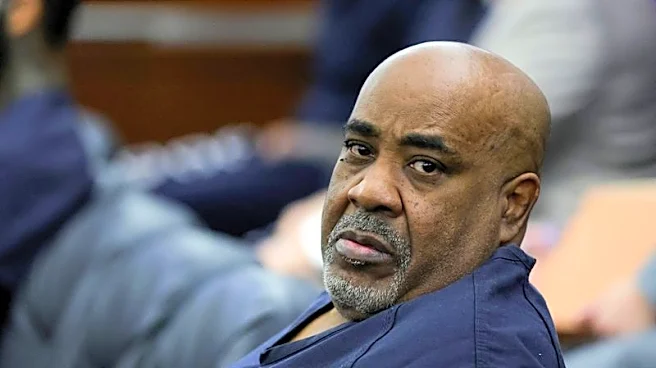
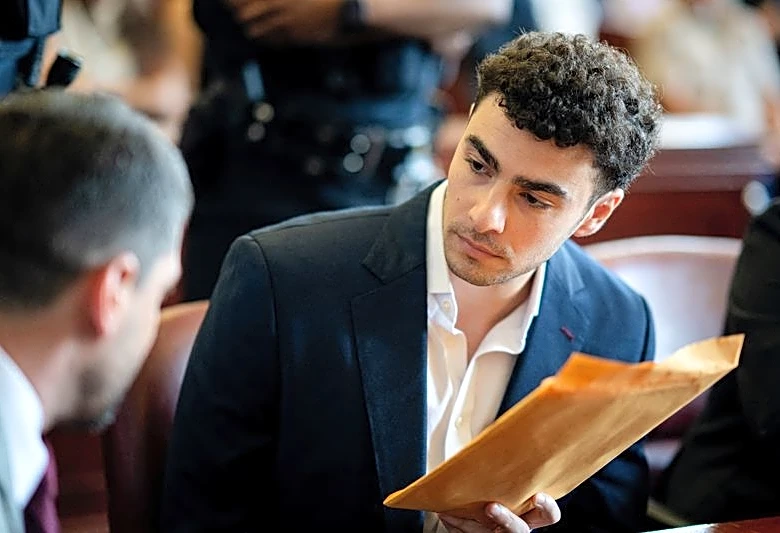
The trial began Monday, Aug. 10, with jury selection, kicking off what is expected to be a monthlong trial to determine the fate of Duane Keith "Keffe D" Davis, who prosecutors allege instructed gang members to shoot Shakur – and provided the gun – on Sept. 7, 1996.
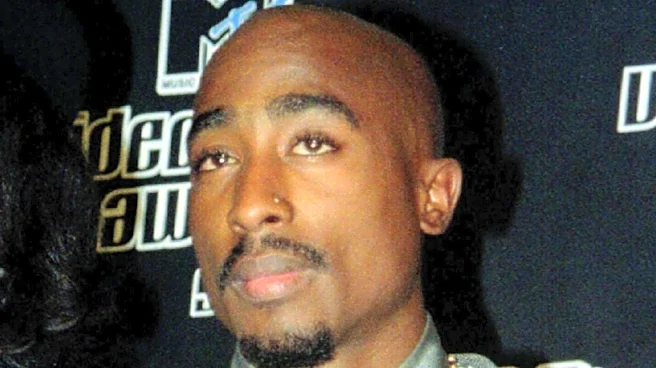
The cultural icon was just 25 and at the height of his career at the time of his death and built his career on his uniquely honest music about the Black male experience and the struggles that came with it. Decades later, Shakur remains one of the most influential figures in hip-hop.
Davis, the only person arrested in the case, has been charged with one count of murder with a deadly weapon
with the intent to promote, further or assist a criminal gang. He has pleaded not guilty. If convicted, he faces a possible sentence of life in prison.
Here's what to know about the high-profile proceedings.
What happened the night Tupac Shakur was shot?
At the time of his death, Shakur was signed to Death Row Records, which was co-founded by Marion "Suge" Knight and allegedly had ties to the Bloods street gang, a rival of the South Side Crips. The label signed him for millions in 1995 and paid more than $1 million in bail to get the legendary rapper out of prison while he awaited an appeal on his sex-abuse conviction from the previous year.
On the night of Sept. 7, 1996, Shakur and Knight were leaving a boxing match in Las Vegas when they beat up a Crips member, who was also Davis' nephew. Hours later, both Shakur and Knight were shot in a drive-by shooting, allegedly by the Crips. Only Knight survived.
Many believe the shooting was an act of retaliation by the Crips against the Bloods. No one was arrested until 2023, when a grand jury indicted Davis for murder.
Shakur's death sent shockwaves across the world. Just months before, he had released his record-breaking double album "All Eyez on Me," which sold more than 5 million copies in the U.S. It was also his second album to reach No. 1 in two years, following 1995's "Me Against the World."
Who is Duane Keith 'Keffe D' Davis? Suspect confessed in book
In 2019, Davis co-wrote a book titled "Compton Street Legend: Notorious Keffe D's Street-Level Accounts of Tupac and Biggie Murders, Death Row Origins, Suge Knight, Puffy Combs, and Crooked Cops," in which he admitted to being in the car and providing the weapon used to shoot Shakur.
During a pre-trial hearing in June, prosecutors said, "Had Mr. Davis never opened his mouth, never written the book, he would probably not have been prosecuted for the crime."
Davis later sought to have the book excluded as evidence in the trial, arguing that his account could have been misrepresented because he worked with a co-author. He also moved to exclude what his attorneys called an "involuntary confession" made during police interviews in 2008 and 2009, while he was "in a position that he was afraid for himself and his family." A judge denied the request.
Prosecutors pushed back, stating Davis "chose to release [the memoir] to the public and profit off it." They also said he had the opportunity to review and approve the manuscript before it was published. They asked that "everything" be admissible. The judge ruled in the prosecution's favor.
Duane Keith 'Keffe D' Davis said Diddy put a hit on Tupac. Diddy denies this.
Davis told police that Sean "Diddy" Combs placed a $1 million hit on Shakur and Knight, according to a Drug Enforcement Administration report filed in court in 2025 and obtained by USA TODAY. Combs was the owner of New York-based Bad Boy Records at the time, which was affiliated with the Crips and had a rivalry with Death Row Records.
The label's co-founder, Kirk Burrowes, made similar allegations, saying in a 2003 lawsuit that Combs "orchestrated" Shakur's fatal shooting. In a separate civil suit filed last year, Burrowes said he "witnessed instances in which Combs expressed paranoia and frustration over Shakur's success, indicating a deep-seated need to diminish his rival's influence."
Combs, who is currently serving a 50-month prison sentence for a July 2025 conviction on two counts of transportation to engage in prostitution, has denied involvement in Shakur's death. Additionally, a spokesperson for the Las Vegas Metropolitan Police Department previously told USA TODAY Combs has never been a suspect.
Biggie Smalls, Tupac and the rivalry between Death Row Records and Bad Boy Records
The two labels and the gangs reportedly affiliated with them had a longstanding rivalry throughout the '90s. In 1994, Shakur was shot five times when three men tried to rob him at the Quad Recording Studios in Manhattan. Combs and Bad Boy rapper Biggie Smalls (also known as The Notorious B.I.G.) were upstairs.
Testifying before a grand jury in 2023, former Death Row security chief Reggie Wright Jr. said he witnessed a heated exchange between Combs and Knight at the 1995 Source Awards after Knight publicly touted his label's superiority over Bad Boy.
One month later, Knight’s close friend Jai Hassan-Jamal "Big Jake" Robles was shot and killed outside a party in Atlanta where members of Knight's crew and Combs' were in attendance. The same year, Death Row Records took over Shakur's contract, and Davis alleged Combs offered $1 million to kill Shakur and Knight. Combs denies this.
Shakur was killed in September 1996. About six months later, Smalls was fatally shot at 24 in what many speculate was an act of retaliation by the Bloods and Death Row Records. Smalls' murder has never been solved.
Who will testify at Tupac Shakur's murder trial?
The prosecution released a 200-person witness list on Aug. 4, revealing several notable figures who may take the stand during trial. Among them is Knight, who told TMZ in 2023, "I wouldn't testify, none of that," adding, "1000% I wouldn't go." He is currently serving an unrelated 28-year prison sentence for voluntary manslaughter in a fatal 2015 hit-and-run.
Others on the list are Burrowes, Diddy's former bodyguard Eugene "Gene" Deal, Wright, the co-author of Davis' memoir Yusuf Jah, the Los Angeles Police Department detective who interviewed Davis when he allegedly confessed and several members of Shakur's family.
Prosecutors are also set to call expert witnesses and law enforcement, among others, to the stand.
Contributing: Gina Barton
This article originally appeared on USA TODAY: Tupac Shakur murder – What to know ahead of the historic trial