



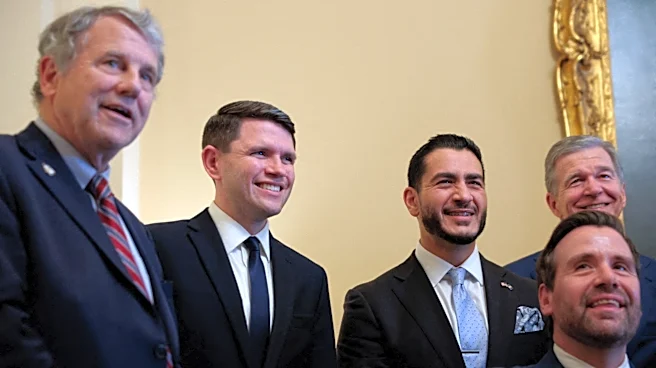
In South Carolina, President Donald Trump called Annie Andrews, who is cisgender, an anti-trans slur.
In Ohio, an ad by Elon Musk's America PAC accused Sherrod Brown of "giving the green light to the radical trans agenda."
And in Texas, Republicans bestowed a laundry list of nicknames on James Talarico, including "Talafreako" and "Six-gender Jimmy" to attack his support of transgender youth.
All three Democratic Senate candidates won their races in states Trump had carried by wide margins in 2024.
In ads and on the campaign trail, Republicans desperate to save their congressional majorities worked to paint their Democratic opponents as out of step with voters, primarily by attacking them over transgender issues. But in an election cycle in which
Americans ranked cost of living issues as their top concern, that familiar campaign playbook failed to stave off the blue wave that delivered both chambers to Democrats.
Now some Republicans are criticizing the strategy, and calling for the party to rethink its approach, raising questions about whether the GOP's big focus on transgender issues and other hot-button culture war fights in recent years should fade as attention turns to the 2028 presidential race.
"Republicans need to get away from the divisive culture wars and focus on economic issues and getting out of Iran," said GOP strategist Mike DuHaime, the former political director for the Republican National Committee.
Florida Gov. Ron DeSantis – a 2024 presidential candidate and potential 2028 contender who rose to national prominence as an ardent culture warrior – said after the midterm election that he knew the GOP was in bad shape when he saw how much candidates were spending on transgender ads, saying Republicans were "fighting yesterday's battles."
"That was not the issue motivating voters," said DeSantis, adding that the attacks were effective in the past, "but the ground shifts and the emphasis then is on different things."
Republican strategists said the economy outweighed cultural concerns in the minds of voters, and the attacks also were less effective because Democrats were better positioned to refute them. Whether that continues to be the case remains to be seen, said GOP strategist Mark Bednar, predicting that the 2028 presidential primary could drive Democrats to the left and cultural issues could reemerge as more salient for voters.
"It's Democrats' next move on this for sure," said Bednar, a former Republican House leadership aide.
'Cost of living issues dominated'
Florida has been ground zero for some of the recent culture war battles, with DeSantis passing legislation limiting how race and LGBTQ issues are discussed in schools and battling with Disney over legislation critics dubbed the "don't say gay" bill.
So for DeSantis to say cultural issues have faded from relevance is "awfully telling," DuHaime said.
"Four years ago we were in the peak woke era," DeSantis said at a press conference after the election. "Well, now the issues are different."
DeSantis said Democrats were able to "outflank Republicans" on emerging issues such as the backlash to data centers needed to power artificial intelligence. The biggest issue was the economy and cost of living, though.
"I think cost of living issues dominated culture issues," said Charlie Black, a Republican strategist who has worked on multiple presidential campaigns.
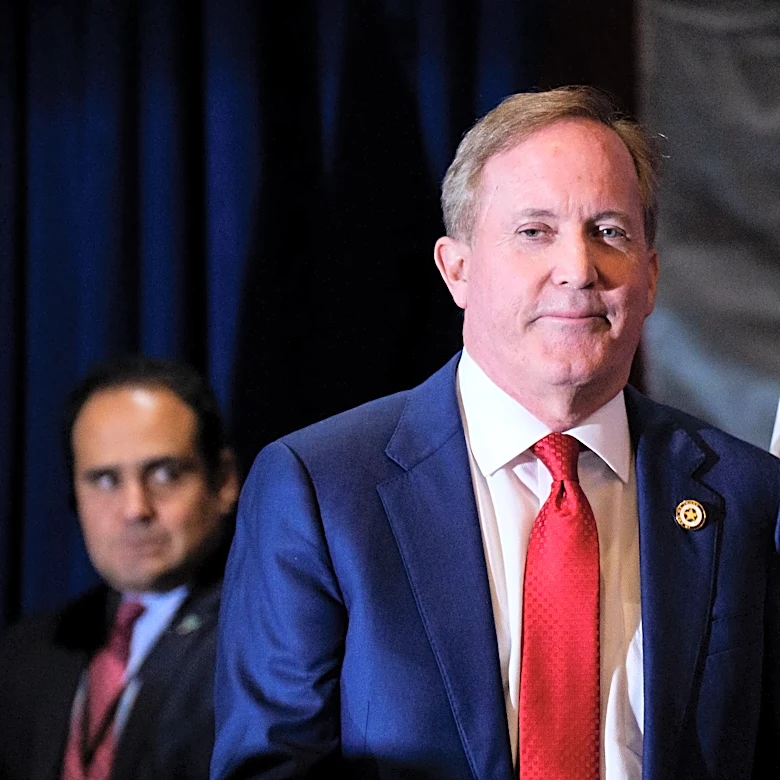
Republican candidates in conservative-leaning states took several approaches to paint their opponents as extreme. Texas Attorney General Ken Paxton, his state's GOP Senate nominee, referred to Talarico as a "vegan," though the Democrat is not. In Michigan, Republican Senate candidate Mike Rogers accused his Democratic opponent Abdul El-Sayed of supporting the Muslim Brotherhood, a group El-Sayed has disavowed. Republicans, including Texas Sen. Ted Cruz and the president, called El-Sayed a "jihadist."
But the bulk of the GOP's attacks centered on transgender issues. The strategy echoed Trump's approach in the 2024 presidential election, when his campaign spent more than $19 million on ads attacking Vice President Kamala Harris over her support for gender-affirming care for detainees in a 2019 ACLU questionnaire. The ad said Harris was “for they/them” and Trump was “for you."
"The Republicans obviously over-learned the lesson of 2024," Lanae Erickson, a senior vice president for social policy, education, and politics at the centrist think tank Third Way, told USA TODAY. "We could see that this was coming and they didn't have much else to run on."
DuHaime doesn't see a big shift within the GOP on cultural issues while Trump continues to lead the party, but suspects that some Republicans will recalibrate heading into the 2028 presidential election.
"Once the presidential primary starts, you will see a greater diversity of opinion within our party about how to approach these issues," he said.
That could depend on what Democrats do with their new majorities in Congress, and how their own presidential primary plays out, Bednar said.
"It's really easy to see how this will reemerge in a Democratic presidential primary," Bednar said, predicting that Democratic candidates will face pressure from activist groups to embrace positions on cultural issues that could be politically problematic.

Millions in ads
Republican groups spent an estimated $183 million on ads by Oct. 25 that discussed transgender issues, such as trans athletes' participation in women's and girls sports, according to the Associated Press.
DeSantis said the spending was misguided.
"I knew Republicans were in trouble when I was reading an overview about what were they running ads on and they're spending hundreds of millions of dollars across the country on transgender ads," he said.
The attacks failed even as voters in four states supported ballot initiatives that would limit trans athletes' sports participation. Washington and Colorado passed new bans prohibiting transgender women and girls from participating on female sports teams, while a Nebraska ballot initiative made an existing ban part of the state constitution. In Arizona, where voters re-elected Democratic Gov. Katie Hobbs and gave her party control of the legislature for the first time in decades, voters passed a proposition that adds new restrictions to an existing trans athlete ban.
In some instances, Republicans used artificial intelligence to create deepfake ads featuring their opponents. In Texas, Citizens for Sanity, a pro-Trump group, spent six figures airing an ad featuring an AI-generated version of Talarico wearing a dress and singing about trans kids. In North Carolina, the National Republican Congressional Committee and Republican House candidate Jennifer Balkcom aired an ad featuring her Democratic opponent, Jamie Ager, dancing in a barn with drag queens.
“Jamie Ager talks like you and me on TV, but he's dancing with they/them,” the ad said.
Both Talarico and Ager won.
“At the end of the day, Trump's approval rating and handling of the economy was more important than anything else,” Alex Conant, a Republican strategist, told USA TODAY. “There was a lot of discussion about candidate quality and cultural issues, and money, and none of that actually mattered.”
A focus on the economy
Democratic strategists said the ads worked in 2024 because the party didn't have a response on transgender issues and Harris struggled to define her agenda.
This year, Democrats in tight races were able to keep their campaigns focused on economic issues.
The key, Erickson said, was to address concerns about fairness without denigrating the transgender community or committing to blanket bans in the future. She pointed to Talarico, who told Fox News in September that he would oppose trans athletes participating in girls sports “if it endangers safety or fairness."
Other Democrats, including Iowa Democratic Sen.-elect Josh Turek and Andrews of South Carolina, pushed back by echoing Republicans' language on trans athletes.
In South Carolina, a super PAC supporting GOP Sen. Darline Graham aired an ad that accused Andrews of supporting "surgeries for minors" and transgender women playing on female sports teams.
"Annie Andrews is for they/them, not for our values, not for South Carolina," the narrator says in the spot.
Andrews clarified her record in a response ad.
"I want you to hear me loud and clear: I don't support biological men playing women's sports, and I don't support and haven't ever performed gender surgery for minors," Andrews said in the ad. "I'm Dr. Annie Andrews, and I approve this message because Darline Graham lying about me won't do a thing to help you."
Black, the GOP strategist, said Democrats were able to push back effectively.
"Attacks on candidates must be fact-based and documented to work," he said.
Cultural issues are still "very potent," said GOP pollster Whit Ayres. They were just overwhelmed by economic concerns in the midterms. Black said they are "still salient if a candidate has endorsed, or voted for, a radical position."
Tyler Hack, the executive director of the Christopher Street Project, which endorses candidates who support the transgender community, said their preferred candidates were able to stay focused on the economy without backing away from transgender issues.
“They're focused on economic issues that affect 100% of Americans,” Hack told USA TODAY. “But they will stand with us when it matters, and fight to build back our protections.”
This article originally appeared on USA TODAY: GOP culture-war attacks fell flat in the midterms. Will they work in 2028?