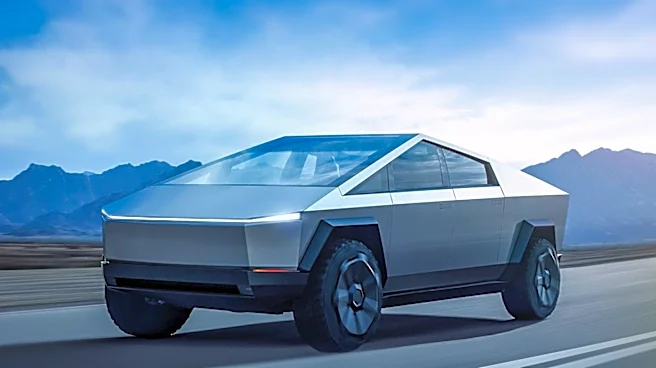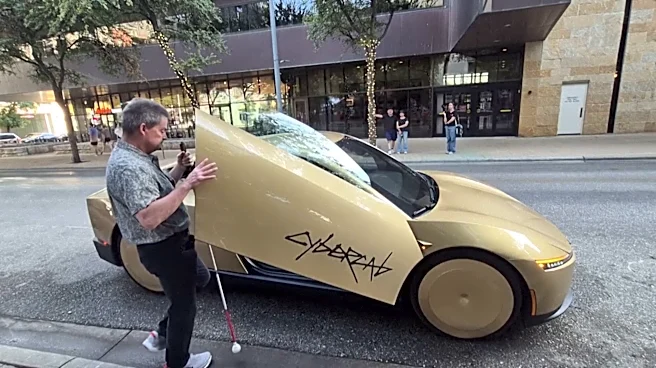





Tesla is planning to boost international production of its two-seat Cybercab robotaxi amid plans to greatly expand the service to multiple American states, according to an engineer who works at its Berlin, Germany, factory.
"In the early afternoon, we informed our staff about the expansion of the Gigafactory Berlin-Brandenburg!" the engineer, Andre Thierig, who is senior director of Tesla's Berlin-Brandenburg factory, wrote in a Nov. 16 LinkedIn post.
"As a first step, we are investing around ($3.3 billion) in a new production building, which we will begin construction of in the first half of the year!" Thierig continued. "Starting in 2029, we will start production of the autonomous Cybercab and will hopefully ramp it up to up to 1 million vehicles
per year! With this expansion, we will have the most technologically advanced factory of all Tesla Gigafactories worldwide located in Grünheide near Berlin."
The announcement comes Tesla CEO Elon Musk announced it is winding down production of its unconventional Cybertruck electric pickup truck to focus on boosting domestic production of the Cybercab.
"Tesla will be winding down production of the Cybertruck at Gigafactory Texas around the middle of next year to make room for increased Cybercab production," Musk wrote in a Nov. 6 X post.
Tesla has said it is planning to expand its Robotaxi service to a "dozen or so states" by the end of the year, Musk told investors as his company was reporting first-quarter earnings on April 22.
Musk has also said the Robotaxi will be a big part in his company's "overall shift to an autonomous future."
The USA TODAY Cars team took a look at what consumers should know about the Tesla Cybercab and the company's plans for its Robotaxi expansion.
What are the specs of the Tesla Cybercab?
Tesla revealed in documents submitted to the U.S. Environmental Protection Agency in May that the Cybercab will have a fully electric motor. It will weigh 3,113 pounds and have a 48 kWh lithium-ion battery with a charge-depleting range of about 418 miles.
Tesla said the Cybercab will be all-wheel drive and have 219 horsepower. The vehicle will have regenerative braking that is commonplace on most fully electric cars.
— Tesla (@Tesla) September 2, 2026
How will riding in Tesla Cybercab compare to the experience of being an Uber or Lyft passenger?
Tesla said rides in Cybercab robotaxi will be ordered using a cellphone app that is similar to the ones riders use now to search for Uber and Lyft rides.
The company says drivers will have to create an account, and the app is currently available on Apple iOS and Google-based Android devices.
Tesla says drivers will wait for their Cybercab rides at a designated pickup location, and they will be notified when the car arrives via the app. But there's one catch: In a Tesla Cybercab, there will be no human driver behind the wheel to greet when you open the door.
Tesla says passengers will simply tap a "Start Ride" button when they enter the Cybercab cars to get their trip going. The company said riders will be able to personalize their Robotaxi experience with different features such as climate settings and seat position. They will also be able to stream much the Robotaxi app, and certain driver profile settings will carry over for Tesla vehicle owners.
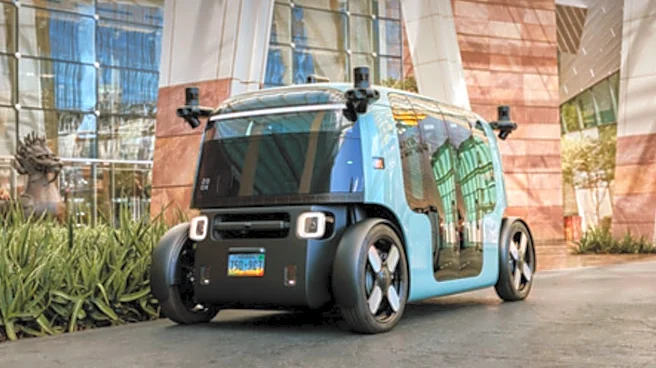
It's an experience Zoox and Waymo riders have already grown accustomed to in select U.S. markets, providing some ready-made competition as Tesla enters the autonomous rideshare game.
The company says riders should gather their belongings upon arrival at the destination, exit the vehicle, close all doors and provide feedback via the app upon conclusion of their ride.
On its website, Tesla says "we want Robotaxi pricing to be simple and easy for you to understand."
"Initially, as part of our introductory program, we will charge a simple, affordable rate plus applicable taxes and fees for all rides within the available service area," the company said. But there's a caveat there too: "pricing is subject to change," Tesla says.
Where do Tesla's Robotaxis operate?
Tesla says it currently operates its Robotaxis using Model Ys and Cybercabs in limited areas of Austin, Dallas, Fort Worth, Houston, San Antonio, Tampa, Orlando and Miami.
The company says on its website that it plans to expand the service to cities such as Phoenix, Las Vegas and Jacksonville.
Musk told investors on the April earnings call that his company's expanded Robotaxi service will use the same software that is being used in Austin and San Francisco.
"The limiting factor for expansion is really rigorous validation," Musk said. "Making sure things are completely safe. We don’t want to have a single accident or injury with the expansion of robotaxi and we've to the credit of the team, not had a single one to date."
Keith Laing is an automotive reporter on the National Trending Desk at USA TODAY. Contact Keith at klaing@usatodayco.com.
This article originally appeared on USA TODAY: Tesla plans to invest $3.3 billion to boost Cybercab production