









Snapshots of the economy: Relentless inflation and a stagnant job market have thrust the economy to the forefront of the November midterms. In the run-up to election day, USA TODAY Money reporters fanned out across the country to examine how Americans are coping with the financial squeeze, from the gut-punch of sudden layoffs and endless job searches to the daily grind of making ends meet. This is the third piece in a six-part series.
Lynn Weidner knew she'd pay more for health insurance after the Affordable Care Act's enhanced subsidies expired this year on Jan. 1.
But the 43-year-old woman thought her pay raise from a Pennsylvania caregiver program would offset the extra insurance costs. It had the opposite effect. The extra income meant she
no longer qualified for any aid under the ACA, which cuts off subsidies to people who earn more than four times the federal poverty level, or $63,840 for an individual.
Her $400-a-month Obamacare insurance bill in 2025 more than doubled to $865 this year.
"I got a raise of $2 an hour," said Weidner. "So I lost every bit of assistance I could get."
Like millions of Americans, Weidner is struggling to cover the cost of health insurance, medical care and daily living expenses. Fewer than half of adults said they can afford health care, medical appointments and prescriptions, according to a June survey from West Health-Gallup.
Prices for gas, groceries and everyday staples are rising, and consumer confidence is at the lowest level in a dozen years. Two-thirds of people support the idea of "Medicare for All," a concept of extending government-funded health insurance to everyone, according to an Oct. 6 poll from KFF, a health policy nonprofit.
Faced with paying rent or the electricity bill, consumers such as Weidner are choosing to postpone or ration care to stretch budgets.
Weidner reduced her weekly therapist appointments to every other week because she couldn't cover the copay. Her family also negotiated a lower monthly rate for their household internet bill.
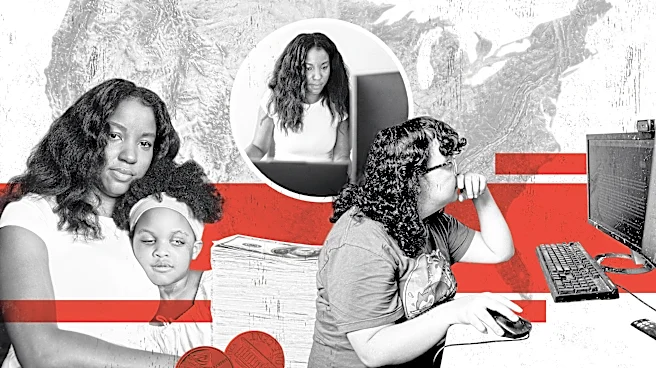
After a backup caregiver took another job, Weidner increased her work schedule to 80 hours a week as a full-time caregiver for her long-term partner, who has cerebral palsy. Through a Medicaid waiver, a Pennsylvania program pays family members or home care workers who provide in-home care services to eligible Medicaid patients. Weidner also is an unpaid caregiver for her mother, who has early stage Alzheimer's disease, and a 2-year-old niece.
Weidner, her partner and her mother live in an apartment in a suburb of Allentown, Pennsylvania. The apartment isn't outfitted for people with disabilities, but they remain there because the monthly rent of $1,600 is manageable.
Even with health insurance, catching up to medical bills is a struggle. Each year, she must meet a new deductible − the amount she must pay before coverage kicks in. That means medical bills accumulate until she meets her deductible. She pays $210 every month, but it's never enough to fully pay her medical bills.
"I always have rolling medical debt, even with insurance," Weidner said. "By the end of the year, I'm almost paid off but it starts all over again."
'Prices stay up. They don't come down'
Health care analysts say changes in federal health policy could further squeeze consumers struggling to make ends meet.
More than 3 million people dropped their Affordable Care Act coverage this year. Many consumers faced significantly higher monthly insurance bills when the ACA's enhanced subsidies, enacted during the COVID-19 pandemic, expired Jan 1. Enrollment experts said some people likely dropped coverage because they could no longer afford it, while others might have obtained insurance through their job.
In June, a federal report said 19.2 million people were enrolled in an ACA plan as of February 2026, down from 23.1 million people who signed up for coverage by January 2026. Trump administration officials also cut off subsidies for about 760,000 enrollees they said were fraudulent, improper or phantom sign-ups arranged by rogue insurance brokers.
Most working-age Americans get coverage through the workplace, and benefits consultants warned that those plans are getting pricier, too. The average family health insurance plan offered through an employer costs more than $28,000 this year, according to KFF's annual employer health insurance benefits report released Oct. 22.
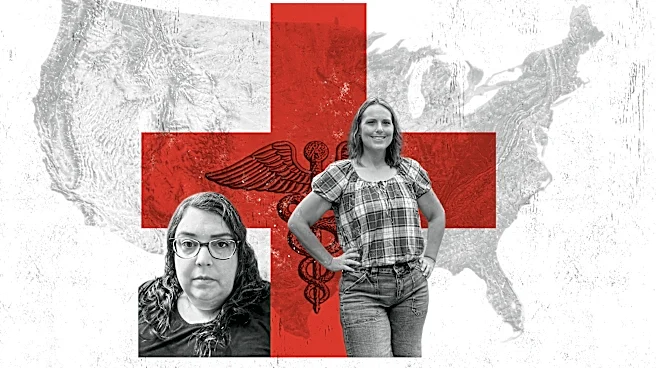
Even reliable coverage through work strains budgets. Houston resident Jennifer Jobe, who is a public school district employee, told USA TODAY she owes thousands of dollars after a battle with colon cancer.
Job-based health insurance is taking a bigger chunk of take-home pay. In 2026, workers' paycheck deductions for health insurance surged 9% while average wages increase just 3.7%, according to KFF. Job-based health insurance costs are projected to rise an average 9.5% in 2027, the fastest clip in two decades, according to consultant AON.
And millions of Americans on Medicaid, the state-federal health program for low-income families and people with disabilities, are projected to lose coverage when stricter eligibility requirements go into effect in January 2027. Medicaid enrollees will have to work at least 80 hours a month, go to school, complete job training or volunteer to maintain their government-funded health coverage.
About 1 in 4 U.S. adults said they or a family member had medical debt as of December 2025, according to an Urban Institute survey. More than 1 in 3 adults without health insurance had medical debt, the survey said.
"There are gaps in the extent to which health insurance is protecting people from out-of-pocket costs that they can't pay," said Michael Karpman, principal research associate at the Urban Institute. "And there's a serious concern that this could get worse over time. Health care costs continue rising and these federal cuts to Medicaid and (ACA) marketplace coverage begin to take effect over the next several years."
Earlier research from the Urban Institute projected that 3 to 7 million people could lose Medicaid coverage due to work requirements, and another 2 to 3.1 million could be be dropped due to more frequent eligibility checks.
Other economists suggest that the coverage losses won't be as dramatic. University of Chicago economist Robert Kaestner projected a more conservative estimate of about 2 million people losing coverage nationwide due to the Medicaid work requirement and Affordable Care Act subsidy cuts.
Kaestner points to the COVID-19-era Medicaid enrollment during President Joe Biden's administration as evidence that people are resilient at finding health insurance elsewhere. States paused Medicaid eligibility checks as a condition of accepting federal funding during the COVID-19 pandemic. When Medicaid eligibility checks resumed in 2023, millions of enrollees who were no longer eligible − a process referred to as unwinding − were removed from coverage.
But Kaestner said Census figures released after the unwinding showed that the uninsured rate remained flat, indicating that there's "no evidence this increased the rate of uninsured."
Still, Kaestner said consumers are probably feeling the effects of higher health costs combined with rising inflation and a higher cost of living. Inflation outpaced workers' wages for three consecutive months through September 2026, and consumers feel the pain when their paychecks don't stretch as far as they once did.
"Anyone with a memory of six or seven years is saying, 'Wow. The cost of everything has gone up,'" said Kaestner, a research professor at the University of Chicago's Harris School of Public Policy. "Prices stay up. They don't come down."
Teacher focuses on health, not rising medical bills
Jobe was diagnosed with colon cancer five years ago.
The 43-year-old middle school teacher underwent surgery, chemotherapy, genetic testing and routine scans before being declared cancer free. Recent scans have shown no signs of cancer, and she no longer takes maintenance medication.
Jobe, 43, has reliable health insurance coverage, but her plan has a high deductible and an out-of-pocket maximum of $8,000 per year. That's the amount she must pay herself before insurance covers the rest. A single chemotherapy treatment easily surpassed her out-of-pocket maximum.
She received help along the way. A GoFundMe campaign set up on her behalf helped reduce her financial burden during her first year of treatment. A patient assistance program secured through her medical provider, M.D. Anderson, paid roughly $4,000 for her medication, leaving her responsible for another $4,000.
But even though she's done with her chemotherapy treatment and scans show she is cancer free, the medical bills continue to fill her mailbox.
She owes about $4,000 in unpaid bills, most of which have been sent to collections.
Jobe is concentrating on her health, not the financial side effects that so often come with a cancer diagnosis. She sympathizes with the millions of Americans facing medical debt. But she believes a positive outlook is critical to her health.
"I'm not stressing medical bills," Jobe said. "I send $50 a month and if it gets paid, it gets paid. If it doesn't, it doesn't. Who has an extra $8,000 laying around to pay bills every year?"
This article originally appeared on USA TODAY: Medical bills stress Americans amid rising inflation, federal cuts