

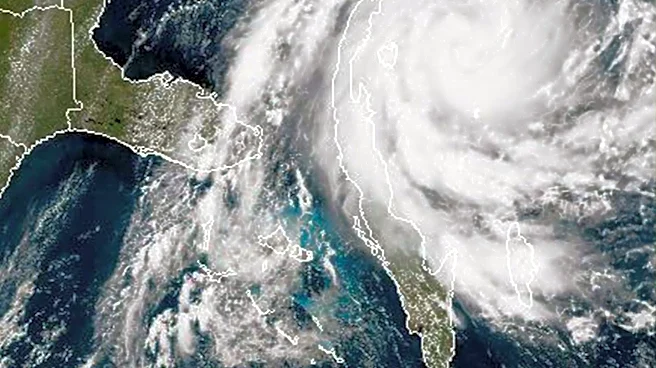

Six Florida counties ranked among the top 10 most hurricane-vulnerable nationwide — and two of South Florida's counties ranked within the top 20.
The rankings, which are based on FEMA’s National Risk Index, were released Aug. 11 by a national landscaping startup called Lawn Starter, co-founded in Austin by a tech analyst.
Counties were given overall scores that evaluated hurricane risk, hurricane history in the past 10 years, financial impact and disaster cleanup. Each metric was then weighted based on its impact. The metrics were gathered from FEMA, NOAA and the U.S. Environmental Protection Agency.
Monroe County ranked 13th, with an overall score of 54.71, a hurricane risk rank of 49, a hurricane history rank of 10, a financial impact rank of 50
and a disaster cleanup rank of 262. Miami-Dade County ranked 20th, with an overall score of 50.58, a hurricane risk rank of 2, a hurricane history rank of 104, a financial impact risk of 2 and a disaster cleanup rank of 439.
Palm Beach County and Broward County ranked further down the list, at 25 and 27, respectively.
Palm Beach County had an overall score of 48.95, a hurricane risk rank of 4, a hurricane history rank of 104, a financial impact rank of 4 and a disaster cleanup rank of 410. Broward County had an overall score of 48.72, a hurricane risk rank of 5, a hurricane history rank of 104, a financial impact rank of 7 and a disaster cleanup rank of 384.
Miami-Dade, Brevard, Palm Beach, Collier and Broward are all in the top 20 most storm-prone counties in the country, based on data from Colorado State University.
According to CSU, Florida has more run-ins with tropical cyclones than any other state in the U.S., with a historic 274 named storms coming within 50 miles of its borders.
Other Florida counties in Lawn Starter's top 10 were Bay County, in third, Charlotte County, in fifth, Collier County, in seventh, Polk County, in eighth and Sarasota County in 10th.
Only counties rated by FEMA as having a “relatively moderate” to “very high” for hurricane risk were included in the report.
Lee County, which suffered a direct hit from Category 4 Hurricane Ian in 2022 and impacts from 2024’s Helene, had a total score of 67.74. That’s ahead of runner-up Terrebonne Parish, Louisiana, which scored 62.96.
Only two Florida counties — Baker and Union — didn’t make the hurricane ranking list, as they are categorized as having “relatively low” risk.
Other high ranking Florida counties on the national list include:
- #11, Manatee County
- #12, Hillsborough County
- #13, Monroe County
- #15, Brevard County
- #20, Miami-Dade County
- #25, Palm Beach County
- #26, Taylor County
- #27, Broward County
- #28, Osceola County
- #34, Escambia County
Florida counties that ranked low on the list include:
- #431, Liberty County
- #356, Gilchrist County
- #348, Wakulla County
- #324, Dixie County
- #315, Glades County
Kimberly Miller is a journalist for the USA TODAY NETWORK FLORIDA. She covers weather, the environment and critters as the Embracing Florida reporter. Sarah Perkel is a South Florida Connect Reporter for the USA TODAY Network's Florida Connect team. You can get all of Florida’s best content directly in your inbox each weekday by signing up for the free newsletter, Florida TODAY, at palmbeachpost.com/newsletters.
This article originally appeared on USA TODAY: South Florida counties rank among top 20 for hurricane vulnerability