


Even in Iowa, Republican candidates for the Senate and governorship are now locked in tight races, a new Suffolk University poll finds − thanks in part to dissatisfaction with Donald Trump in a state he carried in three presidential elections.
The margin-of-error results in the Hawkeye State are stoking Democratic hopes of scoring midterm victories in unexpected places.
In the governor's race, Democratic state Auditor Rob Sand is leading Republican businessman Zach Lahnby 4 percentage points, 48%-44%.
In the Senate race, Republican congresswoman Ashley Hinson is leading Democratic state representative Josh Turek by 4 points, 45%-41%.

“Keep in mind this is a state that Donald Trump won by more than 13 points in 2024,” said David Paleologos, director
of the Suffolk University Political Research Center in Boston. No Democrat has been elected governor of Iowa in 20 years, and none has been elected to the Senate in 18.
The poll of 500 likely voters, taken Aug. 20-23 by landline and cell phone, has an error margin of plus or minus 4.4 points.
Asked their "primary motivation" for voting in the midterm election, 30% said it was to "express dissatisfaction with the current national political climate." That's more than the number who cited supporting a specific candidate's vision (11%) and weighing in on local ballot issues (16%), combined.
Four in 10 said they were voting to "fulfill my civic duty."

In the governor's race, Sand has edged ahead thanks to near-solid support among Democrats, disproportionate support among independents (53%-34%) and even 9% support from Republicans. In contrast, Lahn received no Democratic support.
In the Senate race, Turek is supported by nearly all Democrats and leads narrowly among independents, 39%-35%, plus 5% of Republicans. Hinson was backed by a single Democratic respondent.
When the handful of Trump voters in 2024 who aren't supporting Hinson were asked why, the most common response was that Republicans had "gotten off track" and "didn't deliver."

Among the most enthusiastic voters, those very likely to vote, Turek and Hinson are tied, 45%-45%.
The race is being closely watched as an unexpected prospect to help Democrats regain control of the Senate. That would require holding all the Democratic-held seats on the ballot in November and flipping four Republican-held seats. Iowa hasn't been in the top tier of Democratic targets, but a competitive race here could help offset a loss elsewhere.
Sen. Joni Ernst isn't running for reelection. Nor is Gov. Kim Reynolds.
Iowa is still, to be clear, a ruby-red state. Registered Republicans outnumber Democrats by 200,000, and Republicans now hold all six seats in Congress, both chambers of the state legislature and every statewide elected office save one.
But the state's agricultural economy has been hit hard by trade wars and the rising costs of gas and fertilizer, and the national issues over the affordability of groceries, housing and health care resonate here, as well.
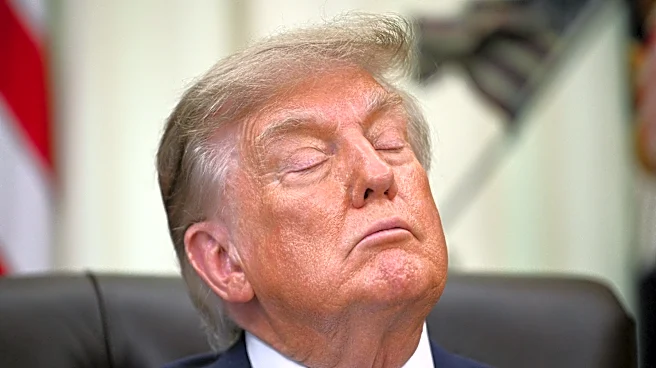
While Trump swamped Democrat presidential nominee Kamala Harris in Iowa in 2024, his favorable-unfavorable rating is now underwater by a tick, at 48%-49%.

Among Republicans, 10% now give him an unfavorable rating, and independents by 51%-42% have an unfavorable view.
To compare, former president Barack Obama, who carried Iowa in both his presidential campaigns, has a rating that is narrowly positive, 49%-45%.
The survey also showed the transformation in the way voters prefer to gather information about political campaigns. At the top were candidate debates and town halls, followed in close order by social-media platforms, then by local news broadcasts and newspapers.
This article originally appeared on USA TODAY: Even Iowa? Trump's troubles tighten races for Senate, governor