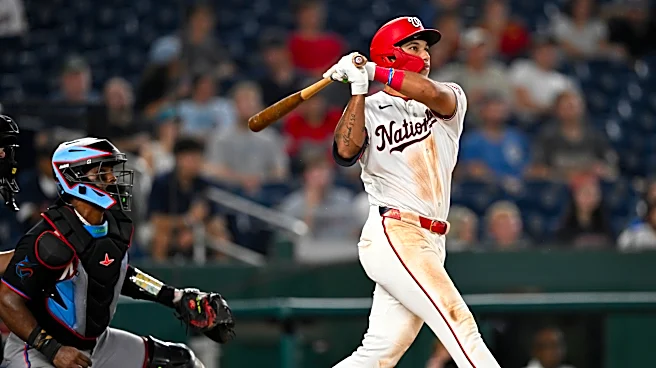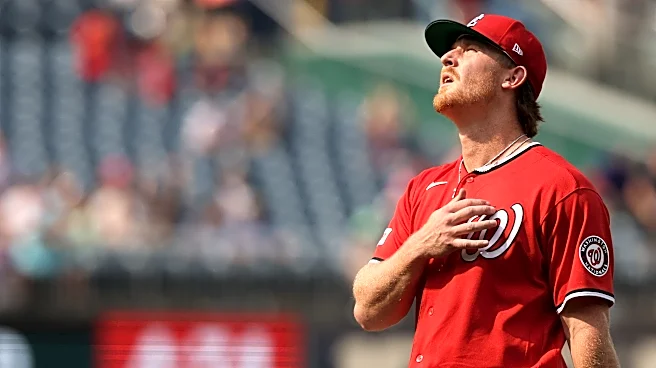

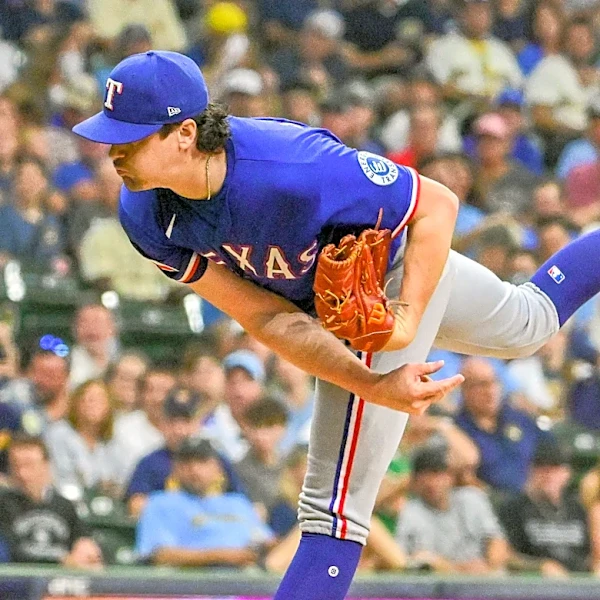
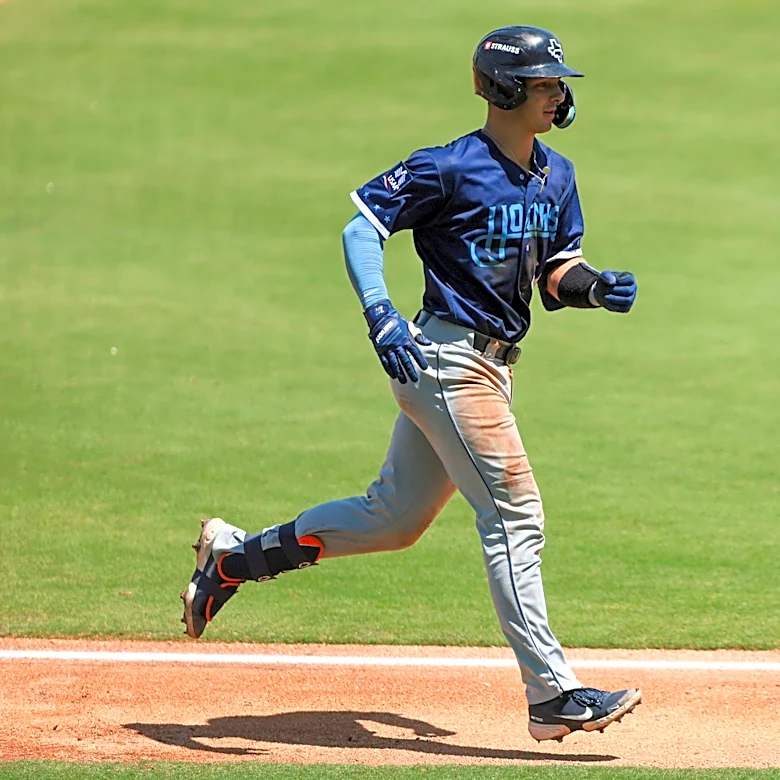

WASHINGTON – Sometime soon, the Washington Nationals bullpen will tie, and almost certainly break a record it wants no part of.
Nationals relievers have blown 35 saves, second in major league history to the 37 suffered by the 2024 Chicago White Sox. You might remember those Sox: They were, according to the loss column, the worst team in major league history
, dropping a record 121 games as the roster suffered a complete breakdown.Yet these Nationals are not a bad team.
They wildly exceeded expectations thanks to a vastly improved offense, were above .500 as late as July 29 and made the decision much harder for first-year president of baseball operations Paul Toboni to part with prized players come the August trade deadline.
Toboni ultimately sold,
but not before perhaps the most teachable moment of his first season served to ruin many late innings and lead to more than a few restless nights for he and rookie manager Blake Butera:
You can only skimp so much on relief pitchers.
“The value of having homegrown relievers coming through the farm that you don’t have to spend huge dollars on necessarily but can lean on is really important,” Toboni said this week.
“But the opposite is true, too: If you don’t feel like you’re in that spot at any given point in time, you have to consider throwing free agent dollars at pitchers.”
That, the Nationals did not do.
Five of the seven relievers on their opening-day roster had one year or less of service time and six of the seven made between the major league minimum $780,000 and $825,000, according to salary data obtained by USA TODAY Sports.
Their most experienced arm, lefty Cionel Perez, posted an 8.31 ERA for Baltimore a year ago, made the club on a $1.9 million deal and was designated for assignment by May 4.
But the Nationals’ relief torment was just beginning.
Opening acts, closing nightmares
A bullpen disaster is often a top-down problem. After all, relievers incur no damage on nights they sit, feet up, in the bullpen while a starting pitcher mows down the opponent for the greater part of the evening.
Yet those nights are rare.
Nationals starting pitchers rank 29th in the major leagues in innings pitched, 53 behind their nearest divisional rival, the Mets. The uneven workload was exacerbated by the presence of veteran right-handers Miles Mikolas and Zack Littell, who often needed to work behind a reliever opening the game and weren’t very good once they did take the ball.
Both pitchers were designated for assignment in August, Mikolas toting a 5.82 ERA, Littell 5.21.
A shaky rotation foundation tends to have a downstream effect. The Nationals have utilized an opener roughly 30 times this season, which takes away resources from middle- and late-inning relief help.
Injuries have not helped: Four members of the opening-day bullpen – PJ Poulin (left flexor strain), Richard Lovelady (left triceps strain), Mitchell Parker and Ken Waldichuk (Tommy John surgery) – are on the 60-day injured list. Two more are on the minor league IL.
Plugging so many holes can lead to floods.
Such as the 10 runs they yielded in the final two innings to the San Francisco Giants, capped by a Bryce Eldridge walk-off grand slam against Parker. Or the six-run ninth inning Sunday, Aug. 31 in which Max Kranick and Tom Cosgrove combined for three walks, a hit batter and a two-run homer to turn a 2-0 gem into a 6-2 loss.
That was blown save No. 35, the black mark technically going on Cosgrove’s record; he was designated for assignment Thursday. Yet there’s only so much to fault the players – they are trying, very hard – as well as Butera, who pushes buttons furiously from the dugout for a club both shorthanded in arms yet with a lineup that for most of the season slugged sufficiently to keep things close and create ample high-leverage situations.

It’s a lot for a unit to take on, particularly one lacking experience and a true bell cow. Riding the emotional roller coaster can take its toll.
“Just try to be a little more neutral,” says right-hander Clayton Beeter, whose 12 saves lead the club yet has also absorbed the most blown saves – six – on the staff. “As a unit and a staff, we get high when things are going good and switch up when things go bad pretty quickly, in a lot of different ways.
“I try to talk to everybody and make them feel comfortable. I don’t try to tell anyone how to pitch or do what they do. I just know when I was young and coming up, it was nice to have people talk to me just like I was a normal dude and just give me a little comfortability of being in a new place in the big leagues.”
Trial by fire
When Beeter debuted with the New York Yankees in 2024, Luke Weaver was that dude for him. A great guy, he says of the current Pirates closer, who helped him a lot.
And there’s no shortage of paying it forward among the Nationals’ revolving door of relievers. In addition to Beeter, Nationals relievers say Orlando Ribalta, their 6-7, 28-year-old right-hander, has been key to spreading knowledge and advice.
And starting pitchers Jake Irvin and Cade Cavalli – the latter still going through his first full season due to injuries – are also sounding boards.
That more or less epitomizes the Nationals staff: Not terribly young but also inexperienced, relying on each other to avoid bumping around in the dark.
“We do have a younger staff. And I think that’s a good thing because we’re going through the same situations with each other,” says lefty Erik Tolman, 27, who made his major league debut Aug. 22 and has posted five scoreless outings since. “We get to talk to each other about how we feel, collaborate and come to a conclusion on what can get you a little bit readier for the next day.
“And we have a couple older guys on the team, always around to give advice. And when we’re not even asking they’ll come up to us and help us out.”
Tolman has certainly provided late-season inspiration for a club that’s gone 12-22 since July 29. He has survived a pair of Tommy John surgeries in addition to a freak injury suffered simply hopping over the baseline on his way to the mound at low Class A in 2023, tearing knee ligaments and his hamstring and rupturing his peroneal nerve.
“I think that’s why baseball relates to life so much,” he says. “In life, you fail so much. And this game is all about failure. And if you think positive and have positive thoughts, it goes a long way.”
Just keep swimming
Indeed, the bedraggled bullpen has been injected with late life from lefties Tolman, Will Dion and Jared Simpson, who all debuted this season; Dion came over from Cleveland in an August trade for All-Star lefty Foster Griffin.
Simpson made his major league debut Tuesday by inheriting a first-and-second, no-out fifth-inning situation against Atlanta.
Not exactly a break-him-in-gently situation. Yet Simpson induced a double play grounder from All-Star Drake Baldwin and a groundout from Austin Riley to preserve a 5-2 lead.
Simpson just kept going, pitching three perfect innings to earn the win in his debut. The Nationals intend to do the same, even if an ignominious record is attached to their bullpen.
“Honestly, try to worry about myself and perform to the way I know I can and in turn, that will help the team,” says Beeter of the September string to be played out. “Just try to simplify a lot of things.”
Or, as Tolman, a major leaguer for two weeks yet with a veteran perspective, puts it: “You hear it - in this game, you gotta have a goldfish mind. Just forget about the bad right away, and then you just gotta move on.
“It goes a long way.”
This article originally appeared on USA TODAY: Nationals bullpen nearing an ugly record. Having a 'goldfish' memory helps.