







MIAMI – Jean-Marie Denis raised a metal gate and unlocked his Little Haiti bookstore, stocked with books printed in Creole and French.
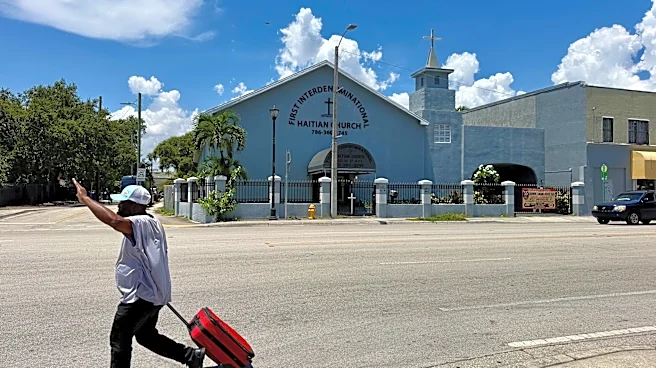
His shop is next door to the Little Haiti cultural complex, designed like a turn-of-the-century Haitian gingerbread house painted in vivid Caribbean yellow and teal. Nearby is a Haitian Christian church, the Haitian restaurant Piman Bouk, Haitian murals reading “Help! Haiti is being strangled,” and an elementary school named for Toussaint Louverture, who led the slave revolt that liberated the island nation.
Denis, who goes by Jan Mapou after his store, Libreri Mapou, has long been a fixture in Miami’s Little Haiti neighborhood, a refuge since the 1970s for Haitians fleeing dictators and political unrest. It remained
the historic heart of America’s largest Haitian diaspora through Haiti’s 2010 earthquake, a 2021 presidential assassination and the government collapse into gang warfare.
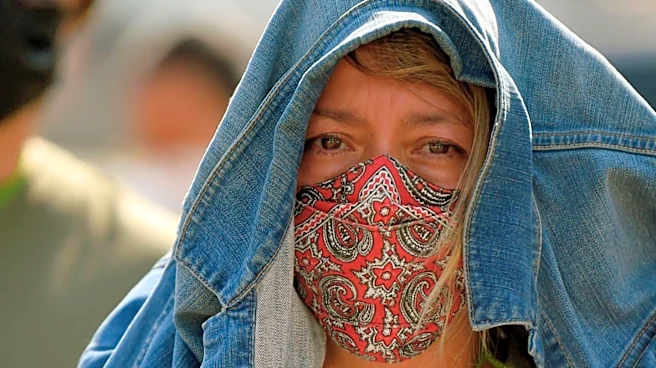
But an eerie quiet has descended on the neighborhood since the Trump administration ended temporary protection for Haitian immigrants in the United States on Aug. 5. Those once seeking shelter now fear deportation.
“They just don't want to expose themselves,” Denis said. “They don't go out.”
Nowhere has that change hit harder than in Florida, home to nearly half of the 330,000 Haitian TPS recipients living in the United States, many in South Florida.
In enclaves like Little Haiti, the change has disrupted life at every level, community advocates say.
It has left many unable to work legally. It has left businesses struggling with fewer workers and customers. It has kept some from venturing out to the doctor or to take their kids to school on the first day of classes, which started Aug. 13 in Miami-Dade County. And it has fueled widespread fear of encountering ICE, hollowing out cultural meeting places in a community defined by generations of Haitian-Americans.
“Our businesses are empty. Churches are empty. The streets are empty. People have completely gone underground,” said Santra Denis, a member of the Haitian American Professionals Coalition. “It’s quite devastating.”
The Department of Homeland Security recently declined to say whether Immigration and Customs Enforcement agents would target Haitians who lost TPS. It said those who leave voluntarily can receive a $2,600 payment and a paid flight home. The department said the program had become a “de facto amnesty program despite Congress never intending it to be permanent.”
Meanwhile, the U.S. State Department has issued a “Do not travel” advisory for Haiti, warning of crime, terrorism, kidnapping and unrest.
In South Florida, many now face what they view as impossible choices.
Haiti remains dangerous and unstable. Finding refuge in another country, such as Canada, is challenging enough without the threat of U.S. deportations looming. Staying means risking being separated from their American-born children and losing their homes and businesses.
“It is one of the most difficult moments in our history,” said Father Reginald Jean-Mary, who has led Little Haiti’s Notre Dame d’Haiti Catholic Church for 25 years. “I have never witnessed such a negative impact of immigration policy on the Haitian community.”

End of TPS sends economic ripples through South Florida
Just before noon in Little Haiti, Chef Wilkinson “Ken” Sejour sweated in the Miami heat, hauling supplies into one of his Chef Creole restaurants. A sign displayed his catchphrase: “This Haitian can cook!”
The son of Haitian parents born in the Bahamas, Sejour switched between Haitian Creole, Spanish and English as he talked to workers and customers. He coordinated with workers as they prepared such dishes as griot fried pork, conch fritters and plantains.
Since TPS disappeared, he’s faced challenges. He lost 14 staffers who no longer had work authorization, forcing him to scramble to keep all seven restaurants open. His Haitian customers who lost TPS don’t have money to dine out, nor do they want to risk going out in public.
Sejour, who has lived in Miami since 1974, voted for Trump, which he said he now regrets.
“I'm not saying to break the law. But at least say … let's take our time and really figure out a pathway. They've been rooted here. They've been here for a while … It's not fair just to uproot them overnight,” he said.
The loss of Haitian workers has rippled across industries in South Florida.
In the greater Miami metro area, an estimated 52,000 Haitian TPS holders were working as agricultural hands, cooks, nursing assistants, landscapers, housekeepers and security guards, according to Phillip Connor, research fellow at Princeton University's Center for Migration and Development, based on an analysis by FWD.us, Haitian Bridge Alliance, and UndocuBlack Network.
About 60 airport workers who were members of the Service Employees International Union lost jobs at the Fort Lauderdale airport, where they worked in jobs such as cabin cleaners, baggage handlers, providing wheelchairs and airport security, the union said.
Two home-care agencies in the area closed when they lost 85 of 86 workers, said Denise Bellville, executive director of the Home Care Association of Florida.
Another provider, Jewish Community Services of South Florida, lost 18 Haitian employees, who had developed long-term bonds with care recipients, including with aging Holocaust survivors, the agency said.
Farah Larrieux, 47, who has been in the United States under TPS since 2010, said she’s had to drop some clients from her communications business. She also lost a part-time hospitality job.
She has applied for asylum, though that doesn’t provide protection from being deported. In the meantime, Larrieux has launched a Haitian TPS recipient national network to advocate for extending protections. She said many Haitian immigrants have built lives here, contribute to the community and pay taxes.
“We feel like we’re living in a nightmare,” she said. “Because you’re asking yourself, is this really the United States?”

The question for many former TPS Haitians: What now?
Harlaine Dominique, 38, of Coral Springs, was starting a travel-nurse job in Massachusetts when TPS ended earlier this month. Unable to legally work, she flew home to South Florida the same day.
Dominique, who came from Haiti as a child, worked on the frontlines of health care during the pandemic. Now she says she doesn’t want to stay in a country where she’s not wanted.
She has considered leveraging her nursing skills to move to Australia, Canada, New Zealand or France. But none of that is simple. And a custody battle has complicated her options. Her son doesn’t have a passport.
“If I was to be picked up by ICE today, I would be separated from my son. I would be forced to leave without him,” she said.
She said she’s not in hiding, since Haitians granted TPS had to provide their addresses. But she can’t work.
“My mind's going a thousand miles an hour trying to figure out what's the next step,” she said. “I’m being told that I'm not allowed to work in the United States, despite me having American bills to pay.”
Some are looking at returning to smaller cities in Haiti, such as Cap-Haïtien, despite the dangers and a dearth of economic opportunity, said Paul Christian Namphy, political director for the Family Action Network Movement (FANM), a Miami Haitian advocacy group.
Others are considering migrating to Canada, Chile or Brazil, where some moved before coming to the United States, Nampy said. Some are applying for U.S. asylum, but approval rates have fallen below 5%, according to the American Immigration Council.
“I would love to pick up and go. This country does not want me. Who wants to stay somewhere where they're not wanted? But I'm trapped. Being separated from my son is not an option,” she said. “That's what's keeping me up at night.”

Waiting and watching for ICE, families face strains
Natacha, a 44-year-old North Miami mother, is like many others – hunkered down and waiting to see what happens. (She asked USA TODAY to withhold her last name for fear of being targeted by ICE.)
She rarely leaves her home, where she lives with five of her children, including one who is a U.S. citizen with Down syndrome. She was afraid to take another child to a doctor for an ear condition. When the first day of school came around, her husband convinced her to keep the kids home.
“Let’s wait a little bit, because it may be a trap,” he told her.
While advocates have not seen any major, visible sweeps, they say former TPS holders are being picked up in smaller ways, such as during traffic stops. Thamara Labrousse, who heads the Sant La Haitian Neighborhood Center, said one man was stopped for a broken taillight and detained when he went out for pizza.
Some TPS holders in Florida have been getting notices to appear in immigration court, which advocates say often leads to a deportation order. Many wonder whether they’ll be required to wear ankle monitors as some were in Springfield, Ohio. That’s where Trump claimed without evidence, during the 2024 presidential campaign, that Haitian immigrants were eating pets.
In July, the Miami Herald reported that U.S. officials have warned the Haitian government to expect at least two weekly flights carrying around 200 people after TPS protections ended. The flights have been landing at Cap-Haïtien. The FAA halted flights to Port-au-Prince airport in November 2024 after three U.S. commercial jetliners were struck by gunfire, Reuters reported.
Meantime, at least some families are preparing for the worst. They are seeking passports for their U.S.-born children, naming trusted relatives as co-signers on bank accounts and setting up power of attorney for their children who may be left behind, advocate and service nonprofits said. Many others, they said, have been slow to make such big decisions.
And then there is the mental toll, Labrousse said. Children are traumatized watching their parents worry. Women have been more reluctant to report domestic violence.
“I've never seen such a high level of trauma and depression,” said Miami-Dade Commissioner Marleine Bastien, who called on Congress to extend TPS for Haitian nationals. "And Haitian people are a people of unbreakable faith. And to hear parents asking me, ‘Commissioner, what have we done? Has God abandoned us?’ So these are the questions I’m being asked.”

Little Haiti looks ahead
On a humid morning in Little Haiti, about a dozen people walked into Notre Dame d’Haiti Catholic Church for Mass, taking Communion and singing hymns in French.
The neighborhood institution has seen a drop-off in parishioners and students at their adult education school amid fears of deportation, said Father Jean-Mary. He calls deporting people to Haiti at this time of crisis “unjust and immoral.”
Throughout the Trump administration’s threats, Jean-Mary has offered steady solace to his parishioners at the church named for the patron saint of Haiti, Our Lady of Perpetual Help.
“Do not let this situation steal your hope, your joy, your peace, and your dignity. You are the children of God, and the victory is on the side of the people of God,” he said in an interview.
He’s less certain what it will all mean for the future of Little Haiti, which has already seen the number of residents of Haitian descent decline over the years amid gentrification, redevelopment and rising rents. He said many parishioners now live in North Miami or other outer areas.
It’s something Miami-born comedian Chris Renois thinks about, too. His Haitian parents first lived in Little Haiti. He later performed comedy there and acted in the 2024 film “Mountains" about the changing neighborhood. He wondered whether the loss of TPS will further hollow out the neighborhood’s culture.
But he said the Haitian community in South Florida remains close-knit, with families looking out for each other and offering mutual support.
“As dire as the situation looks now, my mom always reminds me that it’s really just a storm, and that the Haitian people will make it through,” he said. “And I believe Little Haiti will survive what's going on now.”
Chris Kenning is a national correspondent for USA TODAY. His wide-ranging enterprise reporting includes examining how national polices are playing out in people's lives across the country. Reach him at ckenning@usatoday.com.
This article originally appeared on USA TODAY: ‘The streets are empty:’ How Miami’s Little Haiti is reacting to TPS loss