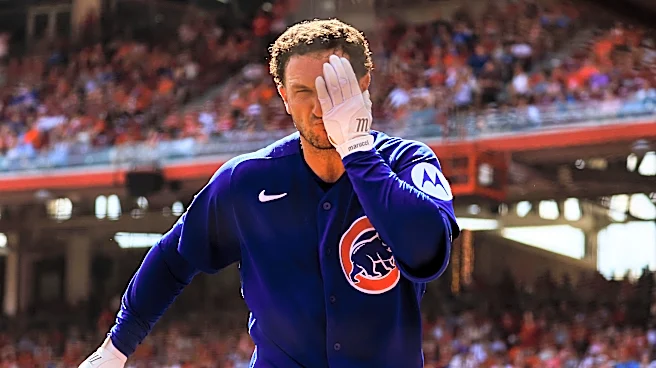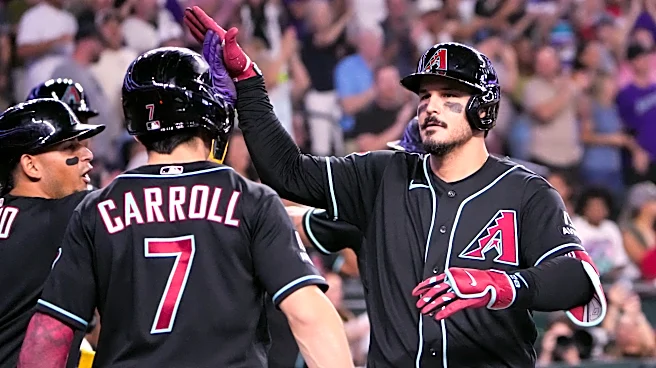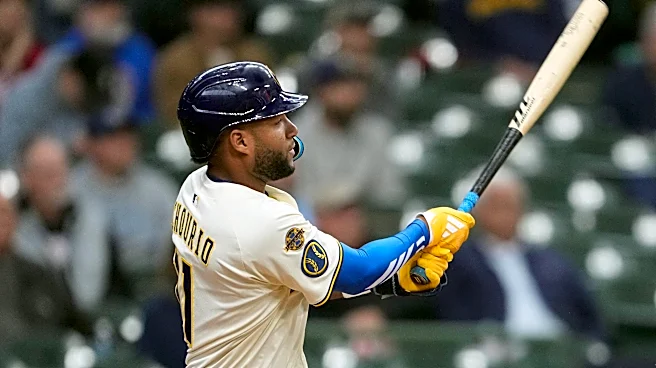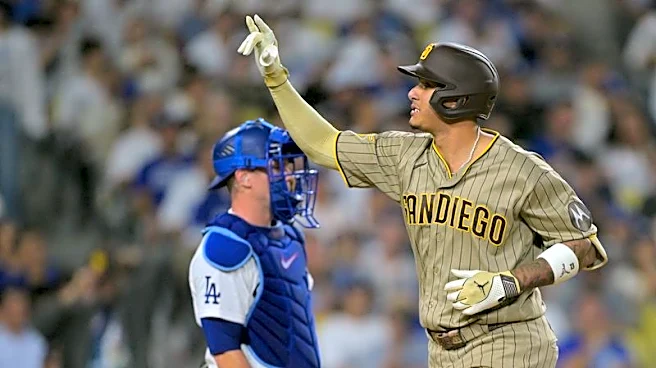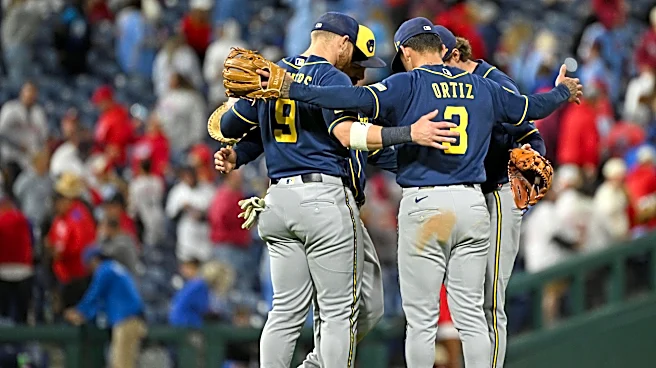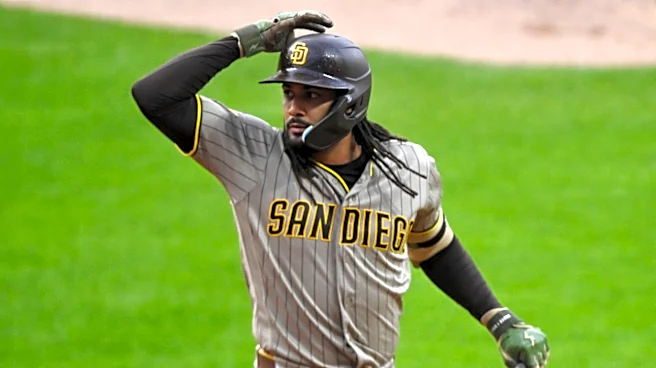

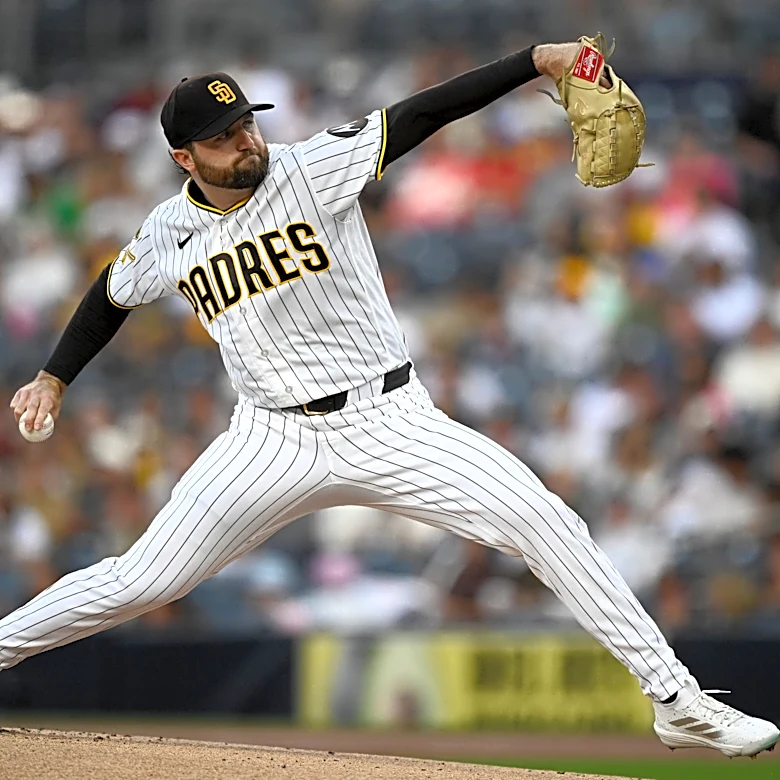

It has spawned accountability meetings. Forced managers to take certain players “offline.” And others to figuratively kick their players in the butt and tell them to tap their helmets a little more.
The first season of Major League Baseball’s automated ball-strike challenge system has created a certain build-the-plane-as-you-fly-it ethos around the game. That’s not unexpected as teams figure out the highest-leverage chances to potentially burn one of their two challenges per game while figuring out who’s good at it and who’s not.
Now, the grand one-year lab experiment has ended and the true test begins: The playoffs.
Ball-strike challenges that can flip an at-bat and, potentially, a game take on far greater magnitude when a postseason game is at stake.
The push-and-pull between disputing a call in a potentially game-turning spot and worrying you’ll be out of challenges by the later innings only grows stronger.
And an exhaustive trove of data coldly exposes who excels at ABS, and who’s flailing.
Teams in the latter category are trying to make it right before the games really count.

“We reevaluated our thought process at the All-Star break and it’s been much better,” says Cleveland Guardians manager Stephen Vogt, whose club ranks 25th at -13.5 net ABS overturns than expected, perhaps the most all-encompassing team metric, but has taken significant strides in the second half.
“I feel like we haven’t been giving as many away. We’ve maybe missed some opportunities to challenge – but we haven’t been giving any away.”
Vogt, like many managers, credits his team’s recent improvement to a component that will be even more heightened in postseason play: Stripping the emotion out of challenges.
The Guardians take a one-game AL Central lead into the final weekend of the season. Vogt’s club was six games out of first place as recently as Aug. 16, but took over the top spot in the Central on Sept. 16 and will host a wild-card series at Progressive Field if they hang on.
Their second-half success, ABS-wise, came after a midseason summit in which they installed guidelines for hitters, largely to eliminate emotional challenges. Now, the club typically has a challenge available for its pitchers and catchers late in games.
“It seems to be working. There’ve probably been a number of pitches where they were balls called strikes we probably could have flipped,” says Vogt. “But we feel like we haven’t been wasting challenges like we did in the first half.
“That’s a credit to our R&D and our coaches and put our heads together to create a formula that works for us.”
And it’s simply common sense: Hitters have successfully overturned 49% of their 4,666 attempts through Sept. 23. Pitchers and catchers – mostly catchers – have a 58% overturn rate on 5,644 attempts.
Yet even the best could stand to be a little less conservative.
Fear not the helmet tap
J.T. Realmuto remains among the best catchers in the business – and that extends to ABS challenges. He ranks third in the major leagues with 21.3 net ABS overturns more than expected and tops all catchers with 2.4 net run value over expected.
As one might gather, there’s all kinds of ways to slice up ABS data. Yet there’s one column that’s particularly germane to Realmuto and the Phillies: He is second among catchers with 87% of challenges considered “reasonable.” And 71st among 77 qualified catchers with just a 19% challenge rate on pitches considered “reasonable” to challenge.
The Phillies’ message to Realmuto: Tap that helmet.
“J.T.’s been really good. Usually when he challenges, it’s a strike,” says interim manager Don Mattingly. “But there’s also ones we can tell, ‘I think that’s a strike’ and he doesn't and we’ll look at it, and it’s a strike.
“But J.T. has been really good at it. I’ll say that.”
Mattingly should also be careful what he wishes for. He doesn’t want his club to end up like the Milwaukee Brewers.
Buy Dodgers MLB playoffs tickets
Banned from challenging
Just more than two weeks remained before the playoffs began, and Brewers manager Pat Murphy and his staff convened a meeting. The topic: ABS challenges.
The best team in baseball has been all over the map with ball-strike challenges. Their hitters rank 18th, respectably enough, but pitchers and catchers are 25 TH at -16.1 net overturns than expected.
So the Brewers, not unlike the Guardians’ midseason epiphany, are aiming to take action against individuals cooling their success rate.
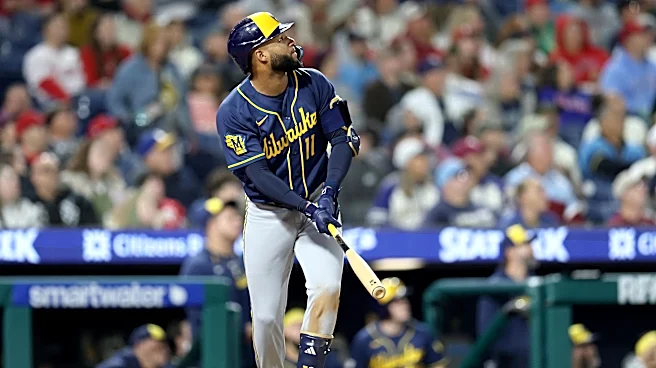
Outfielder Luis Lara, the 21-year-old who made his debut July 7, came up to the majors and immediately began firing, with seven attempts in less than two months.
He was successful on just two of them, a 29% success rate, and just 14% of his challenges were deemed “reasonable.”
The Brewers love Luis, but…
“We took him offline,” Murphy acknowledged. “He can’t get any worse. We’ve got a reverse magnet so if his hand goes near his head it goes away.”
Yet the Brewers contain dualities.
Reserve catcher Gary Sanchez ranks third among all major league hitters in numbers of challenges – 36 – despite playing in just 83 games and receiving 264 plate appearances. (Nos. 1 and 2 in total challenges, Cincinnati’s Sal Stewart and Philadelphia’s Bryce Harper, have 49 and 47 challenges, respectively, in 682 and 675 plate appearances).
Unsurprisingly, Sanchez is well underwater in both overturns vs. expected (-8) and net run value than expected (-2.0). On the other hand, Milwaukee’s Andrew Vaughn has yet to challenge once, in 331 plate appearances.
And Brewers hitters rank last in reasonable challenges taken, at just 14%.
Clearly, there’s a lot for Milwaukee to clean up before October’s bright lights come on.
“Ultimately, it’s being able to apply the situational awareness when it matters and use it in the best way that will keep the offense going or finish the at-bat on the defensive side,” says Brewers catcher Bo Naylor, who spent the first half of the season with the Guardians during their darkest ABS hours. “What are the opportunities in front of you? Is this right, is this wrong, is this the right situation? Should I take a chance?
“So many factors that come into play that don’t make those situations as black and white as they seem.”
Murphy says the Brewers have a rating system – one to five – regarding best and worst times to challenge. Those situations will be writ larger in the postseason, where game conditions will only be magnified.
“As long as you can identify what we call fives – good times to challenge, changing the at-bat,” he says. “But do you change an at-bat with two outs, nobody on in the second inning? It’s kind of identifying leverage and taking a chance there.”
Vogt and the Guardians catchers are proof that units can get better. But time is running out.
“They’ve worked hard at it,” says Vogt. “We dive into it and talk about it all the time and to those two guys’ credit, they’ve been lights out.”
This article originally appeared on USA TODAY: Who challenges umps best? MLB rule change makes playoff debut
Our editors independently choose our recommendations. Some content is produced with paid support from a third party, however our editorial decisions remain independent. If you buy through our links, the USA TODAY Network may earn a commission. Prices and availability may change.