





Democrats have described their huge gains in the Nov. 3 election as everything from a tsunami to a shellacking. But they’re not ready to call it a vote of confidence from the American people.
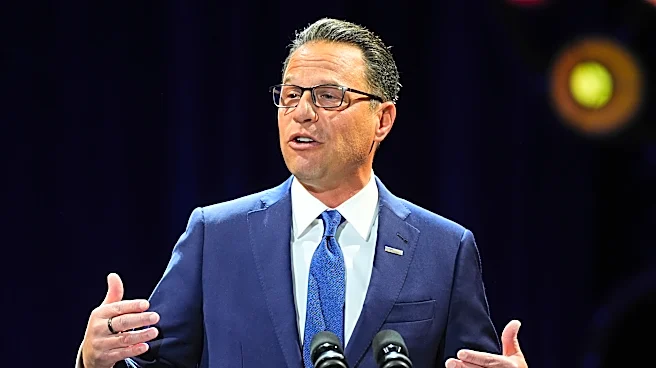
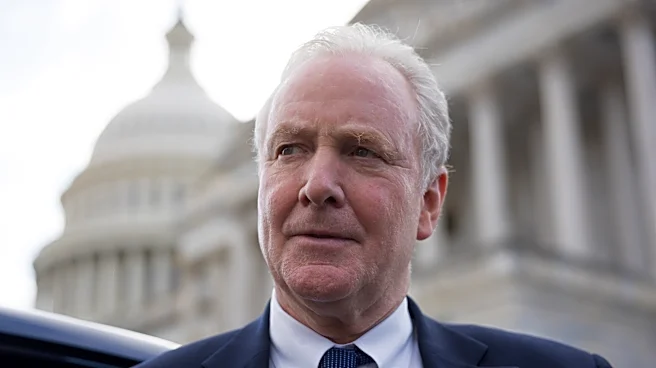
In recent days, Sen. Chris Van Hollen of Maryland said Democrats had been given "a chance." Pennsylvania Gov. Josh Shapiro, whose state will have a Democratic trifecta for the first time in decades, called the results the "beginning of a mandate." And Sen. Ruben Gallego of Arizona warned voters hadn’t written the party a blank check.
"If anything, it is a short-term loan that we need to keep paying, or we will lose it," Gallego said at a Democratic Party gathering in Denver on Nov. 13.
As Democrats prepare to take control of Congress next year, they are grappling
with how best to use the power they’ve gained to expand their majority. The goal, they say, is a 60-seat supermajority in the U.S. Senate and taking back the White House in 2028. Democrats also agree that they must deliver on their promise to make life more affordable for Americans in the next two years if they want to win the public's trust.
In recent days, Democrats have begun publicly brainstorming what that would look like.
There have been calls for the party to move beyond the progressive-versus-moderate fight that has shaped it since the 2016 presidential election, even as Democrats disagree on how to reform health care or the U.S. relationship with Israel.
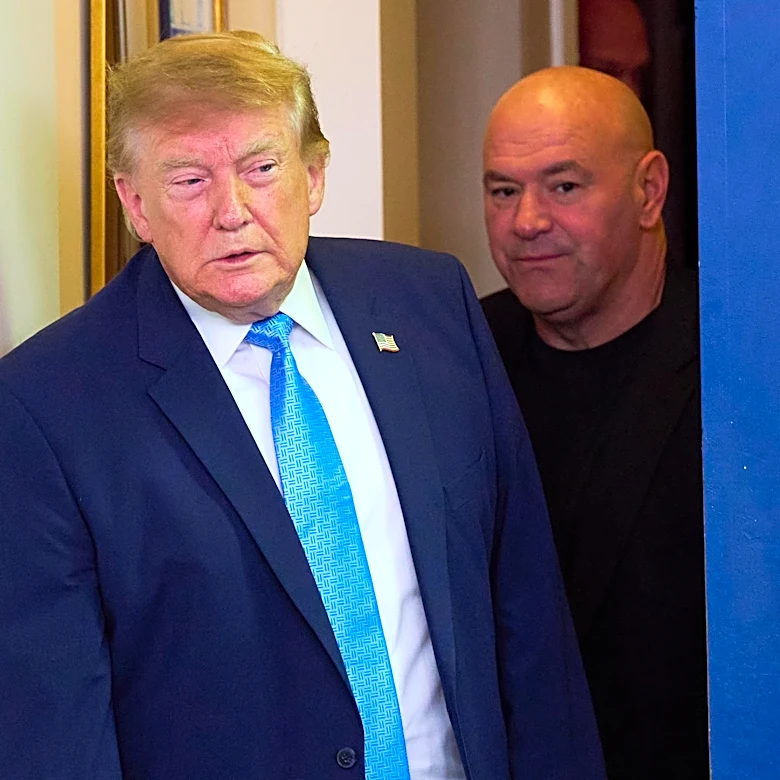
Some newly elected senators have pitched appealing to President Donald Trump's ego if it means getting key legislation signed into law.
And potential presidential candidates have begun workshopping their stump speeches and laying out their vision for a sustained majority that would raise the minimum wage, regulate the artificial intelligence industry and increase the child tax credit.
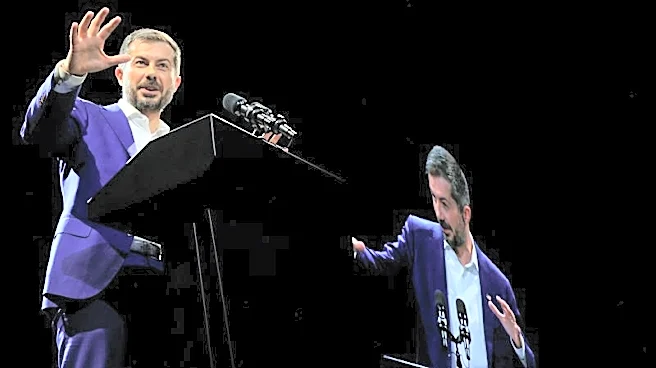
"What just happened, let us be clear, is an opening, not an answer," former Transportation Secretary Pete Buttigieg said in Denver on Nov. 13. "We did not win because America suddenly fell in love with the Democratic Party."
A debate over what’s next
Several members of Congress, governors and potential 2028 presidential candidates traveled to Denver Nov. 12-13 to make their case at "What’s Next," a convening hosted by Majority Democrats, a group of predominantly moderate Democrats who say they’re against the litmus tests of the activist left, the MAGA right and the aging party establishment.
The goal of the Denver gathering was to bring together the people behind some of the party’s Nov. 3 wins – including progressives – to process what happened and think about the future, said Lis Smith, a senior adviser to the organization and an alum of Buttigieg’s 2020 presidential campaign.
"It’s how do we build on everything that we did. And not just in the next Congress, not just in the presidential election, but over the next generation,” Smith told USA TODAY. "Because yes, we had a good election here, but these victories can be very tenuous."
The group has faced pushback from progressives, who argue the future direction of the party shouldn’t be shaped by a group funded by billionaires. Two families – Steve and Sue Mandel and James and Kathryn Murdoch – have invested millions into the organization. Unlike his father, Fox Corporation chairman emeritus Rupert Murdoch, James Murdoch is a Democratic donor.
“It's just kind of jarring, when the main protagonist that led to (the midterm election) victory were the American people, that two mega-donor families would feel like they should decide the direction of that momentum,” Maurice Mitchell, the national director of the progressive Working Families Party, told USA TODAY.
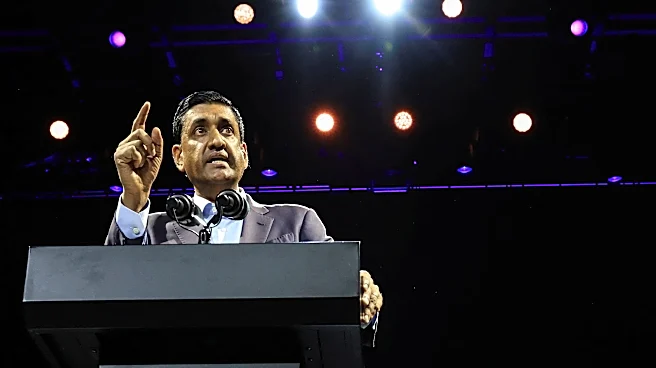
Though the "What’s Next" programming skewed moderate, there was a progressive presence on the ground. Former state Rep. Angie Nixon, a Democratic Socialists of America member who lost a race for a Florida U.S. Senate seat with limited national support, attended the event. Van Hollen, who announced on the first day of the gathering that he was challenging Sen. Chuck Schumer of New York to lead Senate Democrats, gave a speech and spoke with reporters, as did Rep. Ro Khanna, D-California, a potential progressive presidential candidate.
Khanna used his remarks to lay out a laundry list of progressive policy goals, including abolishing ICE, passing Medicare for All, raising the federal minimum wage from $7.25 to $25 an hour and ending aid to Israel.
"I’m all for a big tent, but not a shallow one. A big tent cannot mean that we water down principle for political expediency," Khanna told the audience on Nov. 13. "It cannot mean that we make room for organized money and compromise our purpose to appease donors."
He later said he was surprised by the audience’s enthusiastic reaction at times.
"I thought I’d get booed," he told reporters.

'Tired Washington labels of progressive versus moderate'
As Van Hollen took the stage, someone shouted “leader.” Outside the event’s main stage and smaller side stages, protesters held signs condemning “do nothing” Democrats and called on the party to “chuck Chuck.”
In his remarks, the Maryland Democrat said candidates across the country won on an economic populist message, not the "tired Washington labels of progressive versus moderate."
"We should be making delivering for the American people the single mission of our government, even when that means shaking things up," Van Hollen said. "And that is why I'm running for majority leader in the United States Senate."
The emerging divides are, in many cases, more about strategy than ideology.
One of the major questions facing Senate Democrats is what to do about the filibuster, the 60-vote threshold for most legislation. Progressives have called for eliminating the rule to allow the party to advance its agenda without Republican support.
Van Hollen backs eliminating the filibuster. Schumer, who tried to implement a one-time exception to the filibuster to pass voting rights legislation in 2022, has declined to say where he stands on the filibuster now.
Another brewing debate is over how much to work with Trump. While some have called for sending bills to the president's desk regardless of whether he would sign them, others have proposed trying to find win-win scenarios with Trump.
Sen.-elect Abdul El-Sayed of Michigan has suggested in recent days that Democrats name Medicare for All “Trumpcare” if it would entice the president to sign it. Sen.-elect James Talarico of Texas made waves Nov. 12 when he said in Denver Democrats should make the next two years the most productive of any president in history.
"The American people are demanding change, and in this election they chose our party to deliver it," Talarico said. "We can’t let them down. We can’t play it safe. We can’t get bogged down in the same petty fights. We can’t settle for nibbling around the edges or results people will only feel a decade from now."
It’s not the traditional stance of an opposition party. Ahead of the 2010 midterm elections, Sen. Mitch McConnell, R-Kentucky, famously said his top goal was making Barack Obama a one-term president.
"I say good luck," Tory Gavito, the president of progressive donor network Way to Win, told USA TODAY. "If Talarico and Abdul El-Sayed want to govern to help people, yes, go do that. I'm not sure that it's going to be Trump that helps them get there."
This article originally appeared on USA TODAY: 'A short term loan': Democrats weigh how to ride blue wave into 2028