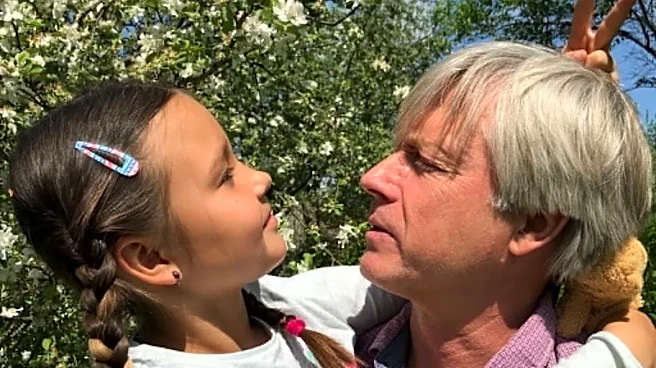






Irina Voloshyna keeps a running list of small Minnesota joys that grows by the week. Fried cheese curds, squeaky and hot from the fryer. The log chute at the Mall of America, the one that soaks you on the final drop. Every food the State Fair can find a way to skewer on a stick.
She has crossed off none of it, and neither has her father. Each line is a promise held in reserve for a girl who isn’t in the United States yet. They won’t touch a single one, she says, not while her 12-year-old sister is still on her own, an ocean away from her family and displaced by a war that has no end in sight. For now, their life is on hold.
"It's not time to enjoy life," Voloshyna, 30, said.
Their father, Valentyn Voloshyn, 57, fled the war in Ukraine in 2023 and
resettled in Minnesota through a federal program that offered Ukrainians a way in. His younger daughter, whom USA TODAY is not naming at the family’s request to protect her privacy, had been approved to travel with him. But at the last minute, her mother, who had custody of her at the time, refused to let her go, the family said.
In the years since, a Ukrainian court has removed his daughter from her mother's care and placed her in his custody, and the family has tried every legal route they could find to bring her to him. The U.S. government turned down her request for humanitarian parole – which grants people temporary permission to live and work in the country – and then refused to reopen the case. A U.S. consular officer rejected her student visa. Inquiries from two U.S. senators and a letter to the White House changed nothing.

The last attempt left the girl stranded in France. In July, she traveled to Paris with a family friend for a student visa interview at the U.S. embassy, planning to stay with the friend’s family for two weeks. The visa was denied, and she never went back. She is still living with them, and in September she started school in a language she does not speak.
"Why can’t I simply raise my own child?" her father said. "All I want is to raise my children in a country where there is no war, where there are no bombs."
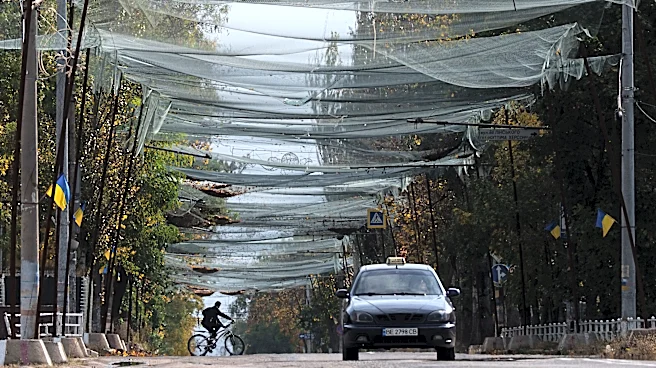
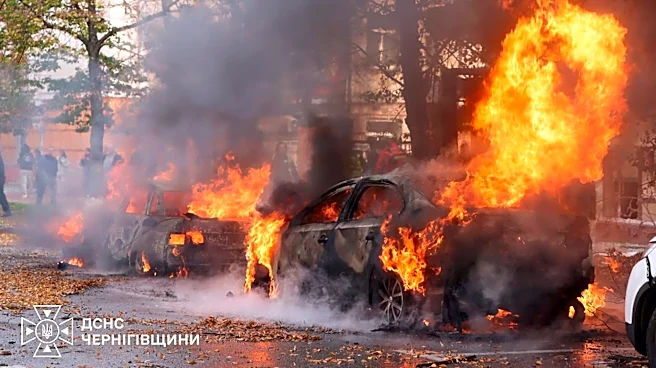
The country the girl left is still at war, and this has been the deadliest year for its civilians since Russia's full-scale invasion of Ukraine began in 2022, according to U.N. figures, with at least 2,570 killed in the first nine months alone. Kharkiv, the family's hometown, has been among the hardest-hit cities this fall. The Trump administration, meanwhile, has stopped donating weapons to Ukraine, pressed its president, Volodymyr Zelenskyy, to make a deal with Moscow and has, at times, openly sided with Russia’s authoritarian leader Vladimir Putin.
The family’s ordeal shows how few legal paths into the United States remain – even for a child whose only custodial parent is already here. Since returning to office, President Donald Trump has rolled back humanitarian protections, cut refugee admissions to a record low and tightened the rules for international students and workers.

"If these circumstances do not justify careful humanitarian consideration, I do not know what circumstances would," Voloshyn said about his daughter.
A child without a safe parent to live with abroad is the kind of case past administrations would have likely admitted through humanitarian parole, said Julia Gelatt, associate director of the U.S. Immigration Policy Program at the Migration Policy Institute. But that temporary permission to live and work in the United States has become far harder to get, she said.
"Parole is granted on a discretionary basis by the government, and certainly, the Trump administration has generally shown itself to be disfavorable towards humanitarian parole," she said.
The Department of Homeland Security and U.S. Citizenship and Immigration Services did not respond to USA TODAY's requests for comment.
'I was in love with my town'
For most of his working life, Voloshyn built houses in Kharkiv, Ukraine's second-largest city, less than 30 miles from the Russian border. In the years before the war, he watched the city repair and remake itself, and on weekends he took his younger daughter out of it, into the hills and onto the slopes.
"I was in love with my town," he said, speaking through his older daughter, who translated for him. "We would go hiking with my little daughter. We would go skiing."

On his own, he raised his oldest daughter after her own mother died. In 2013, his younger daughter was born in Kharkiv to a different mother, who was diagnosed with paranoid schizophrenia and was hospitalized multiple times, according to medical records the family submitted to Ukrainian courts.
"He put all of his priority – all of his attention – towards his children,” his older daughter said, “and we are very blessed, me and my sister, to have him as a dad."
In 2016, Voloshyna left Ukraine to work as an au pair in Minnesota, fell for the country and applied for asylum. Her younger sister was 2 when she left, and they have not been in the same room since. Most of what she knows of her sister has reached her through a screen.
What she knows is a child who paints in her free time and plays piano, who took gymnastics and dance and brings home top marks. A child who loves animals and wants to become an oceanographer, Voloshyna said, "because she thinks that we humans ruin the planet, and she wants to do her best to repair it." A child who gives herself fully to whatever she tries, and whose teachers have told the family they are "amazed by her resilience because she kept her kind heart."

She learned that resilience young. As she grew older and her mother's mental health deteriorated, the girl learned to cook her own meals and get herself to school, her sister said.
"She’s been doing this independent life since very early age," Voloshyna said. "We are not in charge of the things and challenges that we are given in this life. She was unfortunately given this challenge."
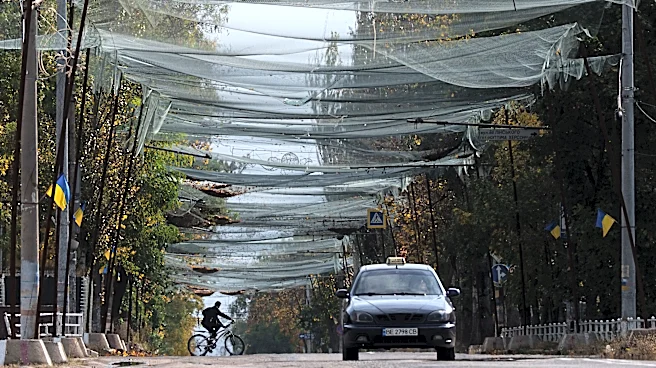
Then, in February 2022, Russian troops crossed the border, and Kharkiv was shelled from the first days of the war.
A house a stone's throw from the family's was destroyed. Southeast of Kharkiv, her paternal grandparents were trapped in the Luhansk region as it fell under Russian occupation. Voloshyna said her grandmother, who could no longer walk, died there this year because of the lack of medical care.
"It’s heartbreaking to watch my hometown of being bombed day after day," Voloshyna said. "The places I grew up with, the streets and buildings that hold my childhood memories, are being destroyed piece by piece. Every new attack takes away another part of the city I once knew."
In April 2022, the Biden administration created Uniting for Ukraine, which let Ukrainians with an American sponsor come to the United States on humanitarian parole. Voloshyna applied for her father and her younger sister, and both were approved, records show.
At first, the girl's mother agreed to let her go, her father said. Then she changed her mind. She took the girl and stopped telling him where they were, the family said, and for about a year they did not know where the child was living.
He put off his departure for as long as his travel permission allowed, hoping to find his daughter before he left. Her authorization to travel expired March 2, 2023. He flew to the United States the next day, alone.
"I want to have a peaceful sky," he said, and the United States "provided that for me, and I was hoping for my children."

For years, he kept fighting for custody in Ukrainian courts, which tend to side with mothers, the family said. He settled in Minnesota, where he is a driver, and he called his daughter every day.
Then, in July 2025, after her mother’s behavior turned violent, Ukrainian officials removed the girl from her care, concluding she was in danger, according to court records. She spent the next year at a girls’ boarding school outside Kyiv, where students slept in the basement during air raids.
In June, a judge placed the child in her father's custody, and her mother did not object.
"I cannot adequately describe the relief I felt," her older sister later wrote. "But that relief was immediately followed by another painful reality. Our father is in the United States."
Every door
Humanitarian parole has been part of U.S. law since 1952. For decades, presidents used it to admit people by the tens of thousands, from Hungarians fleeing the Soviet crackdown in 1956 to Vietnamese escaping war. Before 1980, Gelatt said, "humanitarian parole kind of was our refugee program."
After Congress created a formal refugee system that year, parole narrowed, though presidents still carved out smaller programs, mostly to reunite families. President Joe Biden then expanded it far more broadly, Gelatt said, to help U.S. allies and people fleeing war and to steer migrants away from illegal border crossings and toward legal pathways. More than 200,000 Ukrainians came through Uniting for Ukraine.

Presidents of both parties have leaned on parole and other temporary protections to fill gaps Congress has left in immigration law for decades, said Dara Lind, a senior fellow at the American Immigration Council, a nonprofit research and advocacy group.
"In the aggregate, you are giving people short-term protections and continually not putting anything more stable in place for them," Lind said.
On his first day back in office, Trump ordered an end to the humanitarian parole programs created for specific nationalities, including Ukrainians, Afghans, Cubans, Haitians, Nicaraguans and Venezuelans, which together brought in hundreds of thousands of people fleeing war and upheaval. Congress, the administration argued, meant parole to be granted one person at a time.
Humanitarian parole itself is still on the books, decided at immigration officers’ discretion under standards the government doesn’t publish. Yet, in the first nine months of this fiscal year, USCIS approved 136 requests from people abroad and denied 1,712. More than 32,000 petitions remain pending, according to the agency's data.
In April, Voloshyn filed a humanitarian parole petition for his daughter, backed by about 120 pages of evidence. A lawyer called it "a humanitarian parole case, 10 out of 10 strength," his older daughter said.
Two months later, USCIS denied it. In a two-page letter, the agency said Voloshyn had "failed to establish, by a preponderance of the evidence, that there are urgent humanitarian reasons or significant public benefit reasons that would justify a favorable exercise of discretion." It did not explain what was missing.

The family asked the agency to reopen the case. In September, USCIS dismissed the request because it "does not establish new facts." The notice misspelled the girl's name and gave the year of the original denial as 2022.
"It’s so hard in an individual case, especially where the government isn’t explaining itself, for us to kind of figure out why that might be," Gelatt said.
The family tried another way in. A Catholic boarding school in Winona, Minnesota, offered the girl a seventh-grade spot and a $30,000 scholarship. In July, she traveled to Paris for a student visa interview, and a consular officer turned her down, writing that she had not shown "the ties that will compel you to return to your home country." At the embassy, her father said, the family was told "this is an immigration case."
Her older sister wrote to congressional offices across the country, and most said the case was outside their districts. The offices of Minnesota’s two senators, Democrats Amy Klobuchar and Tina Smith, opened congressional inquiries – or formal requests that ask a federal agency to review a constituent’s case and report back. Such inquiries can prompt a closer look, but they cannot force a decision. The family also appealed to Sen. Chuck Schumer, D-New York, and the White House, which sent back a form letter.
"I have not yet found the strength to tell my daughter that she was denied," Voloshyn wrote to Schumer in July.
Still waiting
Each morning, the girl sits in a French classroom where she understands almost nothing. She started school there this fall, living with family friends who had agreed to keep her for two weeks.
"She’s a true warrior," her sister said. "I am melting down here talking and I’m being very emotional, but she never ever complains about anything."
Still, the strain shows. When Voloshyna suggested piano lessons at a local music conservatory that holds recitals throughout the year, the girl gently said no.
"Well, everybody’s parents are going to be there," she told her sister.
In Minnesota, her father spends his days behind the wheel as a driver, sometimes for 12 hours at a stretch. All of it, he said, is for her. For the lawyers and the embassy fees. For the next application and the one after that. For the promise he made to a girl he has not held in more than three years.
"We are not giving up," he said. "She has a father who loves her, who is ready to raise her, protect her and provide her with a safe home."

Watching him has been its own kind of grief, his older daughter said.
"It's like half of his heart was removed," Voloshyna said. "It's breaking him apart since the moment it started."
Neither of them can leave and go to her. His humanitarian parole would end the moment he departs the United States, and with Uniting for Ukraine closed, lawyers have told him, he would almost certainly have no way back in. If his older daughter leaves, she gives up the asylum case she has waited on for years.
So the girl's father and sister are starting over. They are preparing another request for humanitarian parole, to the same agency that has turned them down twice, and searching for a lawyer willing to take the case.
Now, on every holiday, on every star, on every eyelash that falls from her eye, Voloshyna makes the same wish. She pictures dinner, the three of them at one table, her sister at the piano.
"I play flute," she said, "so we can play together."
Until then, the list keeps growing.
This article originally appeared on USA TODAY: She’s 12, separated from her dad by war. US says it’s not urgent