





For a few months each year, the Milky Way's center becomes one of the most stunning cosmic displays visible to us here on Earth.
But time is running out in 2026 to see the stunning band of hazy light known as the galactic center arcing across the night sky.
Fortunately, the Milky Way should still be relatively easily visible for a few more weeks across the United States – and the rest of the northern hemisphere. Keep in mind, though, that we're officially reaching the end of what's often referred to as "Milky Way season," when the billions of stars that call our galaxy home are the most bright and vibrant.
The good news? You don't need fancy telescopes or equipment to view the cosmic phenomenon− just your eyes, dark skies and maybe a camera, if
you're into astral photography.
Here's everything to know about our Milky Way, including how to see the stunning natural phenomenon.
What is the Milky Way galaxy?

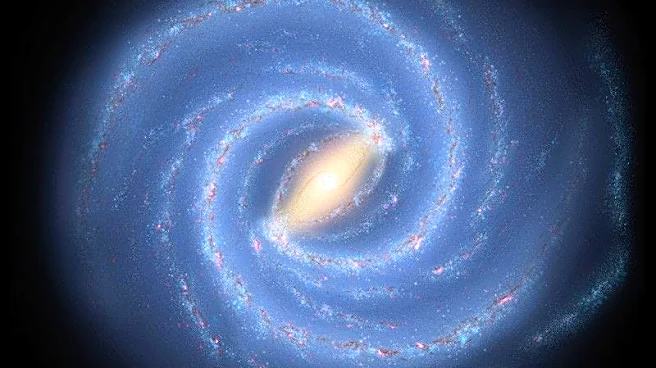
The Milky Way is our home galaxy with a disc of stars that spans more than 100,000 light-years. Because it appears as a rotating disc curving out from a dense central region, the Milky Way is known as a spiral galaxy.
Our planet sits along one of the galaxy’s spiral arms, about halfway from the center, according to NASA.
The Milky Way resides in a cosmic neighborhood called the Local Group that includes more than 50 other galaxies. Those galaxies can be as "small" as a dwarf galaxy, with up to only a few billion stars, or as large as Andromeda, our nearest large galactic neighbor.
Why is it called the Milky Way?
The Milky Way got its name because from our perspective on Earth, it appears as a faint, milky band of light stretching across the sky.
When is Milky Way season?
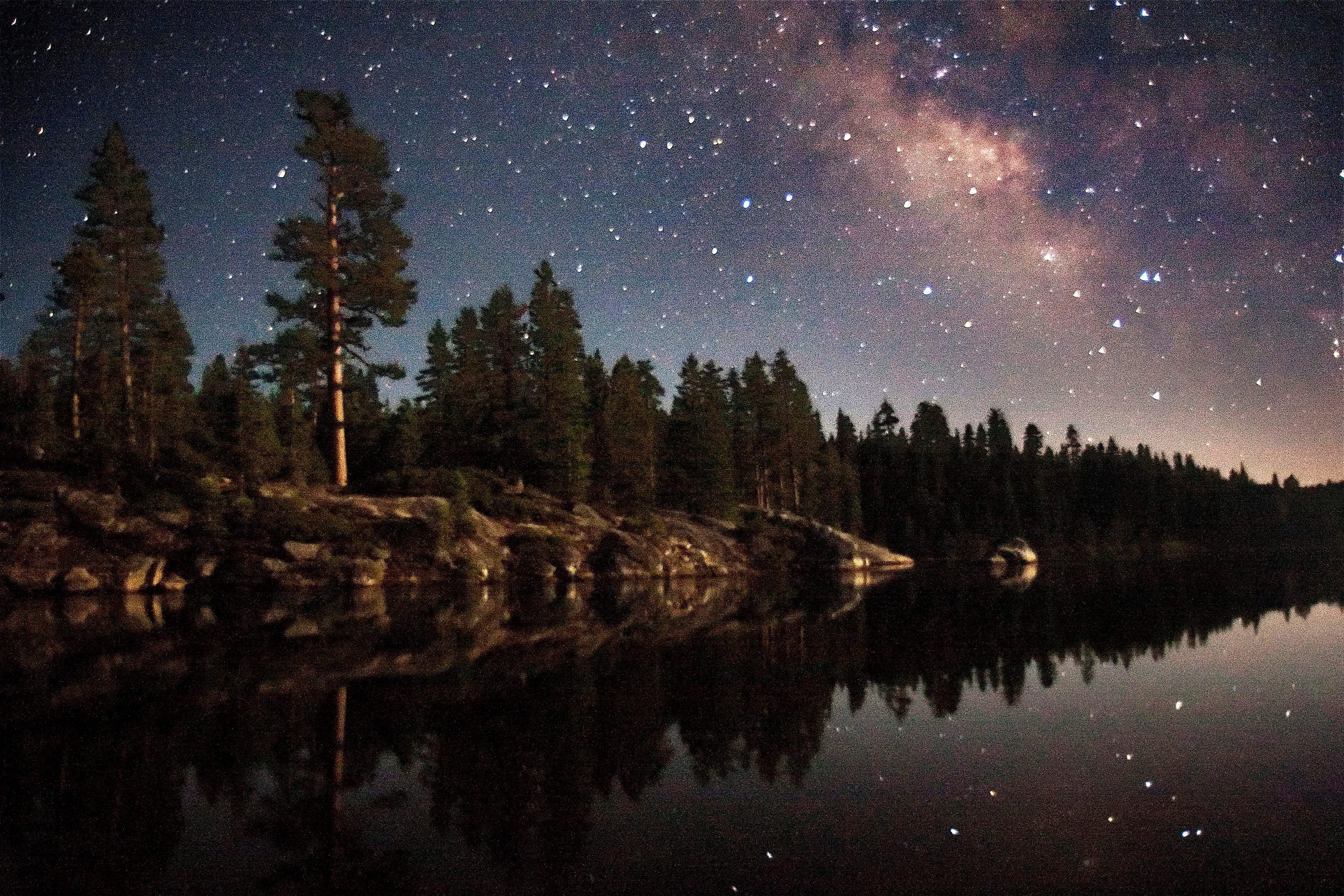
Though the Milky Way is generally always visible from Earth, certain times of year are better for stargazers to catch a glimpse of the band of billions of stars.
"Milky Way season," when the galaxy's bright center becomes easier to see from Earth, typically runs from February to October, according to the Milky Way photography website Capture the Atlas.
But because visibility from Earth depends on the latitude, the further south you go, the longer the Milky Way season will last. In the Northern Hemisphere, which includes the continental United States, the best time to see the Milky Way is generally from March to September, according to Capture the Atlas.
What is the galactic center?
What you're looking at when the Milky Way is visible is the bright center of our galaxy, "seen edge-on from our position within the galaxy's disk," Preston Dyches, who hosts NASA's "What's Up," a monthly video series that describes what's happening in the night sky, wrote in June 2025 for NASA.
September may be prime time to find center of Milky Way
The center of the Milky Way, which Dyches refers to as "the core," is best visible beginning in June across the Northern Hemisphere, when it's "visible as a faint band of hazy light arching across the sky all night."
In September, the Milky Way may be best seen in the middle of the month, when the moon is less bright (more on that below).
What time of night is the Milky Way visible?
The Milky Way is generally visible from sunset to sunrise, or when it's darkest outside, according to Capture the Atlas.
Typically, the sky is darkest from about midnight to 5 a.m. You can check sunrise and sunset times at your location using the website TimeAndDate.
"This doesn’t mean that as soon as the sun goes down you can see the Milky Way," writes Dan Zafra, co-founder of Capture the Atlas. "Even if it’s in the sky, the Milky Way will be barely visible during blue hour, so you’ll have to wait at least until the end of the astronomical twilight to see all the details of the Milky Way."
But the time of year can also influence when people have the greatest chances of seeing the Milky Way at its best. And between September and October, the Milky Way is best seen in the evening.
New moon phase ideal for Milky Way viewing
While the moon can help illuminate the landscape, too much light reflecting off Earth's natural satellite will drown out the billions of stars lighting up the Milky Way, according to Capture the Atlas.
Following a new moon on Sept. 10, the moon has been in a waxing crescent phase, with just a thin sliver of it illuminated each night as it grows daily, NASA explains. Between Monday, Sept. 14, and Thursday, Sept. 17, the moon will be between 13.6% and 38.7% full, according to the Old Farmer's Almanac.
That should give skywatchers some ideal evenings to search for the Milky Way's center before a full harvest moon rises Sept. 26.
How can you see the Milky Way? Find a dark sky location

Between Sept. 14 and 20, a celestial feature known as the teapot may help guide spectators to the Milky Way, according to NASA's monthly skywatching guide.
If you can find the moon in the southern evening sky, it'll be passing near Antares, a reddish star at the heart of the constellation Scorpius. Nearby in the neighboring Sagittarius is a group of stars called "the teapot" that got its name because it appears to have a handle, lid and spout.
Those under dark skies can follow a "hazy steam rising from the teapot's spout" to a thick area that is the center of our galaxy, according to NASA.
Spectators will have the best luck at dark sky locations on cloud-free nights and away from city light pollution. DarkSky International maintains a website that lists all designated dark sky communities around the world, including 178 locations in the United States.
Eric Lagatta is the Space Connect reporter for the USA TODAY Network. Reach him at elagatta@usatodayco.com
This article originally appeared on USA TODAY: Time is running out to see the Milky Way's brightest display in 2026