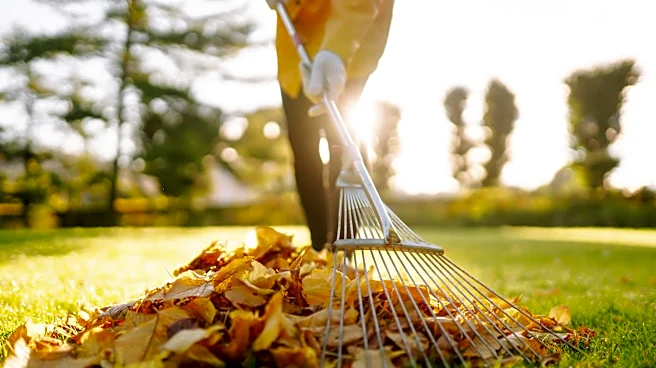






With Thanksgiving around the corner, much of the United States, especially the upper parts of the country, has already experienced peak foliage, which means the leaves have made their way from the trees to the ground below.
While the first instinct may be to clear the leaves and toss them in the garbage, experts recommend leaving fallen leaves where they land. According to the National Wildlife Federation (NWF), leaving fallen leaves on the ground can benefit wildlife and your garden.
"The fallen leaf layer isn’t just a happy reminder of autumn, it’s also a vitally important habitat element for many wildlife species throughout the year," the NWF states in its "How to Leave the Leaves" guide.
However, the NWF suggests raking leaves off sidewalks,
driveways and turfgrass to use in garden beds as natural mulch, or adding them to a compost pile, noting that the practice will help maintain a tidy look.
Here's what to know about raking leaves sustainably and helping the environment.
How do leaves help the yard?
Leaves are rich in nutrients that can be recycled into your lawn, according to a 2023 article from the University of Wisconsin-Madison's horticulture department. The NWF notes that leaf layers that are 3-5 inches thick can serve as a "wildlife habitat and weed suppressant, while also composting down into nutrients for your plants."
While both organizations recommend leaving fallen leaves and letting nature take its course, they also advise managing the leaves to avoid hazards.
"If you have just a few leaves, such as 20% of the lawn covered, you can just ignore them," UW–Madison's article states. "They will blow around, settle in, and break down on their own."
Even if you have a moderate amount of leaves, such as 50% coverage, you still don't need to rake; however, it might be a good idea to run your lawn mower over them to chop them into smaller pieces so they can settle between grass blades, where they will decompose over time and release nutrients for your lawn to use next year.
If you have a thick layer of leaves where you can barely see any grass beneath, the department suggests removing some to prevent matting and smothering of the grass. "Rake or otherwise remove at least half of them," the article states.
Can I mow my leaves instead of raking them?
It depends mostly on how many trees you have in your yard. If a small amount of leaves has fallen in your yard, shredding them with a lawnmower helps them decompose faster and promotes absorption into the soil.
But if you have many trees and a lot of leaves, it may be better to gather them in one place to decompose. According to the NWF, piling extra leaves in a corner and leaving them will turn them into leaf mulch, which makes an "incredible compost" for your garden in the coming seasons.
If you try to mow too many leaves at once, the mower might be taxed and not shred the leaves properly, Lou Meyer, a business developer for the Davey Tree Expert Company’s mid-Atlantic region, previously told USA TODAY.
The NWF recommends avoiding gasoline-powered lawnmowers and leaf blowers, if possible, since they greatly contribute to pollution.

When you should rake your leaves
You should pick up leaves in your yard if your trees have had serious foliar fungal diseases, according to UW-Madison.
"While most leaf spots on leaves are cosmetic and harmless to the overall health of the tree, fallen diseased leaves do serve as a source for spores that can infect next year's emerging leaves," the horticulture department said.
Significantly diseased leaves should be raked and removed from the area and disposed of properly, such as by burying, burning where allowed, or hot composting, according to UW-Madison.
Avoid throwing leaves in the trash, if possible
The NWF says if you do decide to get rid of your leaves, don't throw them in the trash.
"Leaves and other organic yard debris make up over 7.2% of the nation’s solid waste," the foundation says. "That’s over 10.5 million tons of organic matter that could otherwise be used as fertilizing wildlife habitat."
Additionally, foliage in landfills breaks down in anaerobic conditions and produces methane, which is 28 times more potent than carbon dioxide at trapping heat in our atmosphere, according to the NWF. Landfills are the third-biggest source of methane pollution in the United States.
Though the decision to collect fallen leaves is ultimately up to each individual, a 2024 NWF survey of about 1,500 people across the United States found that 90% of respondents were willing to leave or repurpose the leaves in their yard to help the environment.
Contributing: Gabe Hauari, Fernando Cervantes Jr. / USA TODAY
Saman Shafiq is a trending news reporter for USA TODAY. Reach her at sshafiq@usatodayco.com and follow her on X and Instagram @saman_shafiq7.
This article originally appeared on USA TODAY: Drop the rake and leave your leaves alone. Experts say why