




Baseball spent the last three days running like Facebook marketplace.
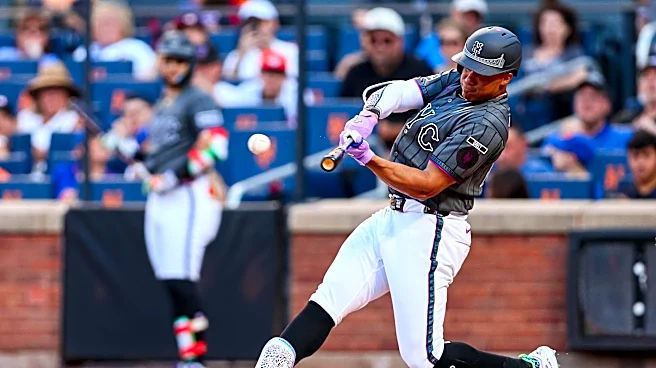
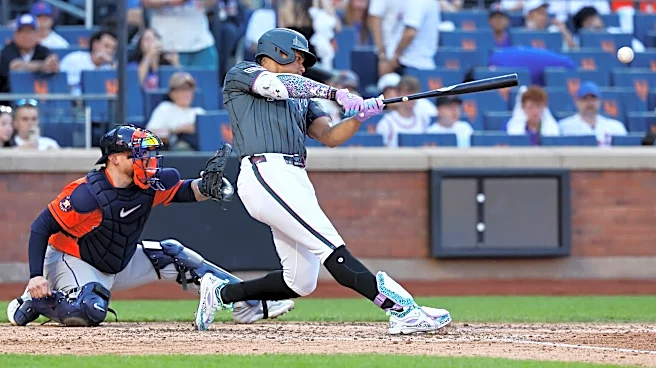
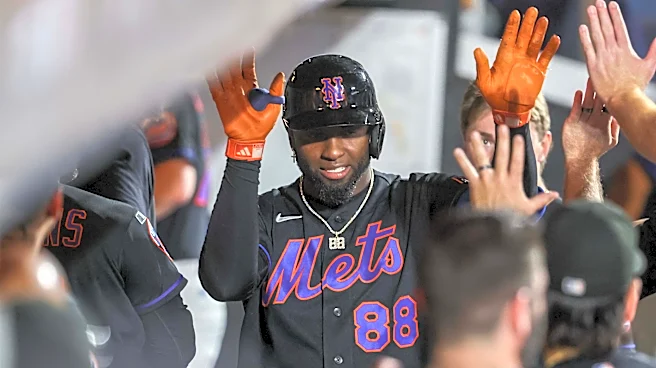
Luis Robert Jr. sold. The Mets put the center fielder on waivers Saturday, essentially putting an ad out for the other 29 teams to let them know he was available. By Monday afternoon he was an Oriole. New York gets nothing back except salary relief and a waiver fee. No prospect, no draft pick, not even cash considerations. The Mets are just happy they are out from under the $3 million left on his deal.
Eugenio Suarez and TJ Friedl did not sell.
Cincinnati put both on waivers last week and told the other 29 teams they could have either one for the cost of their salary. Friedl's cost about $700,000. Nobody bit. He is still a Red, So is Suarez. And everybody knows the Reds were
willing to give them away.
Welcome to waiver claim season.
Nearly a month after MLB's official trade deadline, teams are looking for depth and potential at little cost and risk. They have been perusing the waiver wire like a marketplace for nearly a month. Monday was the last day that they could make a move and have it matter in October.
So, here's what's happening.
Wait, didn't MLB say the trades were over Aug. 3?
They are. Since 2019 there has been no such thing as a trade after the deadline. MLB changed the trade deadline and eliminated the waiver trades in August 2019.
A waiver claim is not a trade. It's a giveaway with a receipt. A team puts a player on outright waivers, the other 29 teams are told he is available, and any of them can have him by agreeing to pay what is left on his contract. Nothing goes back to the original team beyond a $50,000 waiver fee.
No haggling. No prospects. Take him or leave him.
Who gets first dibs?
The worst team in baseball gets first dibs. Waiver priority runs in reverse of the standings, so the club with the uglier record picks first, and then if there are two really bad teams vying for a player, last season's record breaks ties.
Being bad is one of the few things baseball rewards immediately. But bad teams rarely make waiver claims.
These claims are also final. A team cannot float a player, see who bites and pull him back like they used to do. That loophole closed in 2019. Put him on waivers and he is gone if he is claimed.
Why would a team give away a player?
Money, mostly.
A club going nowhere, like the Mets, is paying a veteran to finish out a lost month. Handing him to a team vying for a spot clears salary and opens the roster spot for somebody the team plans to keep.
It usually suits the player too. He gets a pennant race instead of a countdown to his offseason tee time.
Some claims are strategic. A contender can take a player it has no intention of using in order to keep him off a rival team.
What happens if nobody claims a player?
He goes back to his locker, knowing the team was willing to give him away. And he is waiting for the other shoe to drop.
That's Suarez and Friedl right now. Unclaimed players stay put, and their teams can send them outright to the minors, though veterans with enough service time can refuse that and take free agency instead.
Why is there a flurry of moves on Aug. 31?
It's the last hours before the deadline that really matters.
To play in October, a player has to be in the organization before the Sept. 1 cutoff. MLB's rules draw the line on being on the 40-man roster or on the 60-day injured list. Players like Luis Robert Jr. and Tommy Pham, who was claimed by the White Sox from the Phillies, are eligible for October.
A claim takes about 48 hours to clear, so anyone hoping to dump salary had to file by the weekend. Saturday, Robert and Royals reliver John Schreiber were put on waivers. Monday, Robert is now an Oriole and Schreiber was claimed by the Yankees.
This article originally appeared on USA TODAY: Why MLB contenders are getting players for nothing after the deadline