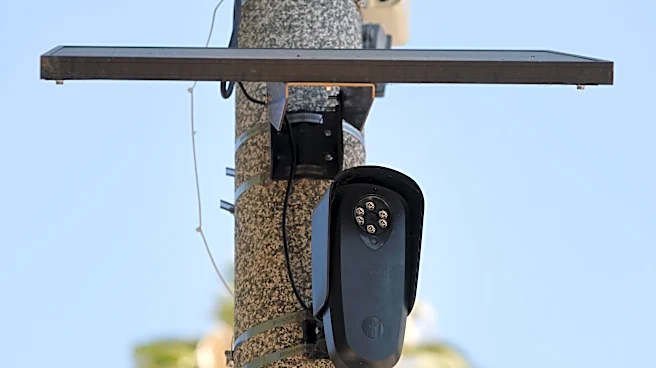




On the Friday, September 4, 2026, episode of The Excerpt podcast: Flock cameras can help police find stolen cars and missing people, but their searchable location data can also be misused. USA TODAY Investigative Data Reporter Austin Fast joins The Excerpt to share how USA TODAY reporters identified troubling searches and what happened after law enforcement agencies were contacted about them.
Hit play on the player below to hear the podcast and follow along with the transcript beneath it.
This transcript was automatically generated, and then edited for clarity in its current form. There may be some differences between the audio and the text.
Podcasts: True crime, in-depth interviews and more USA TODAY podcasts right here
Dana Taylor:
USA TODAY analyzed
more than 75 million searches of Flock license plate reader data and found patterns suggesting misuse by dozens of law enforcement personnel. Following our investigation, at least 19 employees were arrested, fired, suspended, placed on leave or investigated. The findings raise a larger question though, do the benefits of this technology justify the risks?
Hello and welcome to USA TODAY's The Excerpt. I'm Dana Taylor. Today is Friday, September 4, 2026. USA TODAY Investigative Data Reporter Austin Fast is here for a deeper look into the investigation. It's so good to have you here, Austin.
Austin Fast:
Yes, thank you for having me back.
Dana Taylor:
So briefly, how do Flock cameras work and how do they become so pervasive?
Austin Fast:
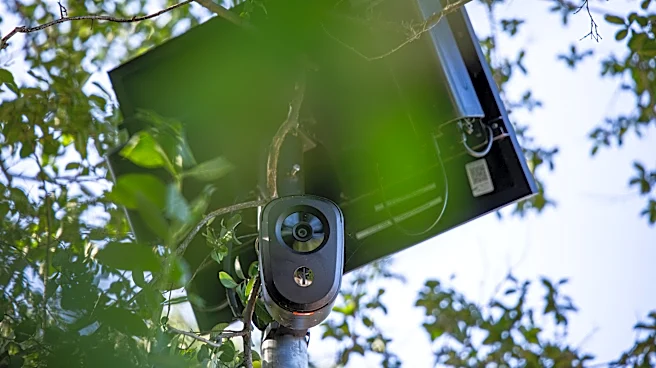
So Flock cameras, they work by capturing the make, model, and the license plate of every single car that passes by them, and then they feed all that data into a giant searchable data set. And so the users of Flock, which in a lot of cases are law enforcement agencies, there's some private companies that also use it as well, but they can search for the license plate or they can even type in things that are just free text searches, things like a white Chevrolet truck or a state. And so it'll return back hits for those license plates and tell exactly where those cars were seen and when they were passing the cameras. And so Flock was founded less than a decade ago, but it spread really quickly. So that's in almost every state across the country at this point. There are over 100,000 of these cameras across the country.
And so part of the reason it spread so quickly, especially over the past few years is that, I mean, think about it's just really attractive to police and sheriffs to, they only have a certain number of employees, there's budget cuts and constraints everywhere, and this just gives them another tool in their toolbox to track stolen cars or help find missing persons or kidnap cases. And so it's really attractive in that sense. And then they're also easy to install and maintain. So a lot of pros going for them if you were in law enforcement.
Dana Taylor:
What first made you suspect there was a larger story hidden in these Flock audit logs?
Austin Fast:
So we have at one of the USA TODAY network's papers in Florida, we have a reporter named Jack Lemnus who had requested these audit logs from a local police department there in Florida. And so let me just explain a little bit about the audit logs and what they are. So I mentioned that police could search the things they could search by. All of those things, those searches are supposed to be recorded into these audits. And so the agency should be able to see who is searching, what they're searching, when they searched, all those things. And so in some states, those are public records.
And so he requested them from that local law enforcement and did a couple stories about police who were tracking anti-Trump protestors really instead of crimes. And so that data that he got back as he was looking at it, he realized it wasn't just that one local agency. The audits actually capture every other police department that has searched that agency's data. So it's actually thousands of police departments. If they had searched that particular police department in Florida, it was in those records. And so we realized that there's a national story here. It's not just something that affects Florida.
Dana Taylor:
Well, as I mentioned, you analyzed more than 75 million Flock searches. How did you separate legitimate police work from behavior that looked suspicious?
Austin Fast:
Yeah, so as I mentioned, we got those records from Florida. And then as I continued to research Flock, I found that there's tons of other journalists and even activists across the country who have asked for those same type of records from their local police departments or sheriff's offices or state highway patrols, whoever it may be. And many of those are available on a website called muckrock.com, which is something that's used by a lot of journalists to file public records requests and they make it available for anyone on the internet to see. And so I was able to download over 120 of those records requests to different agencies in states all over the country. And so from those, I assembled them into one giant data set and there were a lot of duplicates in there because these were for the same time periods. And like I said, agencies can query the data from other agencies.
And so there were some duplicates in there that needed to be removed. But in the end, it represented, as you said at the very start of our conversation, about 75 million unique searches of Flock for people's cars. And so after that, it was really just counting up, looking there to see, how many times did each user search each license plate in the data set? And so as a way to figure out whether it was legitimate use or suspicious, I created a frequency score, which would help us try to pinpoint which ones seem a little bit more suspicious than others. And so the way that that worked was I gave points based on the count of searches, the number of different days that a user was searching for a plate, and then also more points if that user was the only person who was searching the particular plate.
So the thinking is, if there's multiple officers searching a car, then it's more likely to be legitimate police work because there's five, six officers searching for one car compared to if only one person is searching it obsessively over a period of weeks or months, that's more of a red flag. And so that's how the score worked. And so once we designed that, we found hundreds of officers who had searched the same plate for months, sometimes even years, and some of those counts reached into the thousands of times that they were searching for just a single plate. And in a lot of these cases, we found that the reasons they entered for the search were vague. It was just something like, "investigation". Or for example, there was an officer outside of Cleveland, Ohio who used the reason "plate" and "tag" while he searched for the same car over 3,700 times with the only reason being "plate" or "tag".
And then another example I'll give you is a police department outside of St. Louis where the same officer searched a plate over 1,200 times and the reason was always "test", which in my opinion, it's a whole lot of testing to do it 1,200 times on the same license plate. And just to give away the ending in that case, that particular agency canceled its Flock contract immediately after we asked them about that officer.
Dana Taylor:
I want to get a sense of the scale, Austin. When did you realize you were looking at something bigger than just a few bad actors?
Austin Fast:
Well, number one, the sheer number of officers. I mean, I mentioned the frequency score, and so just the number of officers that were pushed to the top of the list that were scoring so high in that metric that we created. So our database revealed there were hundreds of officers who searched the same plate hundreds of times over many months, often with little description of why they were searching. And so we realized that it's not just one or two, there's a lot of people here that have kind of suspicious patterns going on. And now, of course, we can't know for certain whether that's legitimate use or suspicious because there are some cases where they may be tracking the same car over a period of month and it does have a legitimate law enforcement use. And so we had to reach out to the law enforcement agencies to say, "We've been looking at this. We see this person is searching this plate 3,700 times. Can you explain why?"
And in many of these cases, as soon as we asked, the agency was putting out a press release the next day that the person was being investigated or charged with a crime. And so our data's really just the tip of the iceberg. Even though we had 75 million unique searches, most of that is redacted and we couldn't even use it because either the name of the officer was redacted or the license plate was redacted. And so our data is really just the tip of the iceberg, and we know that there has to be other examples in there that we just can't find because of the holes in the data.
Dana Taylor:
I want to turn now to the people at the center of one of these cases. Tell me about Billy Taylor, LeAndra Higginbotham, and Heidi Taylor.
Austin Fast:
Heidi Taylor was near the top of our list because once we did that analysis, we realized that she had tracked a plate over 1,200 times, but it is very difficult to figure out who a license plate is registered to, because imagine in a hospital HIPAA, it's considered private information and legally protected. And so it was very difficult in some of these cases to track down, who are the targets of these law enforcement searches? And so the way that we tracked down Billy Taylor is that we were looking through parking ticket database and cities around where Heidi Taylor worked, and we happened to find a plate that matched the one that she had searched 1200 times. And that parking ticket showed it was registered to Billy Taylor. And so clearly you see the last names match. That seems a little bit unusual. Then we found the court records.
They had just filed their divorce papers. So it turns out that she had been searching her then husband leading up to a divorce. And so we were able to track down Billy. We talked with him and found out that he and Heidi had separated back in November 2024, which is right in the middle of when our data showed that all those searches were happening. And so shortly after that, he started dating a new girlfriend. Her name is LeAndra Higginbotham. And suddenly, they tell us that Heidi kept showing up all over. They'd be at restaurants eating or Heidi would show up at the hospital where LeAndra works. There's even a property in Alabama. Now they live in Georgia. And so there's a property quite far away in a different state where Heidi would show up when they would be there and they just thought, "How in the world is she doing this?"
And it turns out it was because she was tracking them through Flock searches at all hours of the day. And so once we talked with Billy, we realized it wasn't just that one license plate that we had searched, which was Billy's work van, but it turned out it was also his pickup truck and LeAndra's cars were also being frequently searched by Heidi. And so altogether she tracked their cars over 2,600 times over a period of about 10 months.
Dana Taylor:
Austin, you noted that USA TODAY contacted the Dallas, Georgia Police Department about Heidi Taylor's Flock activity on July 6th. What happened then?
Austin Fast:
So the very next day, the Dallas Police Department then asked the Georgia Bureau of Investigations to step in, and Heidi Taylor was arrested a few weeks later on August 12th, and she was charged with two counts of misusing a license plate reader. And then a week after that, LeAndra Higginbotham, who I mentioned is Billy Taylor's new girlfriend, she filed a restraining order against Heidi Taylor writing that she was scared of what Heidi might do in desperation after being arrested.
Dana Taylor:
Austin, what's striking is that some agencies only acted after you reached out to them. You wrote that almost immediately after USA TODAY reporters asked about their officers' irregular Flock usage, at least a dozen law enforcement agencies launched internal investigations. What does it tell you about existing oversight?
Austin Fast:
So it proves that many of these agencies, I mean, they adopted this extremely powerful new technology quickly, but some of them, they're not always closely monitoring its use. Now, many of the agencies we reached out to are really small, like Dallas, Georgia is not a big city. It's a small town and a lot of small town law enforcement agencies, like anything else, they have fewer resources. And even I found out as I was reaching out to some of these smaller agencies that I had to explain to some of the police chiefs how they could access the audit log data that I was referencing. They weren't familiar with the system itself to even go in and do that type of oversight, but not all the agencies have that excuse. I mean, for example, Houston, Texas is the fourth-largest city in the country, and both its police department and the county sheriff's office there immediately opened investigations when we asked them about their officer's Flock use. And so turns out that both small towns and giant cities are not overseeing this as closely as they should.
Dana Taylor:
This story stretches beyond how some in law enforcement abused this tool. Flock has also changed its audit logs. What information is now harder for the public and outside agencies to access?
Austin Fast:
Yes. So an investigation like ours where we looked at these network audit logs for years in the past, it's going to be impossible going forward because of changes that Flock has made to those records. So starting this year in January 2026, they started redacting the network logs, which they show a police department the names of the officers at other agencies who are searching its data. So I'll take Houston since I just mentioned that. So say the police chief in Houston, he can look at the audit log and see only what his officers are looking at, not what the Fort Worth police might be looking at or the Texas Rangers, what they might be looking at. He can only see what his own officers are looking at rather than, what had been happening before is that it was all available. And so Flock is redacting that going forward. They say it's to protect active investigations, but the broader effect is that it really restricts the ability to know who is looking at plates across the country. And so like I mentioned before, repeating this investigation would be much harder for some other reporter going forward.
Dana Taylor:
Flock cameras are now woven into policing across the country. How has Flock responded to the misconduct your investigation uncovered?
Austin Fast:
So we did get a statement from Flock when we asked them about our findings in this investigation, and they said that any officer abuse of the Flock system is completely unacceptable and the people that abuse the system should be held accountable. And then separately, they've had what they call an audit assistance tool for a while, and the point of that is to flag people abusing the system. But starting in August of this year, they've made it mandatory going forward that every customer of the Flock system will have to use this going forward. And so it should detect any abnormal search activity and shut off the access for that user until someone in that agency can review the use. They declined to explain exactly how the tool works, but based on that, it sounds like they're going to do something pretty similar to what we have been doing in our investigation, looking for officers who were searching the same plate over and over over a long period of time.
And then additionally, Flock has started requiring its users to enter specific case numbers or offense types that are associated with each search that they're running. So putting in something just like "investigation" or "plate" or "tags", those very vague reasons that I mentioned earlier in our conversation, those things won't fly anymore. And some of the law enforcement agencies that we contacted through our investigation, they said that the audit assistance tool actually helped them identify misuse already this summer, but this tool does have a limit. It turns out it'll only go back to January of this year. And so we found a couple cases where our data, which goes back to 2023, showed that that particular case of abuse was actually going back further before January of this year. And we were able to say, "No, this officer was not just doing it since January, they've been doing it for over two years." And so there is a limit to this new tool.
Dana Taylor:
Austin, after spending so much time analyzing so much data and speaking to people whose lives have been impacted by Flock cameras, what was your biggest takeaway?
Austin Fast:
So for me, the biggest takeaway is that as a country, we talk so much about political division and it's just been really stunning to watch the public outcry to an interest in Flock cameras, particularly toward the end of this summer. I mean, people, whether they're liberal or conservative or whatever stripe of life they're coming from, I feel like a lot of people don't like to feel like they're living in a police state. They don't like it when officials abuse power they're entrusted with. And so it's just been fascinating to watch people speaking up from all sides.
And so just to echo what I said earlier in one of the questions you asked, I mean, this incredibly powerful technology was adopted so quickly nationwide, and really a lot of people didn't realize there was little scrutiny when the contracts were being signed and people are just now realizing how widespread it is and it's in their communities and it's all over their towns as they're just running around getting groceries, taking kids to school or sports events, whatever. And so I hope now that our investigation has spread some light on the potential for abuse and hopefully those officials that we've entrusted with access to it are going to think twice before they choose to abuse it going forward.
Dana Taylor:
It's truly eye-opening. Austin Fast is an investigative data reporter for USA TODAY. Thank you so much for sharing your reporting and your insights here, Austin.
Austin Fast:
Absolutely. Thank you for having me.
Dana Taylor:
Our stories come from USA TODAY journalists across the country. I'll be back with a deeper look into a story that matters. I'm Dana Taylor. Thanks for listening.
This article originally appeared on USA TODAY: Who can track your car with Flock camera data? | The Excerpt