




Growing nationwide opposition to data centers is emerging as a wedge issue benefiting Democratic candidates in key red states that will determine control of the Senate.
Democrats need to appeal to Republican voters in states such as Ohio, Texas and Iowa, which President Donald Trump carried by double digits in 2024, and the environmental and consumer costs of data centers have given them an issue that can play to their advantage.
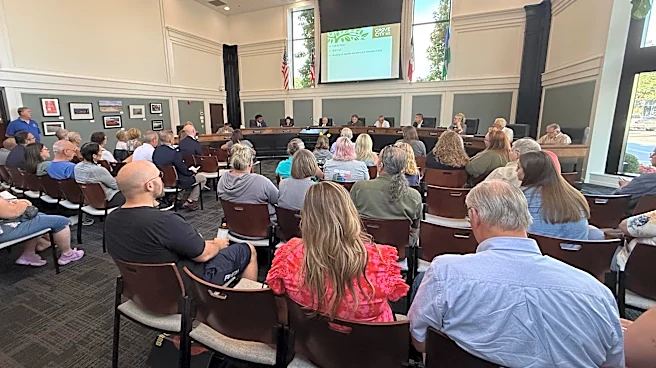
The backlash to rapidly expanding data centers, the physical infrastructure that houses servers powering artificial intelligence and other digital services, comes from voters across the partisan divide.
"The question is, with all of this moving so rapidly, can Democratic candidates put together a solid plan, a strategy
that they can take advantage of in the remaining weeks of this election season?" Mary Radcliffe, head of research at FiftyPlusOne, a site tracking political polling and elections, told USA TODAY. "The conversation has really exploded."
Data centers consume copious amounts of energy to run and water to keep them cool. The International Energy Agency estimated in 2025 that electricity consumption by U.S. data centers could more than double from 2024 levels by the end of this decade.
Neighbors often say the centers generate noise, produce electronic waste, and create few jobs once they're built.
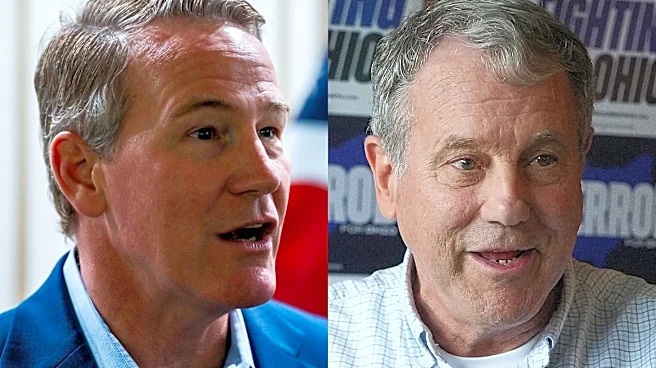
The issue has emerged as central to the pivotal U.S. Senate battle in Ohio between Democratic candidate Sherrod Brown, who calls GOP incumbent Sen. John Husted "the face of data centers in Ohio" in blistering attack ads.
While Trump has remained steadfastly in support of data centers and AI, some lawmakers in both parties have turned toward opposition. Texas Gov. Greg Abbott, a Republican seeking re-election in a surprisingly tight race against data center critic Gina Hinojosa, a Democratic state legislator, has called for data center crackdowns or moratoriums to temper the debate.
But other Republicans have stayed aligned with Trump, such as Speaker Mike Johnson, who recently said Congress should not lead on AI regulation.
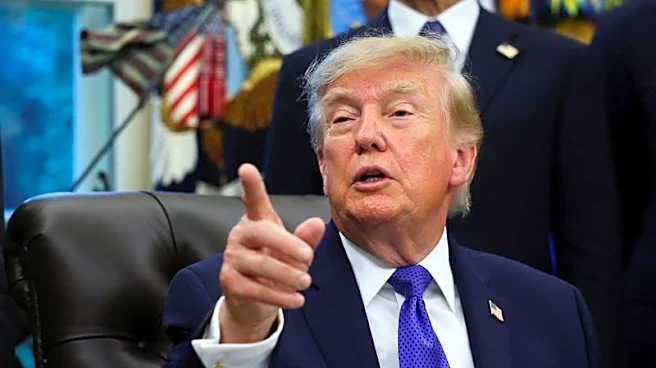
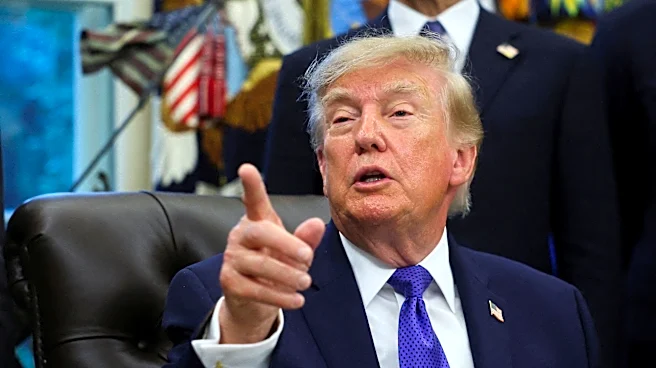
"I’m telling you it’s all a hoax," Trump told Nvidia CEO Jensen Huang during a surprise call-in to a technology and business summit in Los Angeles on Sept. 14 about any concerns. "The data centers are great, and they make people wealthy, and they make states wealthy, and it’s the oil of the next 20 to 25 years. It’s bigger than the internet and the AI."
Local activists who disagree are pushing back.
The recently formed Data Center Resistance has been consulting strategies with grassroots organizations in at least 15 other states after it helped win local court cases allowing voters to decide whether to ban large-scale data centers on the ballot in rural communities.
"I get multiple calls every day asking for legal or organizing help about what to do to stop these data centers from popping up," Ed FitzGerald, the group's founder, told USA TODAY. "The people actively in the anti-data center movement are looking at what these candidates' positions are, what they are saying, and who's going to get their vote."
FitzGerald said politicians across the country are "panicking" right now.
"This wasn’t on their bingo cards. They expected to have an election in 2026 where they would be talking about the high prices of eggs, gas, and a war in Iran. But voters also want to know where they stand on data center and AI issues," FitzGerald said. "Now they have to deal with it, and it's not going anywhere."
Ohio's crucial Senate race could come down to data center issue

Data centers are unpopular in Ohio,amid bipartisan criticism that the state gave $1.5 billion in tax breaksto data centers last year. A recent Bowling Green State University poll said 60% of Ohio likely voters believe data centers are bad for home energy costs, 57% say they're bad for the environment, and 71% supported a temporary ban on new data center construction.
Democrats need to pick up four seats to capture the Senate majority, and Ohio − a former bellwether state that has trended Republican in recent years − is one of their top targets, with Brown and Husted locked in a tight race for the seat once held by Vice President JD Vance.
Brown, a former Democratic senator, has a narrow lead in polls. Despite winning his third Senate term during Trump’s first presidency, Brown lost his seat in 2024 by less than four percentage points to Republican Bernie Moreno, while the state went for Trump by 11 percentage points.
Brown is filling the airwaves with ads casting Husted, who was appointed to the position, as a big data center backer. Ohio passed tax breaks for data centers in 2017, and currently ranks sixth in the nation for current and planned data centers, according to Pew Research Center analysis.
"He led the path to bring data centers to Ohio and gave billions of tax dollars to make it happen," a narrator mentions in a Brown campaign ad against Hustedreleased this month.
Even the National Republican Senatorial Committee (NRSC), the campaign arm for Senate Republicans, issued a memo to AI companies in August describing data centers as "the anchor hanging around Husted's neck."
"Sherrod Brown spent 32 years in Washington failing hardworking Ohio families," Husted spokesperson Amy Natoce told the Columbus Dispatch, a member of the USA TODAY network. "He doesn’t have a single positive accomplishment to speak of, so he’s spending tens of millions of dollars lying about Sen. Husted’s record. Ohioans already saw through Sherrod Brown’s lies and fired him once, and I’m confident they’ll do it again in November."
FitzGerald's organization and another, Conserve Ohio, were among many that successfully argued before the Ohio Supreme Court that voters in the small towns of Ashville and Trenton can decide on Nov. 3 whether to ban large-scale data centers. More than a dozen local ballot measures on data center projects are on the ballot across Ohio this year, according to FitzGerald.
"For the anti-data center movement to be successful, it has to be bipartisan and appeal to people who might not agree on other issues," FitzGerald said. "I think why it’s so successful is because it doesn’t fall into that 'Red state-Blue state dynamic.'
Husted's Ratepayer Protection Act, which would require states to consider a framework to ensure data centers pay for all electricity and grid updates they need, stalled in the Senate on Sept. 17. Democrats have criticized Husted's bill as too meager. Senate Minority Leader Chuck Schumer called it a "fraud" because its requirements are "voluntary." Democrats, he said, have offered a "stronger" measure to more forcefully mandate that tech companies realistically protect consumers' utility bills.

Texas data center debate intensifies
In Texas, America's data center capital, Democratic gubernatorial nominee state Rep. Gina Hinojosa is blasting incumbent Gov. Greg Abbott, who said a year ago that the state would be the "epicenter of AI development," and has seemingly reversed course as their race has tightened.
A recent Texas Politics Project poll found 57% of voters in the state opposed a data center in their community, including 43% of Republicans, 54% of independents, and 60% of rural voters. Texas has more than 600 data centers, the highest number in the nation, according to the U.S. Data Center Mapdirectory.
Abbott is now pushing for a moratorium on data centers, which would pause all projects until the state audits them and for legislation to mitigate their affect on communities erms of noise and electricity usage.
Hinojosa's campaign website calls Abbott's temporary moratorium a "scam," suggesting he will lift it right after the election. She said Abbott should issue an executive order pausing all data center projects and call a special session allowing state lawmakers to create permanent legislation.
"The only way Texans are protected is when real laws are passed," Hinojosa said. "Otherwise, no one believes the arsonist will put out the fire."
Data center chatter explodes in Texas Senate battle
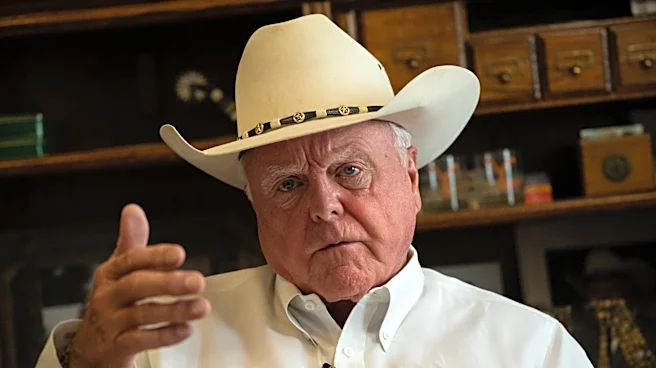
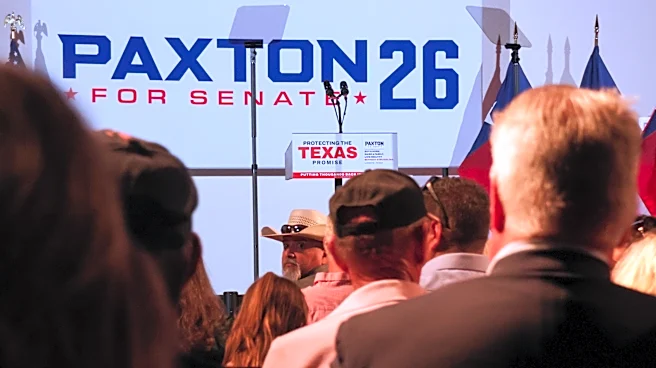
Democratic state Rep. James Talarico has ripped Republican state Attorney General Ken Paxton over data centers, in the Texas Senate race, which the Cook Political Report rates as a "toss-up."
Talarico called Paxton "bought and paid for by the data center industry," after the Washington Sun reported Paxton’s campaign and associated groups have received more than $400,000 from people and organizations tied to data centers.
"Ken Paxton has taken nearly half a million linked to the data center industry, and it's why he ignored residents in Hood County when they asked for his help as Attorney General to pause data center construction in their community. He just ghosted them," Talarico told CBS News Texas earlier this month.
Meanwhile, the Texas Tribune reported that Lone Star Rising, a super PAC supporting Talarico, received more than $11 million from Reid Hoffman − a Democratic mega-donor and noted AI and data center investor.
Paxton campaign spokeswoman Madison Cercy said in a statement to USA TODAY that Talarico is "a hypocrite and a liar."
"He claims that anyone taking money from data center interests is corrupt. Well, then he must be the most corrupt politician in America, because his campaign infrastructure has taken $12 million from donors with data center ties," Cercy continued.
Talarico's campaign slams Paxton for supporting the sales tax exemptions for data centers while in the state Senate in 2013.
"Ken Paxton gave data center companies billions in tax handouts that created the problem we have today," Talarico spokesperson JT Ennis said in a statement to USA TODAY.
In July, Talarico released his "Hold Data Centers Accountable Plan, and he has said he wants to ensure data centers pay for their own energy, recycle their water to help reduce the state's water crisis, provide jobs as a condition of being built, and ensure local communities give input on any data center projects.
In August, Paxton introduced a four-point "Texas First Data Center Plan" calling for new federal restrictions. But online progressive accounts pounced on Sept. 28 when Paxton told the United States Hispanic Business Council, "there's plenty of open space in Texas, and in other parts of the country, where we can put data centers that do not create a different atmosphere for our neighborhoods."
Iowa data center backlash
In Iowa, longtime political activist Katie Biechler and thousands of residents like her are using their grassroots action fund to curb new data centers. As they crisscross the state, they are closely watching what candidates to replace outgoing Republican Sen. Joni Ernst and the candidates for governor say about the issue.
Their organization, the Des Moines-based Iowa Citizens for Community Improvement (CCI), is advocating for a one-year statewide moratorium on data centers to protect electricity grids, water, and open space, according to Biechler, the nonprofit's political organizing director. She said 27 local municipalities have passed data center moratoriums this year, as "too much is happening too quickly" for communities to make informed decisions as data centers occupy space near farmland.

The Des Moines metro area has become one of the biggest data center hotspots, ranking 10th in the nation, according to a New York University study.
Since 2023, Iowa’s four House members and two senators in Congress have all been Republicans. Iowans have voted Trump for president three times. Still, Iowa is now a key battleground state, despite its heavy Republican voter registration advantage.
"I do think this is a moment where people are coming together and rallying around an issue they care about and unites them instead of dividing them, and frankly, this is something we haven't seen in a long time," Biechler said. "Regardless of who they voted for in 2016 and 2020, and 2024, they are united for a moratorium against data centers."
Effect on the Senate, governor races

Democratic state Rep. Josh Turek, a Paralympic gold medalist basketball player running for Senate, and Iowa state auditor Rob Sand, the Democratic nominee for governor, both frame their opposition to data centers as holding large corporations accountable.
"We want to make sure large corporations are paying their fair share, not getting tax breaks," Turek told reporters on Sept. 21 during a campaign stop in Des Moines. "I think also making sure we've got strong guardrails to make sure they are not driving up the energy rate to the end user."
His Senate opponent, U.S. Rep. Ashley Hinson, the Republican who holds a slight lead over Turek in a recent Emerson College/Nextstar Media Iowa Senate Poll, said on a podcast that she supports municipal oversight and local control of data centers.
A recent Emerson College-Nextstar poll found 60% of Iowa voters think data centers will negatively impact the environment, and 52% think data centers will negatively impact the cost of living.
"We're going to be asking some tough questions, seeing where they stand and just how they are going to support everyday people in winning a statewide moratorium," Biechler, the Iowa CCI, said.
Sand said he wants state lawmakers to approve a package of data center restrictions in January 2027, including ending tax breaks, making data center companies cover their own costs for utilities, and local community input.
"As governor, I will make sure anyone building in Iowa is contributing to Iowa, not extracting from us. They should be paying full freight and carrying their own weight, not raising your costs for anything, and respecting those who were already here," Sand said on his campaign website.
His Republican opponent,Zach Lahn, has called for a temporary statewide moratorium and focus on how they would benefit local communities, which Sand argues is just kicking the can down the road.
"If (it’s) a 12-month moratorium, then in 11 months, everyone's going to be all knotted up, worrying again about what's going to happen next," Sand told reporters on Aug. 15. "I want a law on my desk if I'm elected governor and I want it there in January that puts together all the rules that I have called for."

Lahn told the Des Moines Register, a member of the USA TODAY Network, that data centers should have to pay for their own electricity and ensure the "environmental concerns are addressed and taken care of."
"I’m not someone who’s saying we should ban (data centers) outright; I don’t think that’s the case," Lahn said in August at a forum hosted by the Iowa Association of Business and Industry.
Contributing: Zachary Schermele, USA TODAY, Mateo Rosiles, and Brianne Pfannenstiel, USA TODAY Network
This article originally appeared on USA TODAY: Democrats are running against data centers in key Senate races