


For the first time in more than a decade, a spacecraft is on the cusp of reaching Mercury's orbit.
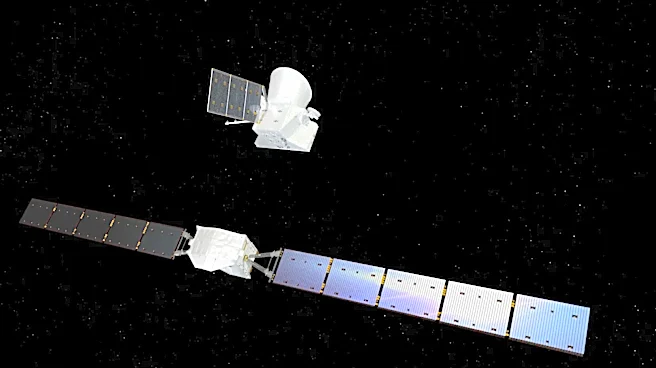
Twin orbiters built by Europe and Japan arrived near Mercury in September and are now due to be captured by the planet's gravity and enter its orbit. After reaching the milestone, the two spacecraft will separate from one another and part ways as they begin exploring the small rocky world.
Few spacecraft have explored the mysterious planet, and just one has actually orbited it. The vehicles, known jointly as the BepiColombo orbiters, will be just the second ever spacecraft to be bound by Mercury's gravity as they circle the planet.
Here's everything to know about the BepiColombo mission to orbit Mercury.
glowing across the US at night
What to know about Mercury, closest planet to the sun
Slightly larger than Earth's moon, Mercury is the smallest planet in the solar system. It's also the closest to the sun and the fastest – completing one circle of our star once every 88 days, according to NASA.
Named for the swiftest of the ancient Roman gods, Mercury formed about 4.5 billion years ago from swirling gas and dust. Similar to other rocky, terrestrial planets, Mercury has a central metallic core, a rocky mangle and a solid crust.
On the surface, impact craters from colliding space rocks have scarred the planet in a similar fashion as Earth's moon. Energy from these impacts generated massive amounts of heat, which Mercury has been losing ever since, according to astronomers.
As a result, Mercury's interior has been shrinking as it cools, with its outermost rocky layers crumpling and cracking as the planet changes size.
Orbiter is 1st to arrive at Mercury in decade

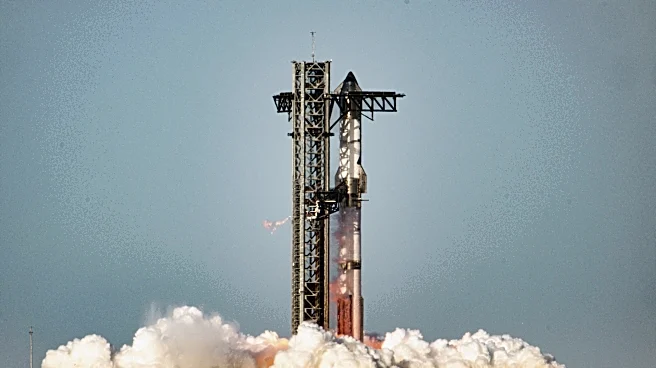
Named for a famed Italian scientists, the twin BepiColombo orbiters are due to arrive in Mercury's orbit Saturday, Nov. 21, following a journey spanning eight years. The spacecraft were launched in 2018 on an Ariane 5 rocket from Europe's Spaceport, Guiana Space Centre in French Guiana on the northeast coast of South America.
A joint effort between the European Space Agency and the Japan Aerospace Exploration Agency (JAXA,) the BepiColombo mission includes three main components.
The ESA's Mercury Transfer Module carried the two orbiters to Mercury using solar-electric propulsion. The twin BepiColombo orbiters – the ESA's Mercury Planetary Orbiter (MPO) and JAXA's Mercury Magnetospheric Orbiter (MMO) – are each outfitted with a fleet of science instruments to study how Mercury formed and evolved so close to the sun.
"This small desert world is the least explored planet of the inner solar system," the ESA explains on the mission website. "Learning more about Mercury will shed light on the history of the entire solar system."
NASA's MESSENGER ended in 2015
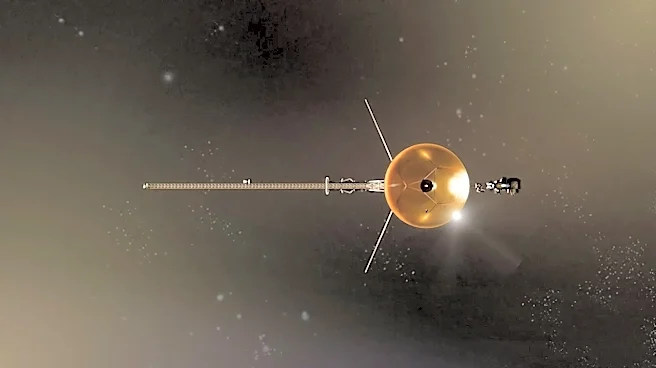
BepiColombo is just the second-ever mission sending spacecraft to orbit Mercury, and the first in more than a decade after NASA’s MESSENGER mission ended in 2015. While Mariner 10 was the first spacecraft to explore Mercury in the mid-1970s with three flybys, MESSENGER was the first to orbit the planet.
Launched in 2004, the spacecraft orbited Mercury for more than four years after its 2011 arrival. During that time, MESSENGER studied the geology, magnetic field and chemical composition of the planet.
On April 30, 2015, MESSENGER was sent plunging into Mercury, endings its mission, according to NASA.
What's ahead for ESA spacecraft BepiColombo
The BepiColombo mission, though, is expected to be even more complex than NASA's venture, according to the ESA.
The arrival phase to Mercury began in September when transfer module separated from the stacked twin orbiters. Next, JAXA's MMO orbiter, which has been mounted on top of its ESA twin orbiter for the journey to Mercury, is expected to separate in December so the two spacecraft can circle the planet on their own orbital paths.
The BepiColombo orbiters are then due to begin science operations in April 2027, with the ESA's MPO operating closer to Mercury's surface, coming as low as 300 miles above the ground.
Among the questions the ESA says they hope the spacecraft can help scientists answer?
"Why is there ice in the polar craters of the scorched planet? Why does Mercury have a magnetic field? And what are the mysterious 'hollows' on its surface?" according to the website.
Eric Lagatta is the Space Connect reporter for the USA TODAY Network. Reach him at elagatta@usatodayco.com
This article originally appeared on USA TODAY: Twin orbiters become 1st to reach Mercury in more than a decade