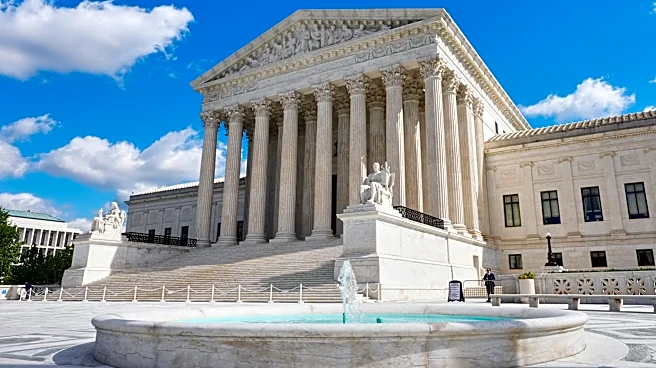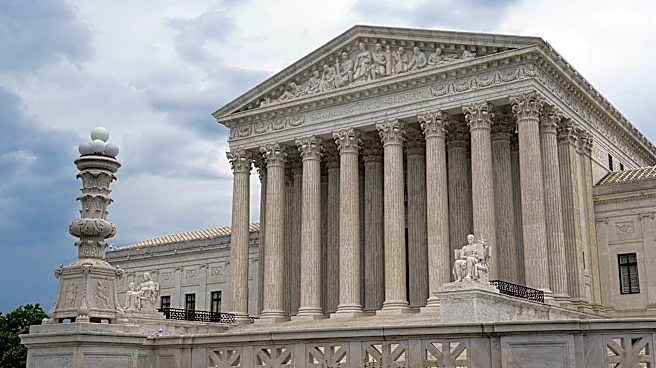





WASHINGTON – The Supreme Court once again sided with the Trump administration in a dispute over radio and television advertising rates in the run-up to the November elections that will determine control of Congress.
Democrats are challenging a new federal policy that allows political parties to benefit from the same low advertising rates that broadcasters must offer to candidates.
Republicans, who are trying to fend off a blue wave to protect their majorities in the House and Senate, are expected to benefit from the high court’s intervention because their political committees have raised considerably more money than have Democrats' party committees. That could help the GOP close resource gaps in key races where Democratic candidates have outraised
Republicans.
A lower court said the Federal Communication Commission was engaging in “gamesmanship” to prevent the courts from being able to review the policy change before the election.
But the Supreme Court on Oct. 14 blocked the lower court from ordering the FCC to respond to the Democrats’ objections, extending a previous pause on the order.
In an unsigned opinion, the court said that the law does not require the FCC to act within a particular timeframe and it would be a violation of the separation of powers for judges to get involved.
"The Commission may exercise its discretion to set its own procedures and schedule for resolving such applications," the majority said.
Two of the court's liberal justices − Sonia Sotomayor and Ketanji Brown Jackson − dissented.

In September, the justices had also ruled for Republicans when it said the Richmond-based 4th U.S. Circuit Court of Appeals could not block the policy before the FCC completed its internal review of the Democrats’ complaint.
In the run-up to an election, stations are required by federal law to give their lowest rates to “any person who is a legally qualified candidate for any public office in connection with his campaign.”
In March, the Federal Communications Commission said that applies to ads run by political parties in coordination with candidates – not just to ads paid for by the candidates themselves.
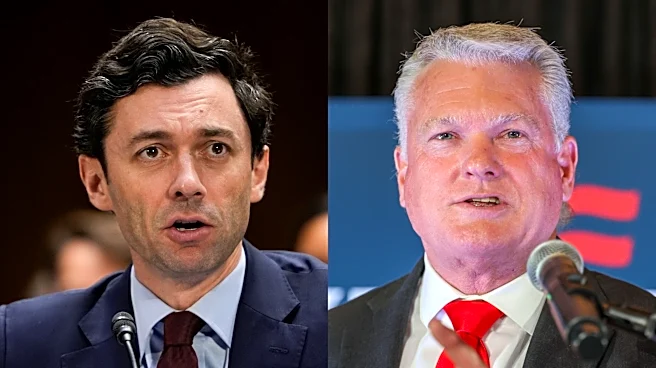
Four Democrats running for the House or Senate in battleground races – including Georgia Sen. Jon Ossoff − challenged that interpretation.
In its Oct. 7 ruling, the appeals court – which divided 2-1 over the issue − said the FCC was trying to “create from whole cloth a new rule entirely outside the purview of judicial review.”
The court said it had granted the FCC “a substantial amount of grace, but its gamesmanship must end.”
In an emergency appeal to the Supreme Court, the Justice Department said the FCC is still collecting public comments about the policy “and it is also entirely reasonable to refrain from issuing a decision on campaign-finance rules in the middle of the election season.”
In response, Democrats said the FCC was conducting blatant procedural trench warfare to delay judicial review of its unlawful action until it is too late to matter.
This article originally appeared on USA TODAY: Supreme Court again sides with Trump in campaign ad dispute