




We know that people work at the White House: Presidents and press secretaries, chiefs of staff and policy advisers, Cabinet members and communications staffers.
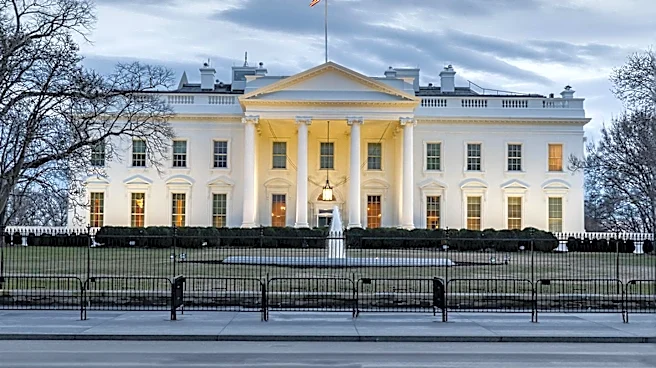
But the People's House is more than a place where government functions. It's where the first family resides, and where they − and by extension we, the American people − host foreign dignitaries and diplomats, where they welcome children for an annual Easter egg roll and where tourists are guided past some of the most important rooms in history.
It is one of the busiest homes in the world.
That home takes a lot of people to keep it running: chefs and gardeners, valets and housekeepers and a host of other people throughout the White House's 226-year history.
Now those workers, from the day
234 years ago when the cornerstone for the house was placed up to the current administration, will be recognized with the White House Workers History Project, a new online platform with profiles on thousands of people who've served the nation and first families.
Launched by the nonprofit, nonpartisan White House Historical Association, founded by first lady Jacqueline Kennedy in 1961, and the Rubenstein Center, the project draws from six years of research into archival material, family and oral histories, documentaries and historical accounts.
USA TODAY talked exclusively to the White House Historical Association's Matthew Costello and Sarah Fling, as well as Cristeta "Cris" Comerford, who shared her experiences working under five different presidents.
'To elevate people who've been part of our history'
According to WhiteHouseHistory.org, the White House Historical Associations' website, the Residence Act of 1790 established the District of Columbia, and its geographic location between two slave states, Maryland and Virginia, "ensured that slavery was ingrained into every aspect of life."

"We know at least nine presidents relied on enslaved people," said Costello, the association's chief education officer and director of the Washington, DC-based David M. Rubenstein National Center for White House History. "As we were doing our research, we came across enslaved laborers, immigrant laborers, indentured servants and free Black workers. These were people from all walks of life... who made the president's house function."
"This is about everyday people," said Comerford, who noted not only the chefs and kitchen staff, but also waitstaff, valets, housekeepers, gardeners and myriad others whose work is vital to events, state dinners and daily life at the White House. "To really elevate these people who’ve been a part of our history."
People like George W. Hannie Jr., who was a butler and maitre'd from 1966 until his 2011 retirement. Charles Henlock, who began working as a laborer at the White House after arriving from England in 1888, and worked his way to head gardener before retiring in 1931. Jeremiah "Jerry" Smith, who worked in the White House for 30 years in a variety of roles including valet, footman and custodian starting in 1873.
An evolving workforce
Fling, a historian with the White House Historical Association, said the research has also shown the ways households, even the highest-profile one in the nation, have changed over the course of our nation's history.
"This has allowed us to understand how the workforce [at the White House] has evolved, and we can see both continuity and change," she said. "Roles have changed over the years as technology has."
For example, White House staff at one time included stable hands and coachmen; today, of course, presidents and their families are driven in limousines and, rather than chauffeurs, the Secret Service handles the president's and the first family's transportation.
Much of the White House staff used to live onsite, but that too has changed. Though the days are often long and the White House is a 24-hour operation, staffers no longer live there, Fling said.
Executive chef to the Chief Executive
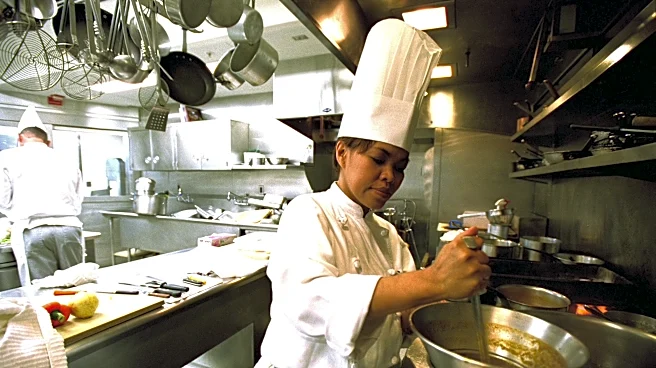
Cristeta Comerford was a well-known chef working in Georgetown when the White House's then-executive chef, Walter Scheib, preparing for a state dinner with Nobel laureate and South African president Nelson Mandela, reached out to her.
"When I walked into the kitchen, well, it's small," said Comerford. "It's not impressive at all, really, but the whole idea of the people you're cooking for, the whole idea of walking through this house used by the president and their families all the way back to John Adams, it just blew my mind."
A native of the Philippines, Comerford said she loved food and the sciences and sought a way to bring her passions together, so she studied food technology at the University of the Philippines.
She worked under Scheib at the White House after what she said was a long and thorough check into her background, one that went all the way back to her high school days in the Philippines. In 2005 first lady Laura Bush appointed Comerford to the White House's executive chef post, making her the first woman and the first person of color in the position, according to the George W. Bush Presidential Center. She remained in the position through successive administrations, retiring in 2024 after 19 years as executive chef.
"Families usually bring in their own chefs," Comerford said, but when Laura Bush recommended the Obamas retain her, they did. She recalled watching the Bush twins, Jenna and Barbara, grow from teens into young women, and the Obama girls, Sasha and Malia, grow from young girls into teens.
"The Bushes loved Tex-Mex food, and the Bidens liked Italian food," she remembered. "We try to tailor what we do to each family and what they like."
Different families have different needs, so as each administration changes, White House staffers will meet with their transition teams. The kitchen staff will learn about dietary preferences, and Comerford said she liked to find out what restaurants they patronize to get a sense of their tastes. Children and teens especially can have evolving tastes over the course of four or eight years, so the chef is ready to make adjustments.

Asked if there's something the public may not know about her work, Comerford said, "The first family pays for their own meals," even though many assume taxpayers do so. "We give them a bill at the end of the month for everything we buy, everything that's brought to the second floor [where the residence is]. They are billed for it all."
Comerford and other staffers are protective of the families' privacy, as well.
"It matters a lot," she said. "You hear conversations and daily family interactions, but we cherish them. It's been an amazing experience ... but at the end of the day, they're regular families who love to talk and eat together."
The work is ongoing
Fling said the six year-long project has yielded information on more than 1,100 individuals who've worked on, and at, the White House over the past two centuries. They've relied on a variety of sources including families, presidential memoirs, oral histories, official records and paperwork. Researchers have uncovered White House workers from 42 states and more than 20 nations.
"But every day we're finding new names and hearing from more families," she said. "So we want to continue to augment the research we've already done."
"We want to tell their stories and make it more relevant for more people," Costello said, highlighting the myriad roles and jobs people took over the years, highlighting their diverse backgrounds "so people can see a history where they see themselves."
The White House, he added, is "a home, a stage, a symbol, and it can feel distant, but it's easy to lose sight of the fact that this is a place where people live and work."
Phaedra Trethan is a national correspondent for USA TODAY, writing about history and Americana. Contact her by email at ptrethan@usatoday.com, on X @wordsbyphaedra, on BlueSky @byphaedra, or on Threads @by_phaedra.
This article originally appeared on USA TODAY: Who keeps the White House running? Archive offers spotlight | Exclusive