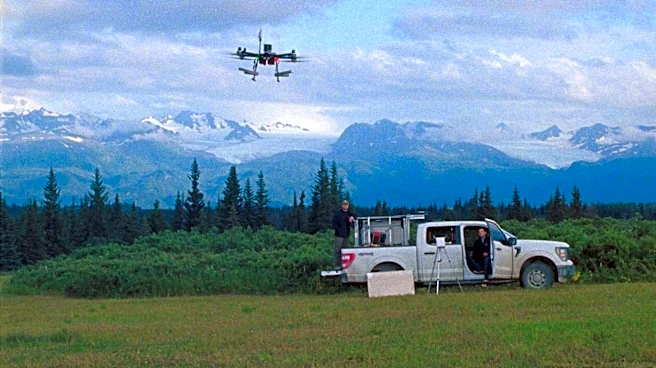







A decades-long controversy has a new twist: Drones have caused 19 million gallons of precipitation to fall in Alaska.
The drones were cloud seeding, part of a long-running scientific project aiming to extract precipitation out of certain clouds in areas that need more precipitation. The latest development is notable because a private company says it was able to rapidly measure how much precipitation was caused by its efforts to modify the weather using drones.
Measuring the effectiveness of cloud seeding has been a tricky challenge over the years, and the news out of Alaska comes as interest grows in using cloud seeding to combat drought in the West.
Cloud seeding is controversial and complex. Over the years, it's generated pushback from skeptics
and conspiracy theorists alike.
Ten states have banned or considered banning it, according to a 2024 Government Accountability Office report. Meanwhile, several states in the Western United States are embracing cloud seeding.

What happened in Alaska?
The news out of Alaska shows how cloud seeding plays out — usually as a drizzle or a flurry, not a downpour.
The approximately 19 million gallons that fell sounds like a lot, but it was spread out over nearly 100 square miles and over three hours, according to Rainmaker founder and CEO Augustus Doricko. Someone on the ground would have experienced at most a drizzle.
Rainmaker, a California-based private company, said in a report that it successfully measured the precipitation, which fell mostly as snow, and can directly attribute it to its cloud seeding efforts on the Kenai Peninsula, Alaska, over a three-hour period on Aug. 23.
It's the first time a private company has validated its efforts with methods that prove cloud seeding caused a specific amount of precipitation to fall in Alaska, said Rainmaker founder and CEO Augustus Doricko.
As extreme drought threatens water supplies, agriculture and the generation of hydroelectric power, states including Idaho, Utah and Colorado have been turning to cloud seeding in the hopes it can provide an extra nudge to generate rain and snowfall in the areas that need it most.
What is cloud seeding? Is this science fiction?
Cloud seeding is a concept that has been around for decades. It was first conceived of with experiments in the 1940s and has been done in several countries around the world.
The most common type of cloud seeding used in the United States is almost all done in Western states, according to University of Illinois emeritus professor of climate, meteorology and atmospheric sciences Robert Rauber. That's because cloud seeding is mostly done with clouds that rise over mountains in the winter time, called orographic clouds, Rauber said.
Scientists look for and identify certain types of clouds that have tiny droplets of supercooled water, which is water below 32 degrees Fahrenheit that does not turn to ice. That's because pure water won't turn to ice until it's much colder, dozens of degrees below 0; tiny particles of other substances such as minerals cause water to turn to ice. The clouds ideal for seeding have lots of supercooled water that is not on its own turning into ice and falling as precipitation. Without intervention, those water droplets wouldn't fall and would eventually evaporate, Rauber said.
The typical process for cloud seeding involves introducing particles such as silver iodide into the clouds, causing the water to turn to ice and fall over the mountain. Seeding the clouds with those particles can be done from the ground or by air using airplanes, or in the case of the Rainmaker project, drones.
"What we're trying to do is get more of the cloud water to land on the mountain as snow," Rauber said. "Why is that important? In the Western United States, snow pack is a reservoir. It's a place where water can be stored and then distributed in the spring and summer when the ice melts."
The problem with cloud seeding for a long time was that while scientists knew it worked, they were unable to prove it and measure how much precipitation was a direct result of cloud seeding, and how much would have fallen anyway. That changed in 2017 with the Seeded and Natural Orographic Wintertime Clouds: The Idaho Experiment, or the SNOWIE project.

The SNOWIE project marked the first time researchers could validate their efforts. Using radar and a formula, researchers were able to prove that their seeding was producing a specific amount of precipitation, said Rauber, who is not involved with Rainmaker but who helped develop the SNOWIE project.
Cloud seeders respond to naysayers
Rainmaker is the first private company to prove how much rain they produced, Doricko said. The Rainmaker drones seeded in a particular pattern in the clouds, and the resulting snowfall was easy to spot on radar as theirs.
"We'll fly either in a specific pattern... or we'll pulse the drones, meaning we'll periodically release silver iodide and then stop," he said. "If you see precipitation happening exclusively in your flight track or exclusively in those pulses, then you know that it's definitively manmade, if it is a replicable enough feature if you do it enough times."
Rainmaker has not been without its skeptics. The idea of weather manipulation often makes people uneasy. It's even been banned in states including Florida and Tennessee. Rauber says much of the opposition to cloud seeding comes from ignorance of the process. There are also unfounded theories about its consequences, which Doricko has spent time on social media trying to debunk.
"I can guarantee no floods or deadly outcomes, this technology has well characterized physical limits," he said in response to criticism from former Republican Rep. Marjorie Taylor Greene on X.
Deadly flooding in Texas Hill Country in July 2025 brought a wave of accusations against the company, which two days before had seeded clouds over 100 miles away to produce less than half a centimeter of rain on farmland going through drought, reported the Arizona Republic, part of the USA TODAY Network. Scientists say it's impossible the cloud seeding could have contributed to the flooding, because cloud seeding can't impact weather that far away, and at most it would be a modest amount of additional precipitation even if it could.
Cloud seeders are very aware of the potential that their operations could be misinterpreted by the public, so they tend to avoid going anywhere near the types of clouds that could risk flooding, Rauber said.

Could cloud seeding be the answer to worsening drought?
The reason cloud seeding is more embraced in the Western United States is because of the hope it can provide aid to areas impacted by severe drought.
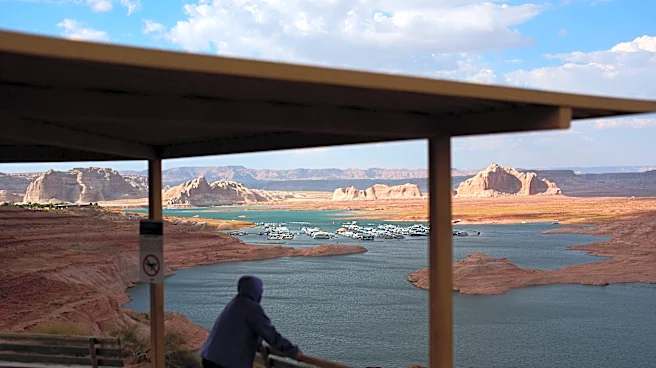
Ongoing drought has seen the United States' two largest reservoirs, Lake Mead and Lake Powell, reach record low levels this summer as climate change-fueled drought is lessening the amount of snow falling on the Rocky Mountains before melting into the Colorado River, which feeds the lakes holding water for drinking supply and power.
Doricko said Rainmaker plans to bring its cloud seeding to a larger scale: The Alaska demonstration, he said, "shows how Rainmaker will add new water to the Colorado River and Great Salt Lake in the coming months."
Cloud seeding alone isn't the solution to the drought crisis in the West, experts say.
"Conservation is really important; we shouldn't waste water," Doricko said. "But if you want to maintain the ecosystems that we have, the farms and cities that we have, you have to work on the supply side. You have to innovate your way into abundance."
This article originally appeared on USA TODAY: Drones modified weather, dropping millions of gallons of precipitation