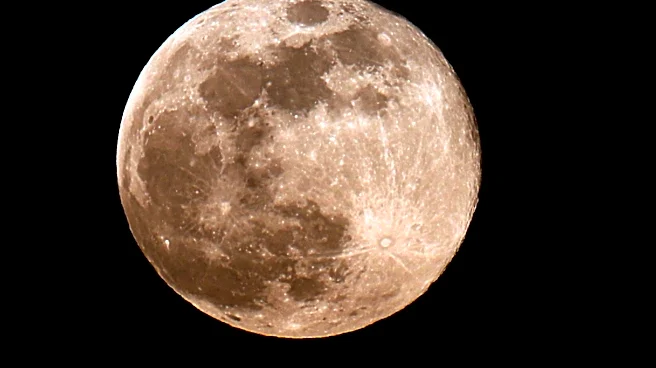






The last full moon of fall will soon rise. November's full moon, known as the Beaver Moon, will also be a supermoon.
Supermoons happen when a full moon is at its closest point to Earth all month, according to NASA. The phenomenon is known as "perigee" and could make the moon look around 30% brighter and up to 14% larger than usual. November's full moon will be the first in a series of four supermoons that will occur at the end of 2026 and the beginning of 2027, according to NASA.
The other full moons in fall this year were the September full moon (Harvest Moon) and the October full moon (Hunter's Moon).
Here's what to know about the upcoming full moon appearance.
When will November's full moon reach its peak?

The full moon will peak on Tuesday, Nov. 24 at 9:53 a.m. ET, according to the Farmer's
Almanac.
When will be the best time to see November's supermoon?
The moon's peak will occur after the sun rises in the eastern United States on Nov. 24, but backyard astronomers shouldn't worry.
The moon will still look bright and beautiful on the nights before and after the moon reaches its peak.
How many supermoons are there in 2026?
In 2026, there will be three supermoons. The last supermoon was in January. The next two will happen in November and December.
First of four supermoons
November's supermoon will be the first of four full moons in a series, according to NASA. The next supermoons will fall on the following days.
- Thursday, Dec. 24 (Christmas Eve)
- Friday, January, 22
- Saturday, Feb. 20
The next supermoon on Christmas Eve will also be the final full moon of 2026.
Why is it called the Beaver Moon?
In the United States, moons are known by names associated with the folklore of Native American tribes, Colonial Americans and Europeans, according to the Farmer's Almanac.
The Beaver Moon gets its name because this is the time when beavers start to take shelter in their lodges ahead of winter, according to the Farmer's Almanac. It was also the season when fur traders in North America trapped beavers for their winter pelts.
The moon is also known by the following names:
- Digging or Scratching Moon
- Deer Rutting Moon
- Whitefish Moon
- Frost Moon
- Freezing Moon
Julia Gomez is a Trending reporter for USA TODAY and covers space phenomena, scientific studies and natural disasters. Connect with her on LinkedIn, X, Instagram, and TikTok: @juliamariegz, or email her at jgomez@gannett.com.
This article originally appeared on USA TODAY: The last full moon of fall, a supermoon, is coming. When to look up