
It was the longest men's international window ever, and at times it felt like it.
Opinions differed amongst players and managers whether or not they like the schedule modification, one that means players return
to their clubs after two full weeks with their international teams, rather than traveling home in separate trips in both September and October.
But there were days when the action was excellent, be it Spain's comeback at Wembley Stadium, Haiti's win in front of a huge crowd of supporters in the Dominican Republic or Lionel Messi making his final appearance in an Argentina shirt.
With so many games in so few days, it could be tough to keep track of, though. Luckily, we were watching as many matches as possible from all over the world.
Here's one thing we learned from each of soccer's biggest confederations:
A good World Cup doesn't mean you're good forever
Watching Cape Verde at the World Cup it was impossible not to think about the team's bright future. A relatively young team that could hang with World Cup finalists Spain and Argentina surely would be able to compete in Africa, perhaps even win the African Cup of Nations. The World Cup run had to inspire more dual-nationals eligible for Cape Verde to join up rather than wait for calls from Portugal or other nations that could never come.
To win the AFCON, you have to qualify for the AFCON. That is at risk for Cape Verde, which fell to Mali and Rwanda in its first two AFCON qualification matches and sits third in the four-team group. The top two teams go through.
There were still some good moments from World Cup heroes. Vozinha looked happy to be back from Chile, where he has had an uncomfortable adaptation period after signing for a Colo-Colo team that may not have needed him. Sidny Lopes Cabral scored in the first game after the World Cup, netting another goal after his stunner against Argentina.
Sidny Lopes Cabral, mali yi avlıyor pic.twitter.com/48cwf0wziN
— gergenpres (@gergenpres) September 25, 2026
But it will not be easy for Cape Verde to avoid becoming a victim of its own success. Former assistant Humberto Bettencourt is now the head coach after World Cup manager Bubista took a job with a top Moroccan club.
"The result wasn't what we expected," Bettencourt said after the loss to Mali.
The lesson? The World Cup is over. There is no connection between what you did this summer and what is happening on the road to 2030.
Then again...
Concacaf's World Cup surprises show they're no flukes
Neither minnow Curacao nor underdog Haiti were able to match Cape Verde's achievement and make the knockout stage of the World Cup, but both showed in Concacaf Nations League group play that their World Cup qualfiication was no fluke.
Curacao, with manager Dick Advocaat on board through the 2027 Gold Cup, trailed Costa Rica 3-0 on the first matchday after the World Cup but assembled a superb comeback to win, 4-3, in San Jose.
Kenji Gorre, Tahith Chong and Jordi Paulina continued that energy - with the Bacuna brothers getting involved as well - in a 6-1 thrashing of Nicaragua that seemed to confirm that the Caribbean still has the edge on Central American teams.
The Blue Wave closed out an undefeated CNL group stage with a win and a draw with Trinidad and Tobago.
After that frustration at home against Curacao, Costa Rica headed to the Caribbean to face Haiti. There, once again, the Caribbean team came out on top. Haiti then had the huge night in the Dominican Republic before a trip to meet a Costa Rica team that had fired its manager, brought in a number of veterans and eventually was able to beat Haiti on the final match day - but Les Grenadiers qualified for the Concacaf Nations League quarterfinals with three wins and the defeat.
The two teams were in the same group, but because of the "Swiss system" Concacaf utilizes, Haiti played Costa Rica twice instead of ever seeing Curacao.
The competition ramps up for both teams in November. Haiti now has a two-legged quarterfinal against the United States, while Curacao will meet Panama - the team that denied it passage to the final round of 2022 World Cup qualifying.
Portugal looks fine without Cristiano Ronaldo
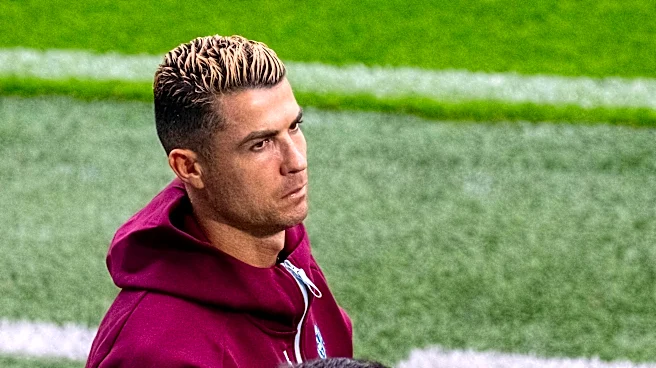
Cristiano Ronaldo's explosive departure from Portugal national team camp was as predictable as it was ugly.
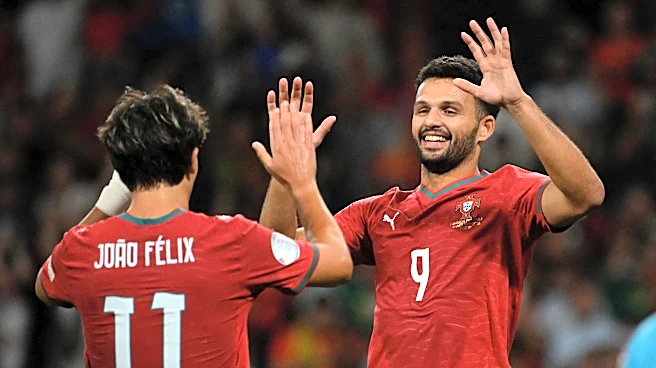
Yet, Portugal didn't seem to miss him. Rafael Leão already was wearing the No. 7 shirt, and the Seleção das Quinas had a great window, scoring freely in a 4-2 win over Denmark and beating Norway, 2-1.
This, too, was not a huge surprise. Portugal usually looked better at the World Cup when Ronaldo was either out of a match or when he was willing to accept something less than a starring role. With and without Ronaldo in this window, Portugal was able to control matches and win as it looks to defend its UEFA Nations League crown.
Portugal manager Jorge Jesus knows how much talent he has in his group but also can see that a core that generally has taken a back seat to Ronaldo doesn't have much time left on the grandest stage. Bruno Fernandes, who captained Portugal in Ronaldo's absence, showed how superb he can be with a pair of assists against Denmark and another good day against Norway.
He is 32. So is Bernardo Silva.
The central midfield stars are younger, as is Gonçalo Ramos, who is being given a chance both with his AC Milan move and with this bigger Portugal role to prove he can fill big shoes. For now, the attack is humming.
Ronaldo may be ready to pay his penance and come back, as he said in his Instagram post, or he may be holding out until Jesus' departure, as was reported in the international press.
Portugal doesn't need the distraction. Portugal doesn't need Ronaldo.
The time for transition is now in South America
Lionel Messi and James Rodriguez announced their international retirements, with Messi sent off with a (sponsored) drone show after he scored and had two assists in a friendly against Benin.
Argentina and Colombia are expected to continue on with promising new generations. They're also setting a standard. On their tours of the U.S., both Peru and Chile deployed teams that were far too veteran for nations playing their next official matches in summer 2028. What benefit will be gained from leaning on players in their mid-30s for either country that missed out on the 2026 World Cup?
But even countries that made the 2026 tournament and have plenty of young stars need time to get the boat turned and pointing in the correct direction.
The new manager of Ecuador, Argentine coach Marcelo Gallardo, was criticized in the country after failing to win any of his first matches, but he stressed patience after playing three fellow 2026 World Cup teams. La Tri lost to Korea and drew with Japan and Panama, losing to Los Canaleros on a shootout.
"The players go back to their respective clubs with a message: This is a start," Gallardo said. "It’s a process that is only 10-15 days long, and we played three games during that but I have good feelings because of the potential I think exists."
There is potential not just in Ecuador but in every South American nation, yet reports on that continent that just 3.5 more World Cup spots will be up for grabs after 2030 World Cup co-hosts Argentina, Uruguay and Paraguay are included have reminded fans elsewhere that the stakes are high. That requires getting young players involved sooner rather than later.
It won't be an easy road for Asian Cup hopefuls
Asia's competition was very regionalized during this window, with Southeast Asian teams participating in FIFA's attempt at an ASEAN championship, most Middle Eastern teams playing in the Gulf Cup and the East Asian teams hosting their own events.
Indonesia was able to win the ASEAN event on home soil, but an Asian Cup group with favorites Japan and reigning champion Qatar - plus ASEAN Cup runner-up Thailand - looks far more daunting for John Herdman's men.
"I’m in the planning stage of the Asian Cup, and this was part of the plan," Herdman said. "It was about more tournament experience with this group, it was about more time together with the core group. We’ve got more work to do, of course, and you can see that.
"As a group, we go through the first 25 minutes of the game and we looked top … then, we have that moment where we get sucked into a black hole and allow teams to get on top of us. Then, we fight back. We’ve got work to do."
Japan showed more defensive fragility than it would've liked but won all four of its friendly matches (one on a penalty shootout after a scoreless draw with Ecuador). Korea lost only to Uruguay. Saudi Arabia won the Gulf Cup.
Those teams will go into the Asian Cup among the teams to beat, but some of the hopefuls like Indonesia had an active September-October and will hope they have momentum heading into the January 2027 tournament.
What's coming in international soccer in November?
Nations League play continues in UEFA and Concacaf, with the U.S., Mexico and Canada all getting involved. The African Cup of Nations qualification also continues, while South American and Asian teams will be involved in friendly matches.
This article originally appeared on USA TODAY: Cape Verde's World Cup hangover, Portugal wins without Ronaldo & more: Takeaways from FIFA international window