
SpaceX's massive Starship rocket could be hours away from soaring halfway around the world for just the second time in 2026.
The possible imminent launch of the world's largest rocket comes a week after
a previous attempt to get the Starship spacecraft off the ground was aborted at the last second due to engine troubles.
This time around, though, it may not be mechanical concerns that delay the crucial uncrewed test flight, but more natural ones. SpaceX, Elon Musk's commercial spaceflight company, acknowledged on social media that it was keeping a close eye on poor weather in the forecast for South Texas as Tropical Storm Bertha begins to batter the region.
If the 400-foot rocket does manage to lift off, be ready for a thrilling one-hour mission as SpaceX races to have the vehicle ready for NASA's upcoming moon landings.
Here's everything to know about the next Starship launch, and how you can tune in live.
When is SpaceX launching Starship? Time, date of flight 13
SpaceX is working toward a Thursday, July 23, launch of its Starship rocket. The 90-minute launch opens at 6:45 p.m. ET at its Starbase company town and headquarters in Texas near the U.S.-Mexico border.
Because the mission would be the 13th time that SpaceX has tested the spacecraft, the company refers to it as "flight 13."
SpaceX monitors weather as Bertha bears down on Texas
In a post on X, though, SpaceX noted that "weather is currently a significant watch item for launch" as Tropical Storm Bertha is expected to bring rain, wind and rough surf to the Texas coast.
Additional preflight testing on Super Heavy complete. Now starting preparations to launch Starship as soon as tomorrow, Thursday, July 23. Weather is currently a significant watch item for launch pic.twitter.com/NtMbwNmoBU
— SpaceX (@SpaceX) July 22, 2026
Flash flooding and tropical storm-force winds remain possible along the Gulf Coast in Texas, according to the National Hurricane Center.
How to watch Starship launch live
The launch will be available to stream on SpaceX's website beginning about 30 minutes before liftoff. SpaceX will also provide updates on social media site X.
Elon Musk says engine issues triggered July 16 last-minute abort
The flight test was originally targeted for July 16, but Starship's system triggered an automatic abort when several engines on the first-stage booster, known as Super Heavy, failed to start.
SpaceX has in the week since replaced at least two of the booster's 33 Raptor-class engines, Musk, the company's chief executive, said in a post on social media site X.
What is Starship?
Starship is the massive rocket that SpaceX, the commercial company founded by tech entrepreneur Elon Musk, has been testing since April 2023. SpaceX is developing the rocket to be a fully reusable transportation system that can carry huge satellites and other payloads to space, meaning both the rocket and vehicle can return to the ground for additional missions.
Starship will eventually need to be capable of refueling midflight in a complex process that requires two Starships equipped with docking adapters to meet in orbit to transfer propellant. The maneuver is one SpaceX has yet to test.
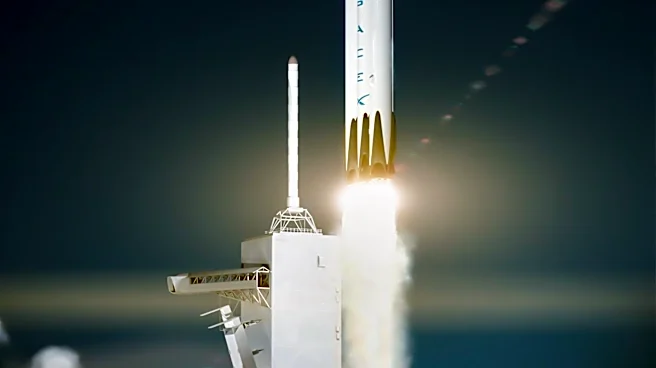
While SpaceX has previously demonstrated that the Super Heavy booster is capable of returning to the launch pad, the company will also need to be capable of returning the upper-stage to Starbase.
How tall is Starship? Is it the world's largest rocket?
Following its maiden voyage in 2023, the Starship rocket supplanted NASA's Apollo-era Saturn V as the largest rocket ever launched.
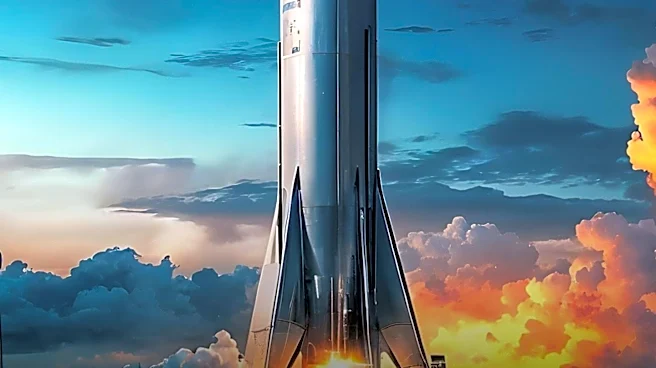
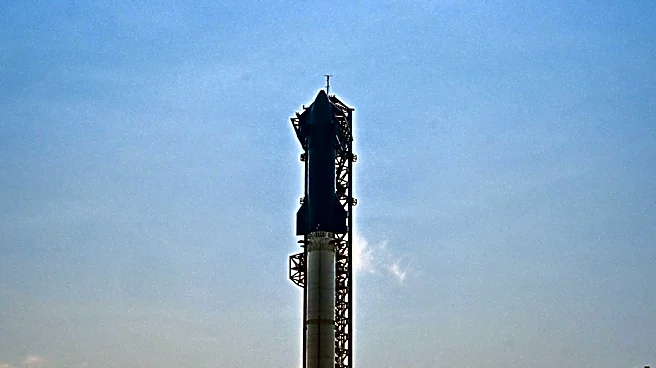
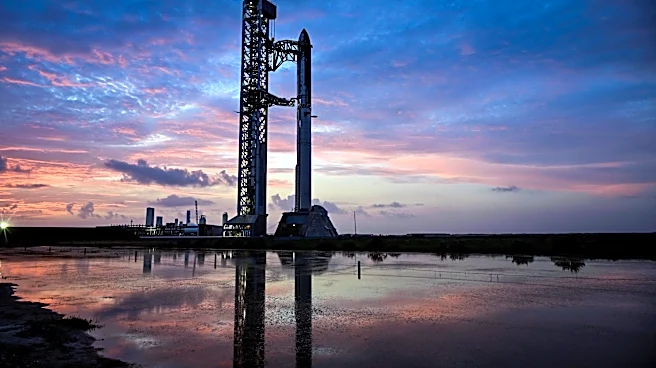
Starship's most recent flight test in May marked the debut of SpaceX's third-generation prototype of the rocket. Standing at 407 feet tall when fully stacked, the new iteration of Starship – known as Version 3, or V3 – became the largest and most powerful rocket SpaceX has ever launched.
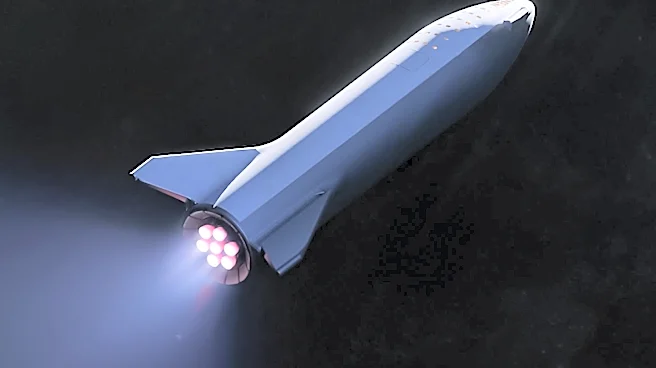
Similar to previous designs, the fully integrated Starship spacecraft is composed of both a 236-feet-tall lower-stage booster known as Super Heavy, as well as a 171-feet-tall upper stage simply called Starship. Powered by 33 of SpaceX's Raptor-class engines, the booster provides the initial burst of thrust at liftoff, while the upper-stage, where crew and cargo would ride, is designed to use its own six Raptor engines to fly in space.
Photos of Starship
What is SpaceX planning for flight 13?
For the next Starship test flight, SpaceX said it is aiming to complete similar objectives as the last launch in May in which it debuted its Version 3 prototype.
SpaceX plans to push the performance of the Super Heavy booster before it lands in the Gulf of Mexico, renamed in the U.S. under executive order as the Gulf of America. The upper stage, which is designed to eventually fly in orbit, will also be put to the test as it flies halfway around the world ahead of a landing in the Indian Ocean.
Starship to carry Starlink satellites to space
In a major first, Starship will be carrying 20 larger versions of SpaceX's Starlink internet satellites that it will attempt to deliver into suborbital space. The satellites will deploy solar arrays and antennas while attempting to connect with SpaceX's larger Starlink constellation higher up in orbit before they fall toward the ground and burn up in the atmosphere about 20 minutes later.
Six of those Starlink satellites are outfitted with cameras to assess the ship’s heatshield while it coasts in space.
If this sounds familiar, that's because SpaceX has deployed mock Starlink satellites during previous Starship flight tests.
Why is SpaceX testing Starship? Elon Musk envisions colony on Mars
Musk's vision has long been for Starship to be an interplanetary vehicle that takes humans to Mars, where they can establish a self-sustaining colony. While the world's richest man has indicated that SpaceX will focus on building a lunar city first, the company has already announced a human-led expedition to Mars' orbit – though it has not set a target date.
NASA relies on Starship for Artemis moon missions
SpaceX is also under contract with NASA to develop a lunar lander configuration of its Starship to ferry astronauts to the moon, known as the Human Landing System.
NASA is relying on Starship to be ready for a mission due in 2027 known as Artemis III. SpaceX and Jeff Bezos' Blue Origin are competing to develop lunar landers for future crewed and uncrewed Artemis missions, both of which will be tested first in Earth orbit during the crewed Artemis III mission.
Eric Lagatta is the Space Connect reporter for the USA TODAY Network. Reach him at elagatta@usatodayco.com
This article originally appeared on USA TODAY: Could Tropical Storm Bertha complicate SpaceX's next Starship launch?