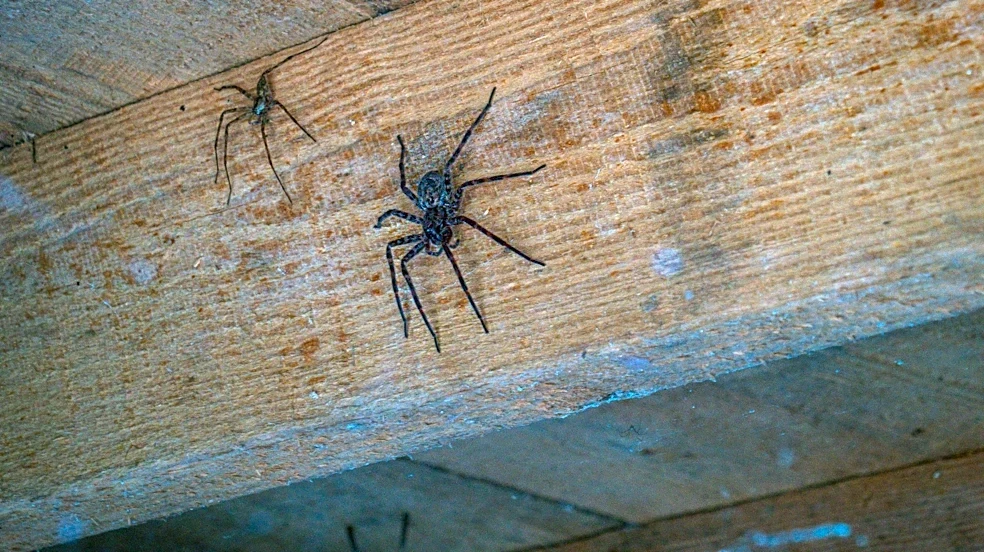










If you feel like you’ve been walking into webs or jumping out of your skin when an uninvited eight-legged critter crawls in front of you in the living room, you’re not alone. Late summer and fall are a big season for spider encounters all over the country.
While it might feel like your home has been infested with spiders overnight, the seasonal surge is completely normal. Biological life cycles, reproduction patterns, and outdoor lighting all play a role in why spider sightings are more common this time of year.
Spiders seem to materialize out of nowhere, but they’ve been around all year — they’ve just been a little more private. In spring and early summer, spiderlings hatch and stay small, so they blend into garden foliage or dark corners. By
late summer and autumn, those same spiders have reached full maturity, so they’re bigger and easier to spot.
That’s not the biggest reason (pun intended) they’re so visible, though. The primary driver behind this sudden visibility is reproduction. Early fall is the peak mating season for many common spider species. Mature males are wandering in search of females, which brings them out into plain view on your walls, floors and patio furniture.
Presumably, you’re not interested in facilitating spider romance, so let’s take a closer look at what you can do to address this sudden deluge of spiders.
Does cold weather drive spiders inside?

Contrary to popular belief, most indoor spiders do not migrate into your home from the outdoors to escape falling temperatures.
"Spiders aren't suddenly multiplying, but they are very active during the fall — they're simply following their food and shelter," says Jeff Schumacher, owner of All-Safe Pest & Termite in Texas. "If you're suddenly finding spiders in quiet places around your house, like under the sink, in closets, behind furniture, etc., it usually means they've been there for a while; you just didn't know it."
Arachnologists estimate that fewer than 5% of the spiders you see inside your home have ever set foot outdoors. Common indoor species — like house spiders or cellar spiders — have adapted to indoor environments and live in wall voids, attics and basements year-round. The sudden surge of indoor sightings in autumn is simply resident males wandering out of hiding to look for females.
That said, certain outdoor species, such as wolf spiders or grass spiders, could accidentally wander through open doors or foundation cracks when temperatures drop. You’re unlikely to see giant invaders like the Joro spider, but it’s possible you might stumble across some outdoor species in your home as it gets cooler.
What attracts spiders to your home?
Spiders are predators, which means they only set up shop where there’s a reliable food source and safe shelter. Your home offers both in spades. Some of the key attractants include:
- Abundant prey: A steady presence of flies, moths, ants or mosquitoes naturally draws hungry spiders.
- Bright exterior lights: Porch lights attract nocturnal insects, creating an all-you-can-eat buffet for web-building spiders.
- Excess moisture: Leaky pipes, damp basements or standing water provide hydration for spiders and their prey.
- Undisturbed clutter: Cardboard storage boxes, woodpiles and overgrown garden beds offer ideal hiding spots.
"Spiders come inside all year round, but it seems like they're more present in the fall because that's when other insects are making their way inside, seeking shelter," says Schumacher. Moral of the story? "Spiders are just following their food."
How to get rid of spiders
Spiders come out in flurry once fall hits, and if you're like us and don't want them interrupting dinner or movie night, there are many ways to deter them from your home. New ultrasonic technology can be used to make your home uncomfortable for the spider, but perfectly fine for humans and pests.

Ultrasonic Indoor Pest Repeller
This nontoxic pest repellent uses ultrasonic waves to stop pests from coming inside. It uses a frequency range of 10kHz-65kHz to create an uncomfortable environment for common indoor pests that shouldn't bother humans.
Buy an ultrasonic spider repeller now
Peppermint has long been used as a natural way to deter spiders. It's safe for families and pets, but will deter the pests like spiders.

Mighty Mint Peppermint Oil Insect Repellent Spray
Mighty Mint Peppermint Oil spray is a natural way to deter spiders and other common household pests from your home. Just spray indoors and near outdoor living areas and the pests will stay away.
Buy nontoxic spider deterant
If you're unlucky enough to have hordes of spiders crawl out of your walls and attic, you may want to take more... drastic measures. Raid is always a favorite in our house, and works exactly as described.

Raid MAX Spider & Scorpion Insect Killer Spray
Don't want to mess with deterrents or have some large, dangerous Widows around? This spray is designed to kill spiders on contact.
Buy Raid Max Spider and insect killer
How to keep spiders out of your home
If you’d prefer to reduce the frequency of your encounters with eight-legged freeloaders, targeted maintenance around your property can make a big difference. There are plenty of natural ways to deter pests from your home.
Seal cracks and entry points
Inspect your foundation, windows and exterior doors for cracks, and seal them with caulk or spray foam. Use caulk to seal gaps around utility lines, replace damaged weatherstripping, and repair torn window screens to block physical entry routes.
Remove webs and egg sacs
Use a vacuum or a long-handled cobweb duster to regularly clear webs from ceilings, corners, garages and porch soffits. Be sure to empty your vacuum canister immediately outdoors.
Reduce insects around your home
Since spiders go where the food is, managing underlying insect populations is key. Keep kitchen counters clean, store food in airtight containers and fix leaky fixtures to discourage general household pests.
Clear clutter and hiding places
Declutter basements, attics and garages by swapping cardboard boxes for sealed plastic storage totes. Store firewood at least 20 feet away from your home's exterior walls.
Adjust outdoor lighting
Switch traditional white porch bulbs to yellow LED or sodium-vapor light bulbs, which are significantly less attractive to nocturnal flying insects.
Keep vegetation away from your home
Trim back tree branches, shrubs and tall grass so they do not touch your siding or rooflines, eliminating natural bridges into your house. Keeping vegetation back can be a useful way to keep outdoor spiders away from your home.
Should you worry about seeing more spiders?
For the vast majority of homeowners, seeing more spiders in the fall is no cause for alarm. Most common species are completely harmless to humans and are natural pest deterrents themselves by eating other pests, such as mosquitoes, flies and gnats. TheU.S. Environmental Protection Agency (EPA) actually names spiders as outstanding natural pest control.
Only a few spider species in North America — such as the brown recluse and black widow — are dangerous to humans, and both species are reclusive and rarely bite unless directly crushed or cornered.
When does spider season end?
While there isn’t really a spider season (they’re always there) the time when spiders are bolder always ends on its own. As temperatures drop steadily toward late autumn and early winter, wandering male spiders finish their mating cycle and naturally die off.
Outdoor spiders slip into a state of dormancy called diapause or hide under tree bark and leaf litter, while indoor spiders retreat back into undisturbed wall voids and attics. By the time the first hard frost hits, visible spider activity drops off significantly. By then, you’ll have other winter things to keep your mind occupied.
When to call professional pest control for spiders
Sometimes, natural products and your best effort is not enough to get rid of spiders for good. "If you're still finding spiders regularly despite all your efforts, it's time to call your local pest control company," Schumacher says. "Most spiders are generally harmless, but professional pest control can help you get rid of them (and other insects) indoors."
But there's a caveat: "if you find a brown recluse or black widow spider, call pest control immediately," Schumacher warns. "These spiders are dangerous and have enough venom to kill small pets and cause serious health problems for humans." If you notice anything that looks like one of these venomous spiders, call a pest control expert.

Call Orkin today
Orkin Pros can tackle your spider infestation in no time.
Call an Orkin Pro
Frequently asked questions
Why are there suddenly so many spiders in October?
October is the peak of spider mating season for many North American species. Mature males leave their hidden retreats and wander out in the open to find mates, making them much more visible to homeowners.
Are spiders coming inside because it’s cold?
Generally, no. Most spiders you see indoors have spent their entire lives inside your home. The sudden increase in sightings during autumn is driven by mating behavior rather than dropping outdoor temperatures.
Does seeing spiders mean your house is dirty?
No. Spiders are attracted to prey, shelter and moisture, not dirt. Even the cleanest homes can have spiders if there are small insects around or entry points from the outside.
What month are spiders most active?
Late August through October is typically the period of highest spider activity and visibility in North America due to mature sizing and mating behavior.
Does seeing spiders mean you have an insect problem?
Not necessarily, but spiders do require a steady food supply to survive. Finding numerous webs inside may indicate that small insects like gnats, ants or flies are also active in your living spaces.
What keeps spiders away from your home?
Sealing exterior gaps, turning off bright outdoor lights at night, decluttering basements and keeping indoor insect populations under control are the most effective ways to keep spiders out.
This article originally appeared on USA TODAY: Why you see more spiders in the fall and how to keep them away
Our editors independently choose our recommendations. Some content is produced with paid support from a third party, however our editorial decisions remain independent. If you buy through our links, the USA TODAY Network may earn a commission. Prices and availability may change.