







Since being announced in April, New York City's newest pied-à-terre tax has gained praise and scrutinty.
Now, it's getting legal attention.
Here's everything you need to know about Mayor Zohran Mamdani's pied-à-terre (so far).
What is the pied-à-terre tax?
Pied-à-terre, French for "foot on the ground," means a secondary home or residence. The tax plans to annually charge one-, two-, and three-family homes valued at more than $5 million and condominium and cooperative units valued at $1 million or more when owners have a separate primary residence outside of New York City.
It's the first of its kind in the state and is the first step to one of Mamdani's major campaign points, which was taxing richer residents more. "The measure targets ultrawealthy out-of-city residents and global
elites who use New York City real estate as a vehicle for wealth storage rather than as homes," a release on the move said. At the time, it was projected to rake in around $500 million a year for the city.
What has Trump said about the pied-à-terre tax?
President Donald Trump has said on numerous occasions that Mamdani has targeted richer residents in the city, and would drive them out.
"Sadly, Mayor Mamdani is DESTROYING New York! It has no chance! The United States of America should not contribute to its failure," Trump wrote on Truth Social shortly after the tax was announced.
"It will only get WORSE. The TAX, TAX, TAX Policies are SO WRONG. People are fleeing. They must change their ways, AND FAST. History has proven, THIS 'STUFF' JUST DOESN’T WORK."
Mamdani responded to the president by saying that "the president and I both want the city to succeed. This is how you do it."
What do some billionaires think of the pied-à-terre tax?
Controversy has shrouded the tax when it comes to billionaires. In one of the most notable disagreements so far, Mamdani and billionaire Ken Griffin went at odds after the mayor stood outside of Griffin's $238 million home and used it as an example of who would face more charges.
Griffin, the CEO of Citadel LLC, a global hedge fund, took great to the post, and called the video "creepy and weird."
After the Griffin video was released, Amazon CEO Jeff Bezos said that billionaires shouldn't be villainized. "When you don’t know how to solve a problem, create a villain, blame them, but it won’t solve the problem. The only thing that will solve the problem is skill," he said in May.
"I pay billions of dollars in taxes. … If people want me to pay more billions, then let’s have that debate. But don’t pretend … that that’s going to solve the problem," Bezos said. "You could double the taxes I pay and it’s not going to help that teacher in Queens, I promise you." After the interview, Mamdani went to X and wrote: "I know a few teachers in Queens who would beg to differ."
When did the city start sending out pied-à-terre tax letters?
NYC began to send out letters notifying homeowners who may fall under the tax late last month. A release on the move called it "the first step in implementing the tax."
NYC officials also released a website to help those through the process at nyc.gov/npsurcharge, and added 24 new jobs within the Department of Finance and the Office of Administrative Tax Appeals to assist the program's implementation. "Today, we sent notification letters to property owners, letting them know that our new pied-à-terre tax is coming soon," Mamdani posted to X at the time.
"The best city in the world deserves the best parks, libraries, and schools in the world. That's only possible when we all pay our fair share."
Controversy surrounds rollout
Confusion has clouded the tax rollout as some owners reported receiving letters despite the property being their primary home. Officials responded by stating that homeowners can use a city website to prove the property is a primary residence, and that letters were sent to taxpayers who may be obligated to pay the pied-à-terre. the Department of Finance sent out 17,000 letters in total.
"The Department of Finance sent informational resources to homeowners to ensure that they understood the tax, that they understood the options before them, and also, if they did not believe it to apply to them, that they had the time in order to be able to appeal," Mayor Zohran Mamdani said at an unrelated press conference.
“You may have received a letter because our records did not allow us to confirm that the property is being used as a primary residence," the DOF said on its website. "Receiving a letter does not necessarily mean that you will owe the surcharge."
A tax roll was also published, which listed properties that may fall under the new rule, although the city said "the vast majority of properties and units listed in the roll will NOT be subject to the surcharge."
Rollout faces brief setback from lawsuit
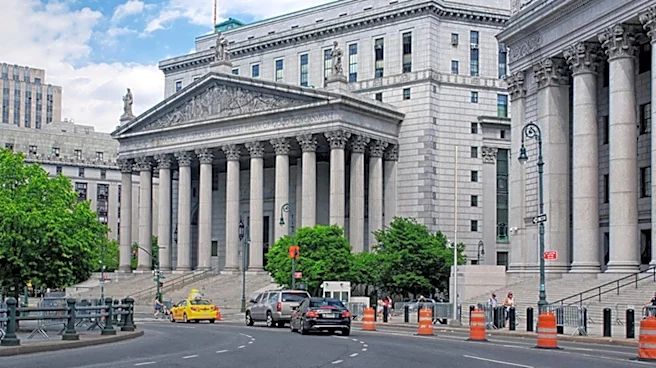
A Staten Island judge issued a temporary restraining order this week on the Mamdani administration's pied-à-terre tax launch after a lawsuit by homeowners claimed that the city botched identifying who would fall under the new surcharge.
The city immediately filed to appeal the decision, which means a higher court will look at it before the order can go into effect. Those suing are represented by former First Deputy Mayor Randy Mastro, who served under former Mayor Eric Adams. Officials pointed to the lawyer's record when asked about the suit.
"There are few things more certain in New York City than death, taxes and Randy Mastro filing a lawsuit against this administration," Mamdani said when asked of the filing.
"So we look forward to vigorously defending our city's position in court as we have done so with the previous lawsuits that he has filed."
What happens next with the pied-à-terre tax?
The city deadline gave around 17,000 residents who received the letters until Sept. 18 to prove that they do not meet the guidelines for the new tax. The next hearing for the case is expected Aug. 31.
As of now, NYC's website on the tax says that "charges will appear on your property tax bill that is due January 1, 2027."
This article originally appeared on USA TODAY: Everything to has happened with Zohran Mamdani's pied-à-terre tax