




For more than 500 days, Shlomo Mantzur’s family could not begin to mourn him.
On Oct. 7, 2023, Hamas terrorists dragged the 85-year-old from his home, handcuffed him in his pajamas, killed him and took him into Gaza. His wife, Mazal, escaped. His family had to wait to do the first thing any grieving Jewish family does: bury him.
In Jewish tradition, burial is supposed to happen within a day, and only then can mourning begin. Mourners sit shiva at home for a week as the community visits with food and stories, say daily prayers for the dead for a year, and every year after, light a memorial candle on the anniversary of the death.
Every culture grieves. Jewish grieving is built so that no one is forgotten. The rituals don’t end when the tears do.
They follow us for the rest of our lives, and we pass them on to our children.
But for Jews, remembering our dead has never been enough. We are also asked to prove that it happened, that it happened the way we say it did, and that it was never justified.
The further we get from Oct. 7, the more its victims fade

I recently debated Norman Finkelstein on Piers Morgan’s show. Finkelstein repeated his claim that there is not a "single frame" of evidence of rape in the Hamas attack three years ago. Ignoring survivors’ own testimony, he demands a standard of proof no rape victim in history has had to meet. That exchange has close to a million views on YouTube.
Finkelstein is far from alone. Days after the massacre, a national campus network hailed it not as terrorism but as “a historic win for the Palestinian resistance.” A year later, protesters in New York City carried a banner reading “Long live Oct. 7.” And this year, organizers of a rally outside New York City Hall called the attack the moment “resistance against imperialism changed the fate of our world forever.”
These aren't protests of Israel's war. They are celebrations of the day Israelis were slaughtered.
None of this is new. Holocaust deniers rarely claim that nothing happened. They argue that the gas chambers were for delousing, that the deaths were from typhus, and that far fewer than 6 million Jews died. They don’t erase the atrocity outright. They diminish it until it no longer seems to matter.
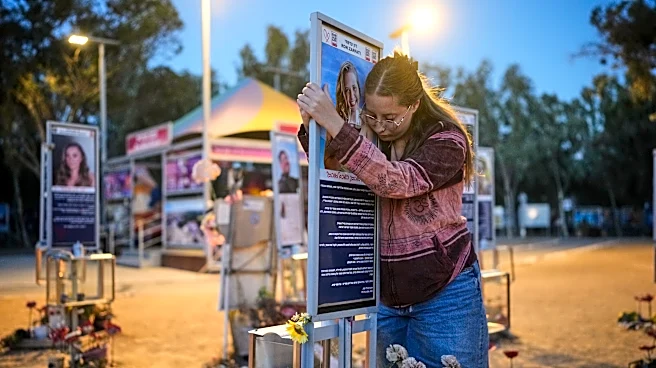
The further we get from Oct. 7, 2023, the more its victims fade from the story, their names replaced by talking points. That is why we insist on memorials, museums and names read aloud. Remembering is how we grieve, even in the middle of a catastrophe. European Jewish communities wrote memorial books for their destroyed towns before the Holocaust ended, and Israel’s founders planned its Holocaust museum before the state existed.
People accuse Jews of wanting to be perpetual victims. The opposite is true: We never want to be victims again. “Never forget” is not just about preventing future atrocities. It reflects our knowledge that the world will forget, deliberately, just in time to justify the next massacre.
Jews have spent thousands of years refusing to forget
I learned this from my grandmother, Hela. She survived the Farhud, when rioters killed as many as 180 of Baghdad’s Jews over two days in 1941. She witnessed horrors she carried for the rest of her life, including the rape of a disabled teenage neighbor.
Shlomo survived the Farhud, too, at age 3. His family moved to Israel when he was 13. There he married Mazal, raised five children and helped found the Kibbutz Kissufim. He spent the rest of his life trying to rebuild what the rioters destroyed.
Few people have heard of the Farhud. The history of Jews in the Arab world is often told as centuries of peaceful coexistence, broken only by the founding of Israel. That story leaves out generations of second-class status, recurring violence and the expulsions that drove roughly 850,000 Jews from Arab lands. My family’s suffering is rarely denied outright. It is simply left out.
That’s why I have dedicated my life to telling the story of Mizrahi Jews like my grandmother. If we don’t remember them, no one else will.
This week, Shlomo’s family will light a candle in his memory. Jews everywhere will say Kaddish for the more than 1,200 people murdered that day; may their memory be a blessing. We remember them not to win sympathy, but to ensure the truth outlasts the lies.
Those who deny, minimize or excuse Oct. 7 are counting on the world to forget. Jews have spent thousands of years refusing to let that happen.

Hen Mazzig is a senior fellow at the Tel Aviv Institute.
This article originally appeared on USA TODAY: People who excuse Oct. 7 want the world to forget. We won't | Opinion