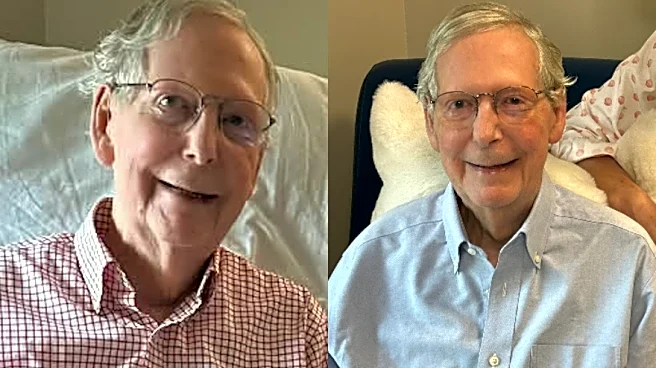





The latest photo of Sen. Mitch McConnell is ramping up questions about his health − and online conspiracy theories about his condition.
McConnell, 84, was hospitalized in June after being reported unconscious at his Washington residence. His office said earlier this month that the former Senate majority leader's health is improving, but details about his condition have been scarce.
In a post to his social media on July 13, McConnell addressed the concerns about his health, saying a fall, which left him "briefly unconscious," landed him in the hospital. He added he was dealing with a "mild case of pneumonia," sharing a photo of himself in a hospital bed. The image led to even more speculation, as many online alleged it was created or altered with artificial
intelligence, even after the longtime lawmaker's office confirmed his health was improving.
In the latest photo, dated July 26, McConnell is seen in a similar pose next to his wife, Elaine Chao − intensifying suspicions that these images don't reflect reality. In an accompanying statement, his office said he was still having "intense physical therapy."
On social media, some users alleged the new photo was "AI slop" while others reposted heavily circulated, unfounded conspiracy theories that McConnell has died. Others turned the photo into AI-generated videos and shared posts mocking the believability of the latest image.
Experts say it's normal to wonder about a public figure's health, especially a politician who can heavily influence Americans' rights.
"When a highly powerful elected official is observed publicly experiencing a medical issue … it is reasonable to expect public discussion as well as a public response from the leader," Laura Petiford, marriage and family therapist and psychiatric nurse practitioner, previously told USA TODAY.
In general, even if conspiracy theories sound ridiculous, experts say they highlight people's eagerness to make sense of the unknown.
"Human brains like to understand things, and they like to have predictability, and they like to have control over their environment," psychotherapist Stephanie Sarkis previously told USA TODAY. "When you have perceived threats in your environment, a conspiracy theory can help you make sense of your distress."
And when it comes to conspiracy theories, "we are all susceptible," said Dolores Albarracin, a professor at the University of Pennsylvania.
"Because we cannot physically verify many of our beliefs – is the Earth round? – we need to trust sources and documentation. If we trust trustworthy sources, we are generally safe, although all sources are fallible. If we trust untrustworthy ones, we are in danger," Albarracin previously told USA TODAY.
But health speculation can be harmful in some cases, too, experts add.
Public figures, including political leaders, "deserve a certain level of privacy regarding their personal health issues," Brad Fulton, professor of management, data science and philanthropy at the Indiana University Bloomington, previously told USA TODAY.
Plus, in current times, it's easy to ignore the boundaries of others.
"In the age of social media, the general public has become trained to share not only their most private moments, but to also expect others to do the same," psychologist Reneé Carr previously told USA TODAY.
Contributing: Alyssa Goldberg, David Oliver and Charles Trepany, USA TODAY
This article originally appeared on USA TODAY: New Mitch McConnell photo fuels online conspiracy theories