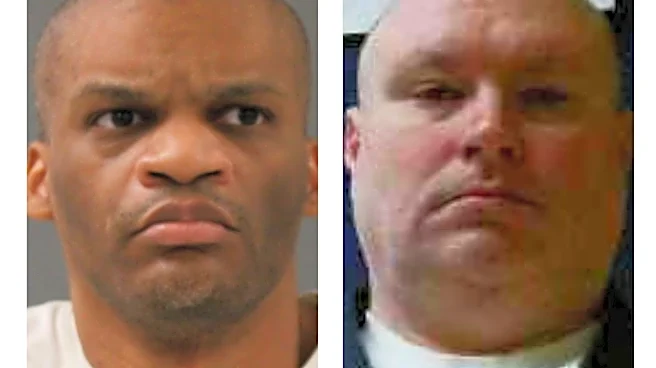








A Georgia death row inmate won a last-minute reprieve from execution for the second time in less than a year on the same day that Texas put a man to death for killing three people in 2005.
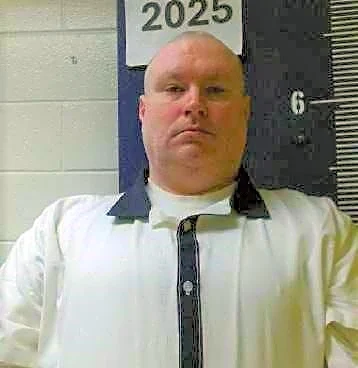
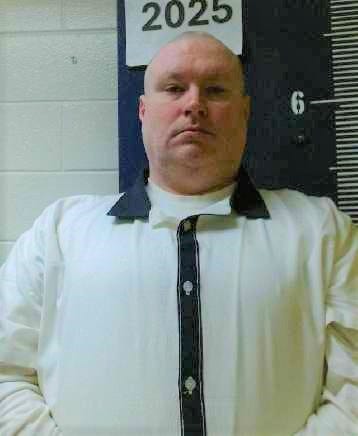
Stacey Humphreys, 53, had been set to die by lethal injection on Wednesday, Sept. 16, at roughly the same time that Texas carried out another execution. But less than 24 hours before Humphreys was set to die, Cobb County Superior Court Judge Tyler Browning issued a stay of execution for Humphreys over a new state law that allows some inmates to seek reduced sentences if past abuse they suffered was "a significant contributing factor" to their crime.
Browning's ruling, obtained by USA TODAY after it came down late Tuesday, did not discuss the merits of Humphreys'
arguments but agreed with defense attorneys that the issue deserves a day in court. On Wednesday, the Georgia Supreme Court allowed Browning's ruling to stand pending a hearing about the new law and how it may apply to Humphreys.
Humphreys was convicted of the 2003 murders of two real estate agents, 21-year-old Lori Brown and 33-year-old Cyndi Williams in the Atlanta suburb of Powder Springs. Humphreys forced the women to take off their clothes, stole their debit cards and shot them execution-style.
Meanwhile in Texas, LeJames Norman was executed by lethal injection for the triple murder of his neighbors during a robbery that turned deadly in 2005. Norman, 40, was pronounced dead at 6:44 p.m. CT.
Here's what else you need to know about Humphreys' reprieve, Norman's execution and each of the men's crimes.
Humphreys spared from execution twice since December
Humphrey's last-minute stay of execution this week comes nine months after he won another stay of execution just two days before his lethal injection was scheduled.
Humphreys had been set to be executed on Dec. 17, but the state's parole board stopped it over conflict-of-interest allegations involving two board members weighing whether to grant Humphreys clemency. A judge later ruled that one board member did not have a conflict but that another board member had to recuse herself.
Humphreys' execution was rescheduled for Sept. 16, and the reduced board voted against granting Humphreys clemency.
The ruling that stopped Humphreys' execution this week came after his attorneys argued that severe abuse he suffered as a child was a major contributing factor to Brown's and Williams' brutal murders.
"His early life and adolescence were defined by chaos, neglect, and abuse of every kind: physical, emotional, and sexual," defense attorney Nathan Potek wrote in a court filing obtained by USA TODAY. "Stacey’s earliest years were spent with a seriously mentally ill mother. ... He was then raised by a violent father and spent nearly every weekend from age six to thirteen with a paternal great-grandmother who sexually abused him."
The abuse Humphreys experienced, Potek wrote, included cigarette burns all over his body, a skull fracture at the age of 3, a dislocated shoulder at 4, and ongoing violent beatings throughout childhood. Potek described horrific sexual lasting between the ages of 5 and 14.
The 2025 state law that led to Humphreys' stay of execution − called the Georgia Survivor Justice Act − allows someone who was sentenced before July 1, 2025, to seek a reduced sentence if they were "subjected to acts of family violence, dating violence, or child abuse ... and such acts were a significant contributing factor to the offense."
The Georgia Attorney General's Office has not disputed the abuse that Humphreys experienced but argued that the new law does not apply to him. They argue that the law was not intended for death row inmates and that doing so essentially usurps a jury's ability to impose the death penalty.
A spokeswoman for the office declined to comment on the stay of execution, citing the ongoing legal case.
Potek said in a statement to USA TODAY that he was looking forward to arguing the case in the Georgia Supreme Court. He said the new law "gives real effect to the scientific evidence that children who endured severe trauma, like Stacey, are placed at a higher risk for negative mental health consequences and criminal behavior − through no fault of their own − into adulthood."
Texas executes LeJames Norman for triple murder
Within hours of confirmation that Humphreys would not be executed on Wednesday, Texas put 40-year-old LeJames Norman to death for the triple murder of three of his neighbors in Edna, about 100 miles southwest of Houston.
On Aug. 24, 2005, then-19-year-old Norman and his friend, Ker’Sean Ramey, were looking to score some cocaine and decided to rob their neighbor, 38-year-old Celso Lopez. Norman and Ramey forced their way into Lopez's home and held him at gunpoint as they looked for drugs, according to court records. At some point Norman shot Lopez, though he claimed it was an accident.
Lopez’s roommates, 18-year-old Tiffani Peacock and 24-year-old Sam Roberts, walked in on the scene. The two had been dating.
“Norman forced Peacock to her knees and shot her in the head,” court records say. Roberts tried to flee but both Norman and Ramey shot him. Ramey shot all three victims several more times to make sure they were dead, court records say.
“It was an execution,” prosecutor Eli Garza said during Ramey's 2007 trial, according to an archived story in the Victoria Advocate.
Norman became the fifth inmate executed in Texas this year and the 26th in the U.S.
Norman's attorneys argued in recent weeks that he deserved mercy because he was remorseful and because his troubled and abusive childhood took him down a path that led to the murders. They also argued that Norman's trial attorneys failed to fully investigate whether he had suffered brain trauma as a result of the "extraordinary level of violence," he experienced as a child, court records say.

Peacock's older sister, Tabatha Munnerlyn Hastings, told USA TODAY that she chose not to attend Norman's execution because it was too emotionally difficult.
"I believe in accountability and justice for what was done to her," Hastings said. "At the same time, I do not view an execution as something to celebrate."
She continued to say that her faith teaches her that "eternal judgment belongs to Christ, and vengeance belongs to God."
"Nothing can bring Tiffani back, so my hope is that she is remembered for her life, not only for the crime committed against her," she said.
She said her sister was on the cusp of going to college and dreamed of becoming a veterinarian and trying out for "American Idol."
"She was only 18 years old. Her whole life was still ahead of her," Hastings said. "Her life mattered before it ever became part of a court case, and it still matters today."

When is the next execution?
The next execution in the U.S. is scheduled for Thursday, Sept. 17, when Alabama plans to execute Jeffery Lee for a double murder during a pawn shop holdup in 1998 in Orrville, about 60 miles west of Montgomery.
Lee killed Elaine Thomas and Jimmy Ellis, who was a noted Elvis impersonator at the time. Ellis performed under the stage name Orion, and a 2015 documentary tells his life story. ("Orion: The Man Who Would Be King")
In a move that still draws protests today, the judge in the case sentenced Lee to death despite a jury voting 7-5 to give him life in prison without parole. The practice − called judicial override − was abolished in Alabama in 2017.
Lee, now 50, had been set to be executed by the controversial new method of nitrogen gas on June 11. But two days beforehand, a federal Alabama judge stopped the state from carrying it out, ruling that the method amounts to cruel and unusual punishment in violation of the U.S. Constitution.
Alabama rescheduled Lee's execution, only this time using the more common lethal injection method.
"The legal process has run its full and proper course," Attorney General Steve Marshall said in a statement in June. "The people of Alabama have not forgotten Jimmy and Elaine. I have not forgotten them. Anything short of carrying out the sentence imposed by the court falls short of justice for the victims, and that is not what victims of this state deserve.”
Contributing: Swasti Singhai, USA TODAY, and Sarah Clifton, the Montgomery Advertiser
Amanda Lee Myers is a senior crime and courts reporter who covers the death penalty, cold cases and breaking news for USA TODAY. Follow her on X at @amandaleeusat.
This article originally appeared on USA TODAY: 1 lives, 1 dies: Georgia inmate wins last-minute reprieve as Texas carries out execution