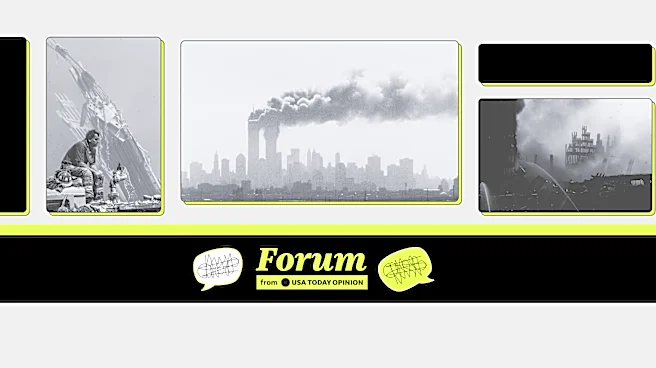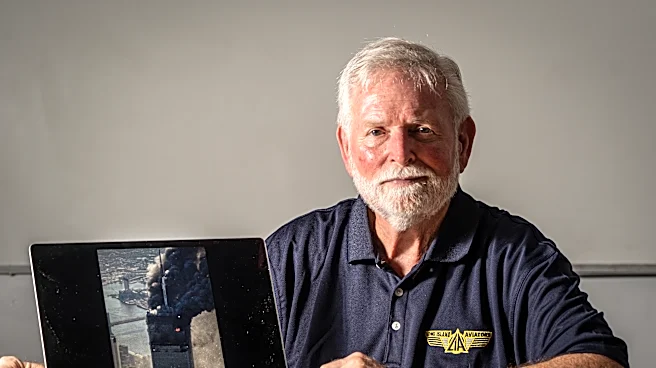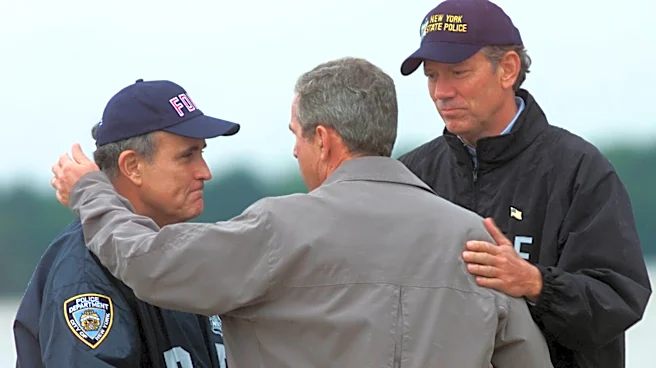



The attacks of Sept. 11, 2001, left wounds that time will never fully heal. Nearly 3,000 people were killed in a despicable act of terrorism – mothers and fathers, sons and daughters, family members and friends.
"Never Forget," we vowed together. But today, about 1 in 3 Americans are too young to remember 9/11. Part of our duty to those we lost, and to our country, is to teach them what happened that day and in the years after, so that they will pass the lessons on to their children and grandchildren.
The terrorists targeted New York City because it has long been a symbol of the freedoms they hated. They aimed not only to bring down buildings, but also to break our spirit and our commitment to the values that give us strength: openness, diversity,
tolerance and ambition.
To see New York a quarter century later is to comprehend how profoundly they failed. The city is more vibrant, exciting and alive than ever before.
But 25 years ago, none of that was guaranteed.
Lower Manhattan's long shadow

I was elected mayor less than two months after the attacks. A deep sense of uncertainty hung over the city’s future.
Many worried that Lower Manhattan would never recover – that no one would want to live or work in the area, and that as businesses and residents left, crime would return, infrastructure would crumble, and the city would slide back into the decline it had known in the 1970s.
All of us in elected office, in both parties, were determined not to let that happen. It would have handed the terrorists the victory they sought. We owed it to everyone we lost on 9/11 to prevent it.
I began my career in Lower Manhattan, just a few blocks from the World Trade Center, back when the area was the financial center of the city. It bustled during the day, but after 6 p.m. and on weekends, it became a ghost town of empty streets and closed shops. In 2001, it was still largely that way.
After 9/11, our team in City Hall believed that Lower Manhattan’s recovery depended not on rebuilding what had been lost, but on building something that had never fully existed there: a 24/7 community.

We set out to reimagine Lower Manhattan as a family-friendly neighborhood, one where more people would want to live, more entrepreneurs would want to open businesses, and more companies would want to operate: a "vibrant global hub of culture and commerce, a live-and-work-and-visit community for the world," as I described it back in 2002.
That vision led us to create new parks and open spaces, including along the city's long-neglected waterfront. It led us to build new schools to attract families and to make new investments in the arts. And it led us to form new partnerships with cultural organizations, including the inaugural Tribeca Film Festival in 2002, which helped show the world that Lower Manhattan was not just safe but also exciting, the place to be.
Ground Zero: Former World Trade Center location is a complicated site
As we worked to transform the neighborhood, however, Ground Zero remained empty. It was an extremely complicated site, controlled jointly by two states and a private developer, with many competing ideas and public debates about what should be done.
Despite good intentions, disputes led to delays that lasted years. By 2006, with progress on the memorial stalled, I agreed to step in to lead the effort – and vowed to open the memorial by the 10th anniversary of the attacks.
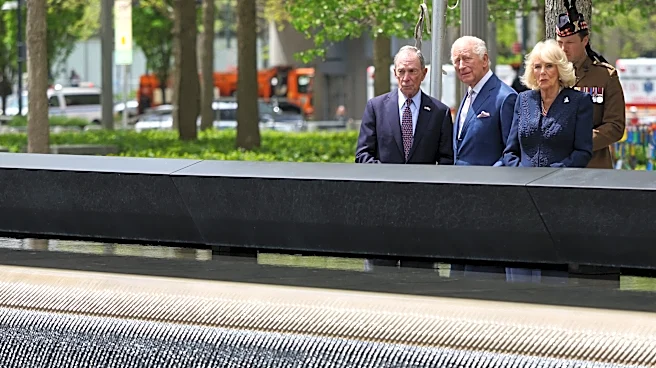
Working closely with state agencies, family members, construction companies, architects and others, we resolved thorny issues, got the project back on track and kept our promise. On Sept. 11, 2011, the 9/11 Memorial opened where the Twin Towers once stood. The name of each person we lost is etched in bronze around peaceful reflecting pools, with waterfalls that cascade beyond view.
Standing before it is a powerful experience more than 100 million people from around the world have now had. Many have also spent hours in the museum beneath it, learning about the day, the people we lost and the stories of heroism, sacrifice and compassion that inspired the world.
Revival of Lower Manhattan reflects New York City at its best
When we left City Hall at the end of 2013, life had already returned to the World Trade Center, and there were far more people living and working in Lower Manhattan than there had been on Sept. 10, 2001. That number has kept growing, as our vision for a 24/7 community continues to bear fruit.
In 2023, the Perelman Performing Arts Center (PAC NYC) opened beside the 9/11 Memorial and Freedom Tower. I was honored to chair the effort to build it, and it fulfilled the plan we had developed in City Hall for the arts to have a permanent home at the site.
People now go to the World Trade Center for the memorial, where they commemorate those we lost; for the museum, where they learn about 9/11; and for PAC NYC, where they take in world-class theater, dance and music. And they go to do what New Yorkers have always done: work, with tens of thousands of people now employed in the new towers.
Thanks to the hard work and cooperation of so many, the rebuilding of the World Trade Center and the revival of Lower Manhattan have led to the rebirth of a community that reflects New York City at its best: a place where people of all backgrounds and beliefs live, work, gather and play together, exercising the freedoms the terrorists could not destroy.
Lower Manhattan today stands as a testament to the strength and resilience of the city’s spirit – and our national character.
Michael R. Bloomberg, founder of Bloomberg and Bloomberg Philanthropies, is chair of the 9/11 Memorial & Museum and the Perelman Performing Arts Center (PAC NYC). He served as mayor of New York City from 2002 to 2013.
This article originally appeared on USA TODAY: Bloomberg: Lower Manhattan seemed finished after 9/11. We knew better.