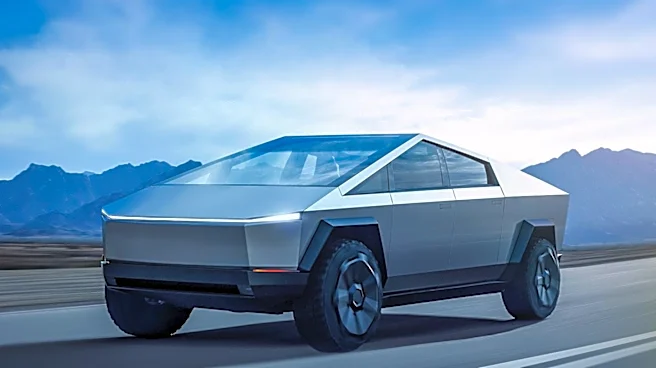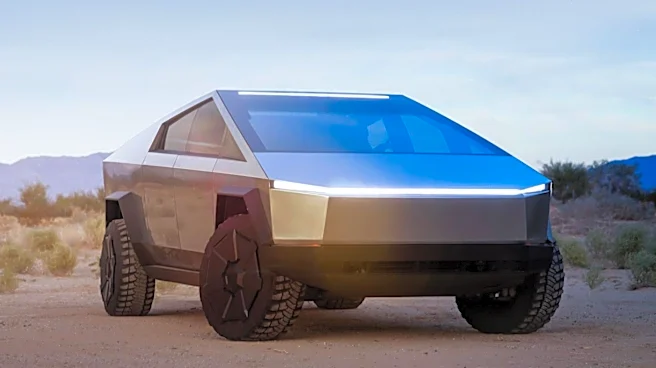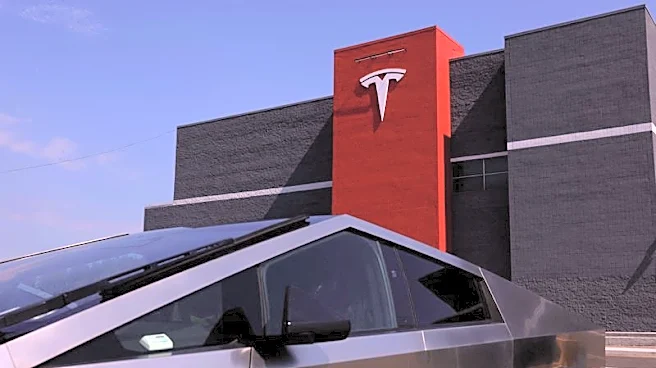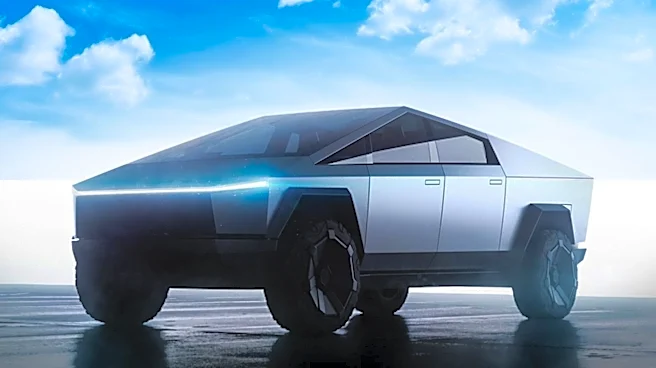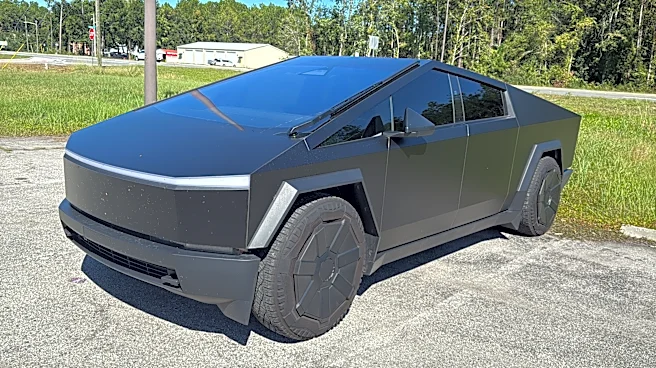








Tesla sold more of its unconventional Cybertruck electric pickups in October than it had in any one-month period for over a year, even as the company has announced plans to end production next year, according to new data released by Cox Automotive.
Cox said Tesla sold 1,914 Cybertrucks in October, which was the stronger than any monthly sales of the electric pickup in more than a year. The finding comes as Tesla CEO Elon Musk said in a Nov. 6 post on X that his company will wind down the electric pickup to focus on the Cybercab.
"Tesla will be winding down production of the Cybertruck at Gigafactory Texas around the middle of next year to make room for increased Cybercab production," Musk wrote.
Cox said the uptick in Cybertruck sales in October
helped drive Tesla's average transaction price for the month to $54,194. The groups said the Cybertrucks had an average price of $92,380.
"Healthy Cybertruck sales in October were one driver of the year-over-year price gain," the group said.
Previously, Cox reported that Tesla Cybertruck have fallen 28% so far in 2026.
Why is Tesla discontinuing the Cybertruck?
Tesla sold 11,586 Cybertrucks in first three months of 2026, compared to 16,097 in the first three months of last year.
The vehicle was first introduced for the 2024 model year.
The Cybertruck sales decline came as overall electric car sales fell in the last few years, following President Donald Trump and Congress eliminating a popular EV $7,500 tax credit.
Carmakers sold 725,888 electric cars in the first nine months of 2026, according to data released Oct. 12 by Cox Automotive, down 30% from the more than 1 million EVs they sold in the same period last year.
Stephanie Valdez Streaty, Cox Automotive’s director of Industry Insights, said in a statement that Tesla's decision to discontinue the Cybertruck "highlights how difficult it can be to translate strong initial attention and enthusiasm around a new vehicle into sustainable mainstream demand."
"The Cybertruck was envisioned as a vehicle that could bring Tesla into the heart of the pickup market, but it ultimately became a more niche offering," she said. "It’s also a reminder that even an established EV manufacturer like Tesla can face challenges when introducing a radically different product into one of the most competitive and brand-loyal segments of the U.S. auto market."
Here's how the Cybertruck has sold since its introduction in 2024:
- 2024: 38,965
- 2025: 20,237
- 2026 so far: 13,500
What has Elon Musk said previously about the future of the Cybertruck?
Musk told investors on Tesla's Jan. 28 earnings call that its unconventional Cybertruck electric pickup truck may be heading for an autonomous, commercial future.
In response to a question about whether he would be willing to design "a more conventional looking pickup" given the sluggish Cybertruck sales, Musk said on the January earnings call, "We will transition the Cybertruck line to just a fully autonomous vehicle."
"There’s obviously a market there for cargo delivery, like say like localized cargo delivery with a city, with a few hundred miles something like that," Musk said. "There’s a lot of cargo that needs to move locally within a city, an autonomous Cybertruck could be very useful for that."
Industry analysts have noted the impact of Musk's work with Trump in 2025 and staunch conservative political stances on the sales performance of the company's cars.
The Cybertruck in particular launched during the height of the 2024 presidential campaign, when Musk vocally supported Trump, and the cars became a symbol for some of shoppers' alignment with Musk and Trump's politics.
According to a November 2025 Yale University study, Tesla sold 1 million-1.26 million fewer vehicles between October 2022 and April 2025 than it otherwise would have without what the study's authors dubbed the "Musk partisan effect." The study found Musk's public political stances also helped to increase the sales of other automakers' electric and hybrid vehicles by 17-22% as drivers who were opposed to the CEO's politics fled to other EV manufacturers.
According to apoll released in January by EVs for All America, an advocacy group that works with car manufacturers to push U.S. and state lawmakers to adopt EV-friendly policies, 44% of people who said they are seriously considering buying an EV had a mostly unfavorable opinion of Musk.
Keith Laing is an automotive reporter on the National Trending Desk at USA TODAY. Contact Keith at klaing@usatodayco.com.
This article originally appeared on USA TODAY: Tesla Cybertruck sales just hit a 1-year high. So why is it ending?