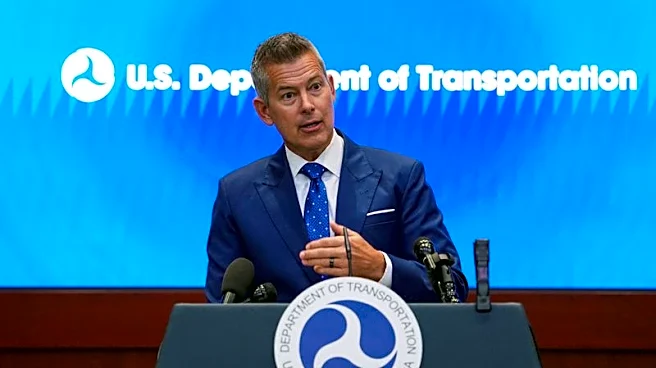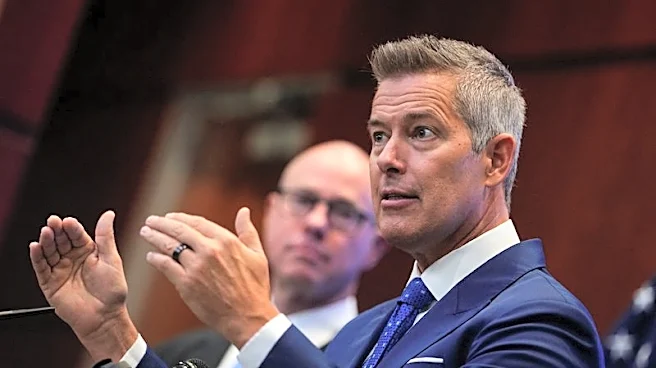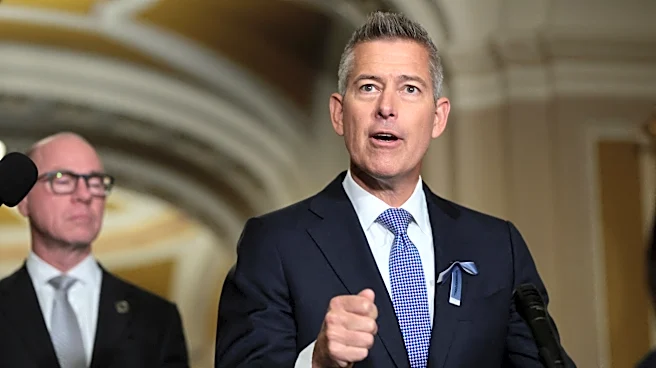

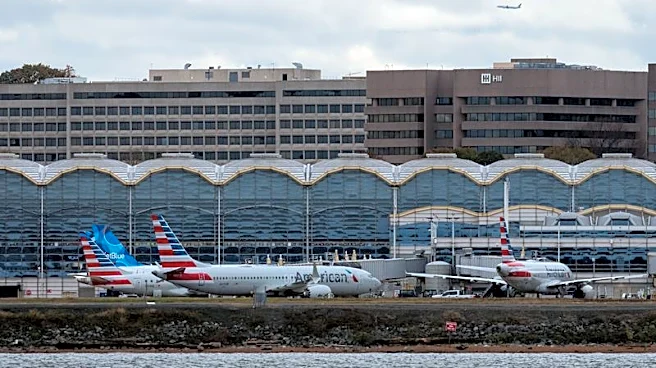
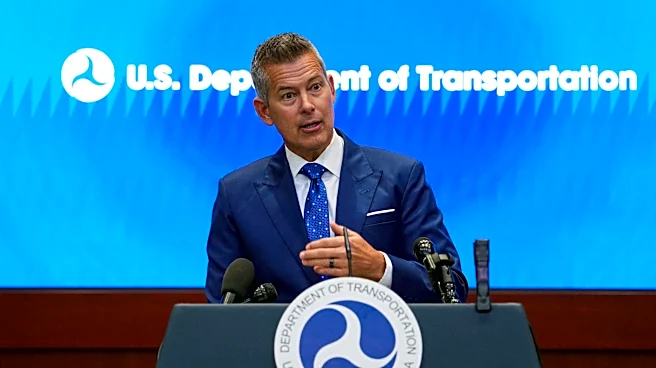
WASHINGTON – Transportation Secretary Sean Duffy detailed why he wants $50 billion more to modernize the air-traffic control system after the four-hour shutdown Nov. 13, but lawmakers asked for more information before loosening the purse-strings.
Lawmakers of both parties said Duffy needed to explain better how the money would be spent and on what, after providing $12.5 billion for modernization last year. Several Republicans voiced skepticism about funding airport improvements.
Duffy told reporters after meeting with Republican senators that he would leave lawmakers to sort out how much of his request to fund.
“I’ll take what I can get,” Duffy said.
Several lawmakers questioned the larger funding request. Duffy said the Biden administration replaced
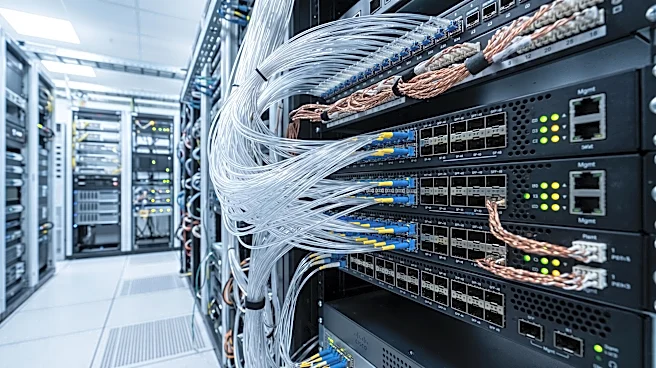
19% of air-traffic control’s copper lines with fiber-optic lines during four years and the Trump administration replaced more than 50% in one year.
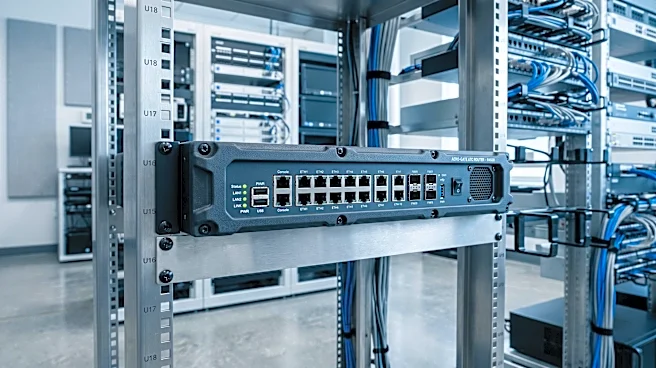
Duffy said 68 routers had been replaced, when the 69th became problematic. He said technical experts are still studying the equipment to determine what went wrong.
But the $50 billion price tag raised eyebrows among lawmakers of both parties. The figure included $10 billion for air-traffic control modernization, $10 billion for airport infrastructure and terminals, $10 billion to rebuild terminals at hub airports, $10 billion for regional control centers and $10 billion to replace and repair 140 airport control towers.
“Tough to sell the price tag, but it was a good discussion,” said Sen. Steve Daines, R-Montana.
Sen. John Hoeven, R-North Dakota, said he expects bipartisan support for improving the flight system’s safety. But he said some lawmakers are skeptical about spending money on airports.
“They are going to have to give us more detail on the funding and exactly where it goes,” Hoeven said. “If somebody wants to develop a nice new airport, that should be more on the states and localities, and the airlines that fly in there. So it depends on what you’re talking about.”

Sen. Rick Scott, R-Florida, said airlines should pay for the air-traffic control upgrade because they are the ones who benefit.
“The upgrade makes sense,” Scott said. “To me it’s a question of who’s going to pay for it. I think the airline industry should pay for it.”
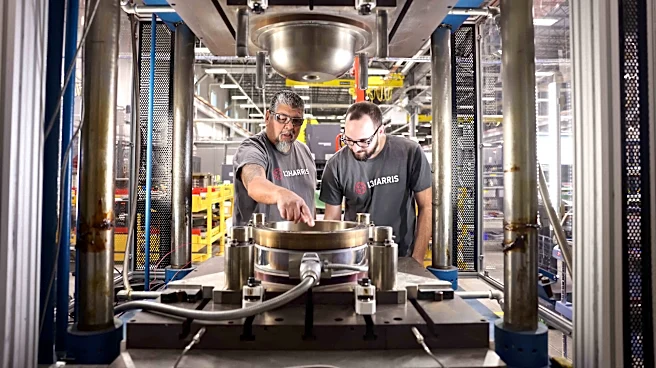
Sen. John Kennedy, R-Louisiana, said he doesn’t want to provide more money to the same company, L3Harris, that installed the problematic router.
“This is dangerous,” Kennedy said. “I don’t want to spend money on fixing a system if L3Harris, who helped screw this up, is going to reap the benefits. I need to hear more about it.”
Temporary funding for the entire government expires Dec. 11. Senate Majority Leader John Thune, R-South Dakota, said attaching more FAA funding to an overall spending bill might be the fastest way to support the air-traffic control system. But he said Democrats have not yet begun to negotiate on the broader funding compromise.
“We’ll see what the traffic will bear – what is achievable,” Thune said.

Senate Minority Leader Chuck Schumer, D-New York, said Democrats have questions, and that Duffy spent his first press conference after the flight halt criticizing Democrats.
“We have not been given the answers. They have not come clean,” Schumer said of the administration. “I have little faith in them.”
House Minority Leader Hakeem Jeffries, who is in line to become speaker when Democrats take control of the House in January, said he spoke by phone with Duffy on Nov. 16 but that he needed more information about what happened.
“There are still more questions than answers in terms of what happened, why it happened, how do we prevent it from happening again,” Jeffries said.
Duffy told reporters he would make improvements at the pace that Congress funds. He said at the current pace of replacing airport towers, it would take 300 years to modernize the entire country.
“The longer we stay on an old rickety network, the less safe it becomes,” Duffy said. “We do have to get this work done.”
This article originally appeared on USA TODAY: Senators question Duffy's $50B request to upgrade air-traffic control