

Each week during the college football season, USA TODAY Sports' insiders will talk with coaches, athletics administrators, agents and more to bring you the behind-the-scenes news. They are granted anonymity to speak candidly. Here's what we're hearing this week:
It just might be the Year of the Coordinator in college football.
Hello, Buster Faulkner.
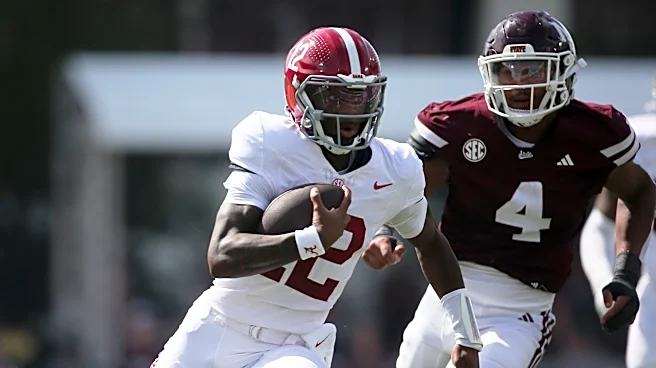
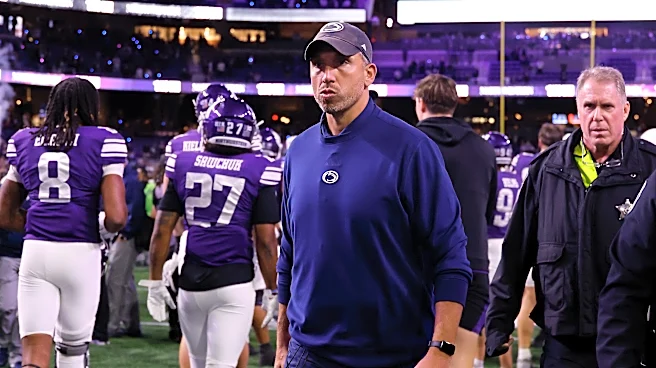
Dominate Alabama with another suffocating defensive performance Saturday night, and Georgia defensive coordinator Glenn Schumann might become the next Dan Lanning or Kirby Smart.
Miami offensive coordinator Shannon Dawson and defensive coordinator Corey Hetherman could follow a path similar to Oregon's 2025 duo of Will Stein
and Tosh Lupoi, who parlayed coordinator success into head coaching jobs at Kentucky and Cal, respectively.
And yet, it might not matter all that much.
At least not this year.
Why?
Because, according to more than a half-dozen industry sources who spoke with USA TODAY Sports on the condition of anonymity, the 2026 coaching carousel may lack the kind of attractive Power Four openings that typically drive coordinator movement.
“I think it’s a bad move-up year from (Group of Six) to (Power Four),” said an individual with direct knowledge of inner-workings at college football’s highest levels.
Several lower-tier Big Ten jobs appear to be inching toward uncertainty. Maryland and Rutgers stand out. There also could be movement at the middle tier of the ACC and Big 12.
The SEC, meanwhile, could enjoy the rarest of developments: a coaching cycle with little or no turnover.
Then again, South Carolina's Shane Beamer entered the season on relatively stable footing. Like his Gamecocks, however, he hasn't been able to protect a lead.
“It’s just not shaping up that great for guys, especially when you have studs like (New Mexico’s) Jason Eck and (Memphis’s) Charles Huff,” an agent who reps neither coach told USA TODAY Sports. “Those two programs are well-funded; stay and be the man or jump a year too soon?”
Industry sources connected to USC are unconvinced Lincoln Riley's future is settled. Because USC has changed athletic department leadership since Riley's arrival, his contract contains provisions that could allow him to leave on his own terms.
If Riley leaves Hollywood, a coaching-carousel domino effect would be unavoidable.
If he stays, however, the consensus among coaches, administrators and agents is that the available Power Four jobs will largely fall into the middle tier. That could create a vastly different outcome: elite coordinators deciding not to leave.
The beneficiaries?
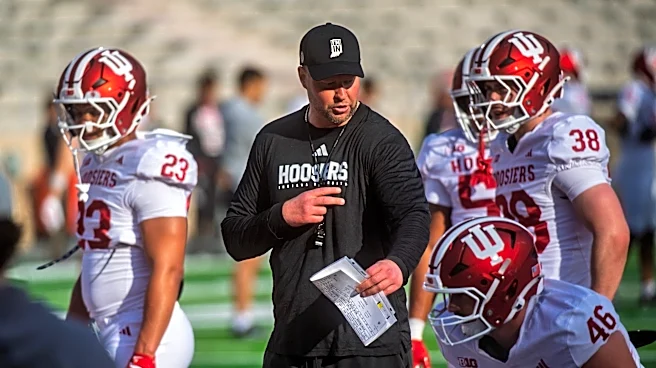
Programs such as Georgia, Miami and Indiana, where both Bryant Haines and Mike Shanahan continue to draw significant head-coaching interest.
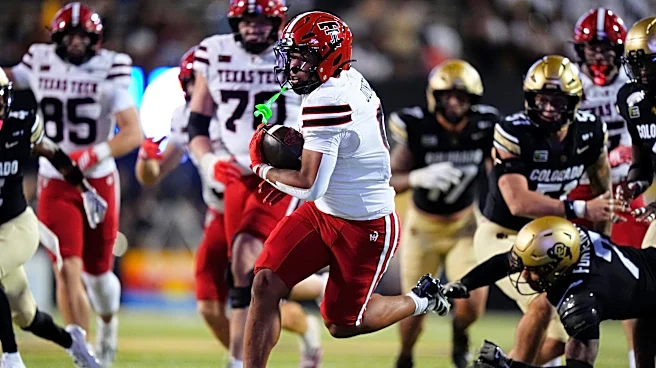
The same goes for LSU's Blake Baker and Charlie Weis Jr., Ole Miss offensive coordinator John David Baker and Texas Tech defensive coordinator Shiel Wood.
Don't overlook Navy offensive coordinator Drew Cronic, either. Despite injuries derailing much of the Midshipmen's season, Cronic remains widely viewed as a future Group of Six head coach.
In a coaching cycle that may lack marquee openings, some of the sport's hottest coordinator candidates could decide the best move is no move at all.
San Diego State's mumps outbreak
On the heels of sharing the Mountain West's best record and finishing just shy of 10 wins, San Diego State entered 2026 with lofty expectations. With former Michigan quarterback Jayden Denegal back under center, the Aztecs harbored aspirations of a Pac-12 championship and a College Football Playoff bid as a Group of Six representative.
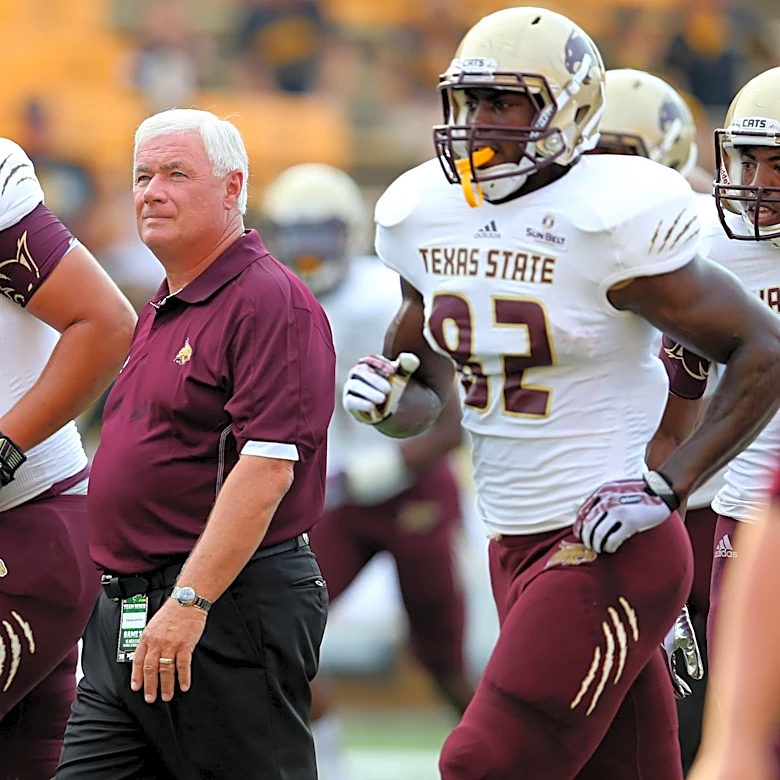
Instead, they arrived at their Oct. 3 home matchup against Texas State riding a three-game losing streak.
Worse, a mumps outbreak had ravaged the program throughout the week leading up to the conference opener, the first official Pac-12 game in school history for both teams.
Approximately 30 players -- half of whom were considered "significant contributors -- were quarantined at various points in recent weeks as the program worked to prevent further spread of the illness. As late as Friday, less than 24 hours before kickoff, two individuals told USA TODAY Sports that another projected San Diego State starter had developed mumps-like symptoms.
The disruptions forced the Aztecs to deploy their fourth starting offensive line combination in just five games.
Texas State appeared poised to capitalize, building a 17-3 halftime lead.
Somehow, San Diego State rallied. The Aztecs exploded for 29 second-half points, including 21 in the third quarter alone, to storm back for a pivotal victory.
Just as important, the health situation appears to be stabilizing. According to those same individuals, the illness has become less disruptive among players expected to be available moving forward.
Suddenly, San Diego State sits at 1-0 in conference play, with its season showing signs of life after a month that threatened to derail it altogether.
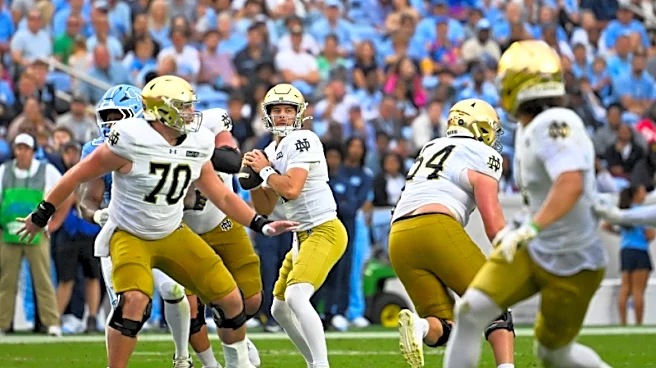
Shooting during Notre Dame prompts meetings
During the Sept. 19 Michigan State at Notre Dame football game, a shooting near the Notre Dame campus — Eddy Street Commons, which houses hundreds of Notre Dame employees Monday through Friday and also is a designated parking area for Irish workers on gamedays — was the scene of a shooting that injured a South Bend Police Officer and 17-year-old woman, per the South Bend Tribune, part of the USA TODAY Network.
Since that time, a number of questions about tailgating safety and gameday environment have been raised with Notre Dame leaders, multiple individuals with direct knowledge of the situation told USA TODAY Sports.
No. 3-ranked Notre Dame (5-0) is scheduled to host similarly unbeaten Miami on Nov. 7 inside Notre Dame Stadium in the latest installment of the "Catholics vs. Convicts" rivalry.
On Sept. 28, Notre Dame held a meeting to discuss plans in the campus’ DeBartolo Performing Arts Center.
Individuals at the meeting who spoke to USA TODAY Sports said Notre Dame reaffirmed its commitment to having horse-mounted police present on home gamedays, no less than two bomb-sniffing K-9s and additional security measures. There have been multiple shootings in the Eddy Street Commons area coincident with Notre Dame home football games in recent years, to also include last year’s primetime, nationally televised showdown between the Irish and eventual College Football Playoff Participant Texas A&M.
Charles Huff: No detail too small
First-year Memphis coach Charles Huff didn't embarrass his player. He didn't light him up on the sideline or turn a teachable moment into a public spectacle.
Instead, Huff walked over to wide receiver Jemyri Davis, a Kansas State, and calmly demanded accountability.
This came after a touchdown.
Davis had just caught a quick slant for a score in Memphis' 59-8 demolition of Charlotte, the American Conference opener for both teams. After crossing the goal line, he emphatically spiked the football and briefly celebrated with teammates, according to video shared on social media.
Moments later, Huff met Davis near the sideline inside the 5-yard line. The exchange lasted only a few seconds. Davis then turned around and walked directly to the field judge to offer a handshake.
It was a quiet acknowledgment Davis had crossed a line.
More importantly, it was a revealing glimpse into the culture Huff is trying to build at Memphis.
The message was simple: Celebrate the touchdown. Don't forget the standard.
“What you saw when you were here,” the individual who noted USA TODAY Sports’ visit to Memphis during spring football said. “The Standard is the Standard.
“South Carolina had a chance to show the same thing last week (Sept. 26 weekend, when star Gamecocks defender Dylan Stewart threw a punch and ended up suspended). These moments are taught long before game days. Having real relationships with players matters.”
This article originally appeared on USA TODAY: What I'm Hearing: 2026 coaching carousel has a surprising problem for rising stars