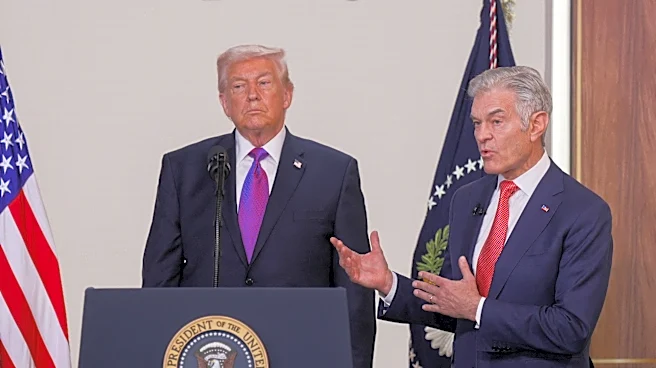



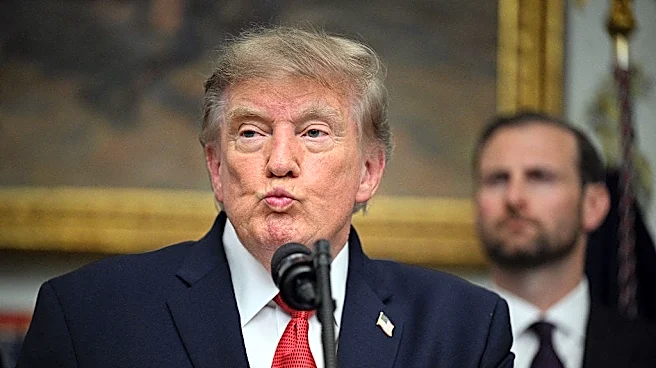

President Donald Trump and Dr. Mehmet Oz, head of the Centers for Medicare and Medicaid Services, are at odds over the MMR vaccine.
On the Sunday, Aug. 23, edition of "Face the Nation," the cardiothoracic surgeon, former host of the daytime talk show "Dr. Oz" and a one-time political candidate, said the MMR vaccine − which protects against measles, mumps and rubella − is "not a lethal vaccine."
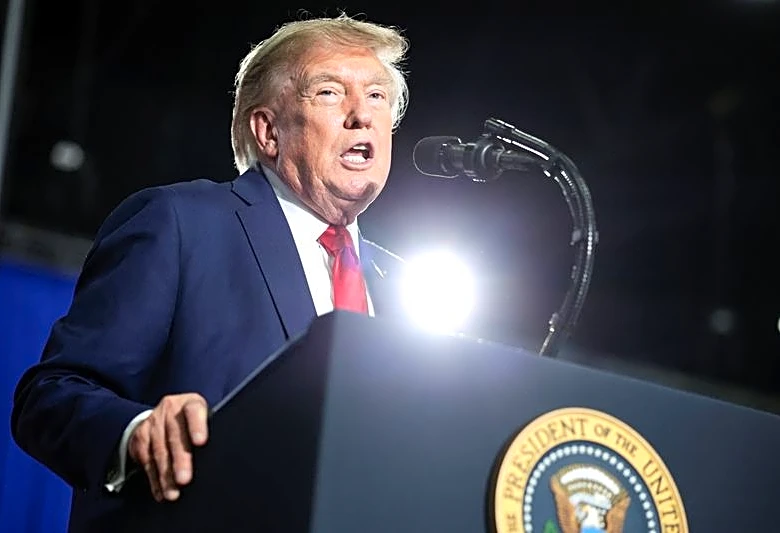
This came after Trump recently said the opposite. Earlier this month, the president made several unproven statements about vaccines while signing an executive order on the matter.
Oz's admission that the vaccine is not lethal comes amid increased scrutiny by experts and Republican Sen. Bill Cassidy about the Trump administration's health policies with November's
crucial midterm elections just over two months away.
Is the MMR vaccine safe?
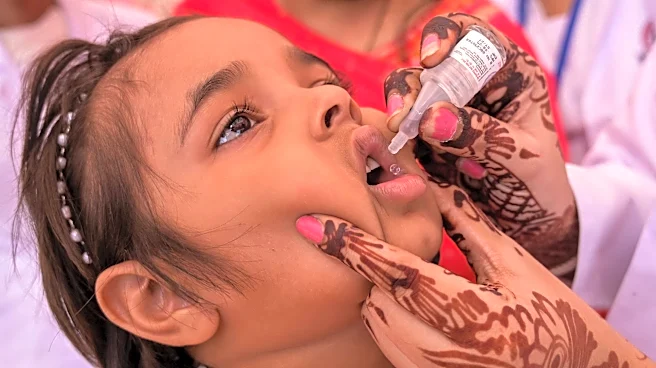
Medical experts have long said the MMR vaccine is safe and effective. For decades, the vaccine has been administered to millions of children, helping to prevent severe and life-threatening complications of measles, mumps and rubella. Serious side effects of the vaccine, including seizures, are rare.
The vaccine has been available in its current form since 1971, marking more than 50 years of safe and effective use. It's also been instrumental in curtailing the spread of measles, which prior to the vaccine's introduction in 1963, sickened an estimated 3 to 4 million people in the U.S. every year, causing 500 deaths and 48,000 hospitalizations annually.
In response to Trump's latest claims, medical experts say the MMR vaccine is not lethal when given in its current formulation, and medical research does not support Trump's assertions that there are benefits to a child's health by dividing the immunizations.
Even on the Centers for Disease Control and Prevention website, which was last updated March 2026, its recommendation is clear: "Children should routinely get 2 doses of MMR vaccine," with the first dose at age 12 through 15 months and the second at age 4 through 6 years. The CDC also notes two doses are 97% effective at preventing measles, and that adults and teens should also be up to date on MMR vaccinations.
'One of the most contagious diseases we know'
The U.S. is experiencing its worst measles resurgence in more than three decades due largely to under-vaccination, leading to the nation being at risk of losing its measles elimination status.
While recent declines in vaccination coverage may sound like a "small shift," measles is "one of the most contagious diseases we know," Dr. Julia Rosebush, an associate professor and pediatric infectious diseases specialist at the University of Chicago, said during a press briefing on Aug. 21, organized by the Infectious Diseases Society of America.
"A single unvaccinated child in a school full of unvaccinated classmates can start an outbreak that spreads to dozens of families within days," she explained. "The measles, mumps, rubella, or MMR vaccine … is safe, effective and remains our single best tool to stop this outbreak."
'A long trend in the wrong direction'
U.S. kindergarten vaccination coverage fell 0.1% during the 2025-2026 school year, continuing a downward trend that has seen declines every year except one since the onset of COVID-19, according to the latest data from the CDC.
Coverage ranged from 92% for the diphtheria, tetanus and acellular pertussis vaccine (DTaP) to 92.4% for the measles, mumps and rubella vaccine (MMR) and the polio vaccine, the CDC said.
The CDC said coverage for the MMR, DTaP, polio and varicella vaccines decreased in more than half the states from the previous year.
"It's continuing a long trend in the wrong direction," said John Grabenstein, a pharmacist who previously ran the Department of Defense's vaccine programs for troops and their families.
"It's not like a tipping point," Grabenstein added. "If trends hold, we'll have twice as many measles cases this year as we did the previous year. It's just going to keep getting worse."
Are separate doses of the MMR vaccine available?
Since the MMR vaccine is currently administered in a single instance, it could take a decade to be administered three separate times. None of the individual shots are licensed in the United States and experts say it could take years before any become available, if they ever do.
Can I still get the MMR vaccine for me or my kids?
So far, the answer is yes. Insurance providers will continue covering immunization costs regardless of the category, senior U.S. Health and Human Services officials previously told reporters on a call.
"As we send children back to the classroom this year, here is the bottom line: Routine vaccinations are proven to be safe and effective at preventing diseases with high rates of morbidity and mortality," Rosebush added.
Amid vaccine confusion and hesitancy, it can be hard for families to find scientifically accurate information, Infectious Diseases Society of America CEO Dr. Jeanne Marrazzo said during the briefing.
"Changes in federal guidance, and especially the recent executive order, have really muddied the waters and made it very difficult for people and families to find trustworthy information on vaccines," she said, adding that medical societies like IDSA, American Academy of Pediatrics, American College of Physicians and American Association of Family Practitioners "remain committed to reviewing the evidence base and to providing patients and physicians with evidence-based recommendations."
Contributing: Jay Stahl and Caroline C. Boyle, USA TODAY; Reuters
This article originally appeared on USA TODAY: Trump, Dr. Oz and the MMR vaccine controversy