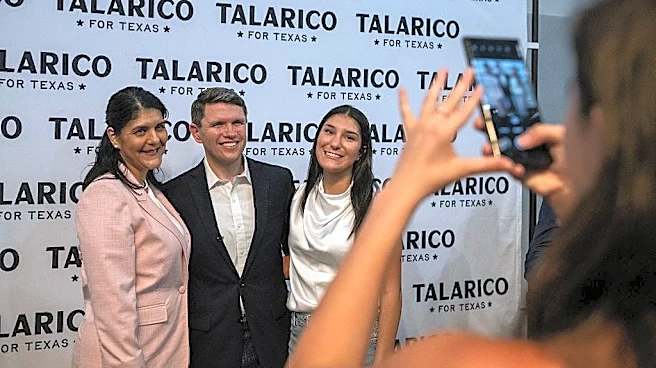

Republicans have been questioning Democrats' masculinity for years. This spring, Texas Attorney General Ken Paxton branded Democratic Senate nominee James Talarico “low T,” which Democrats were quick to condemn.
Now Democrats are fighting back, and with many of the same insults they once called "toxic." They're targeting the masculinity of Vice President JD Vance and Defense Secretary Pete Hegseth, painting both as overcompensators. Meanwhile, their own candidates are trying to prove their manhood in ways many would call performative.
Democrats are entering this fight at a disadvantage. Not because Republicans are naturally manlier, but because Democrats spent years refusing to treat masculinity as a virtue.
Democrats and Republicans go to war over masculinity

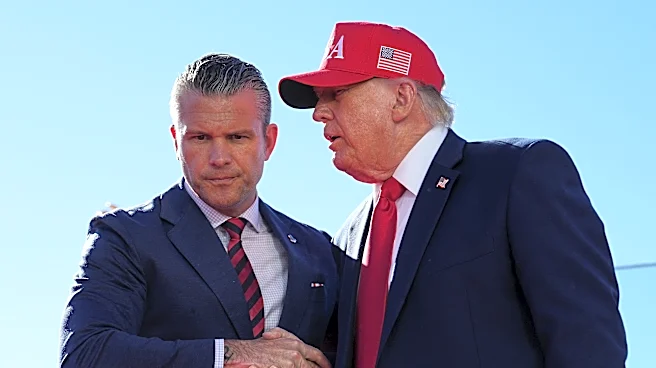
Hegseth has had his fitness questioned plenty by Democrats since taking office.
After he announced mandatory testosterone screening for military service members in July, Rep. Becca Balint, D-Vermont, said people in the Trump administration have "weird, like, intense, homoerotic feelings towards men," and she called Hegseth "the embodiment" of it.
Vance has waded in, too. After he poked fun at Michigan Democratic Senate nominee Abdul El-Sayed's "patchy" beard, El-Sayed questioned whether Vance's beard was real and challenged him to a weightlifting contest. He also gave the vice president a new nickname: "low T JD."
Meanwhile, Democratic candidates are straining to prove their own manliness.

In Michigan, El-Sayed has made masculinity a centerpiece of his campaign, betting that his tight-fitting shirts and 315-pound bench press will make his Republican opponent, former Rep. Mike Rogers, look like a "beta" male.
Talarico, by contrast, has spent his campaign for the U.S. Senate defending his manhood rather than flaunting it.
Paxton and his Republican allies have cast the Democratic Texas lawmaker as a vegan and even transgender, long before Vance started picking fights over beards. But Talarico also rejects the dominance-driven version of masculinity that El-Sayed is selling.
"Nowadays our culture tells young men that greatness is tearing other people down, is trolling and owning and dominating," Talarico said at a campaign rally, responding to the attacks. "But my dad showed me what real greatness looks like. (He) inspired me to serve."
Democrats' masculinity push is insincere
Masculinity isn't just a weapon against male opponents. In Maine, Democrats had hoped it would finally unseat Sen. Susan Collins.
Primary voters nominated Graham Platner, a Marine veteran and oyster farmer whose rugged, working-class persona was central to his appeal. It turned toxic. Platner faced scrutiny over misogynistic Reddit posts, then withdrew in July after a former girlfriend accused him of sexual assault, which he denies.
His Democratic replacement, former state Senate President Troy Jackson, a logger, is employing the same strategy, pitching himself as a working-class guy in Platner's mold.
It's a jarring shift. For the past decade, progressives have warned about "toxic masculinity" and urged men to check their privilege. As a presidential candidate, Joe Biden pledged to pick a woman as his running mate and a Black woman for the Supreme Court. Kamala Harris' campaign leaned heavily on abortion rights and young women.
In 2024, young liberals were less likely than young conservatives to describe themselves as "highly masculine." Young men who see themselves that way have sorted themselves away from the left. Now Democrats are spending tens of millions of dollars to figure out how to win them back, and whole strategy firms are springing up to engineer masculine, blue-collar progressive candidates.
"There's nothing wrong with being masculine," said Democratic House candidate Brian Poindexter, a flat rejection of his party's long reluctance to say so.
But Democrats' pivot from girl power to manly men comes off as insincere. If masculinity was the problem, why embrace it now? And if it never was, why spend a decade saying otherwise?
Young men were told that these shifts were all about elevating marginalized voices, but the reality is that young men felt like Democrats no longer even listened to them. That's why they shifted 15 percentage points in Donald Trump’s favor between 2020 and 2024.
Now, instead of sidelining masculinity to make room for marginalized voices, Democrats want to wield it as a weapon, whether against Republican men or to push out Republican women.
Nominating a few performatively masculine men won't fix Democrats' problem with Gen Z men. The party didn't care about young men until they started voting Republican. Winning them back will take more than a guy who benches 315 or eats barbecue on camera.
Dace Potas, a law student, is an opinion columnist for USA TODAY. Follow him on X: @DacePotas
This article originally appeared on USA TODAY: Democrats called masculinity 'toxic.' Now they're running on it | Opinion