


Editor's note: This column is part of Changing Minds, a USA TODAY Opinion series. Ahead of the November midterm elections, we talked with people who changed their political beliefs after years of seeing things a certain way. We'll publish their stories over the next few days.
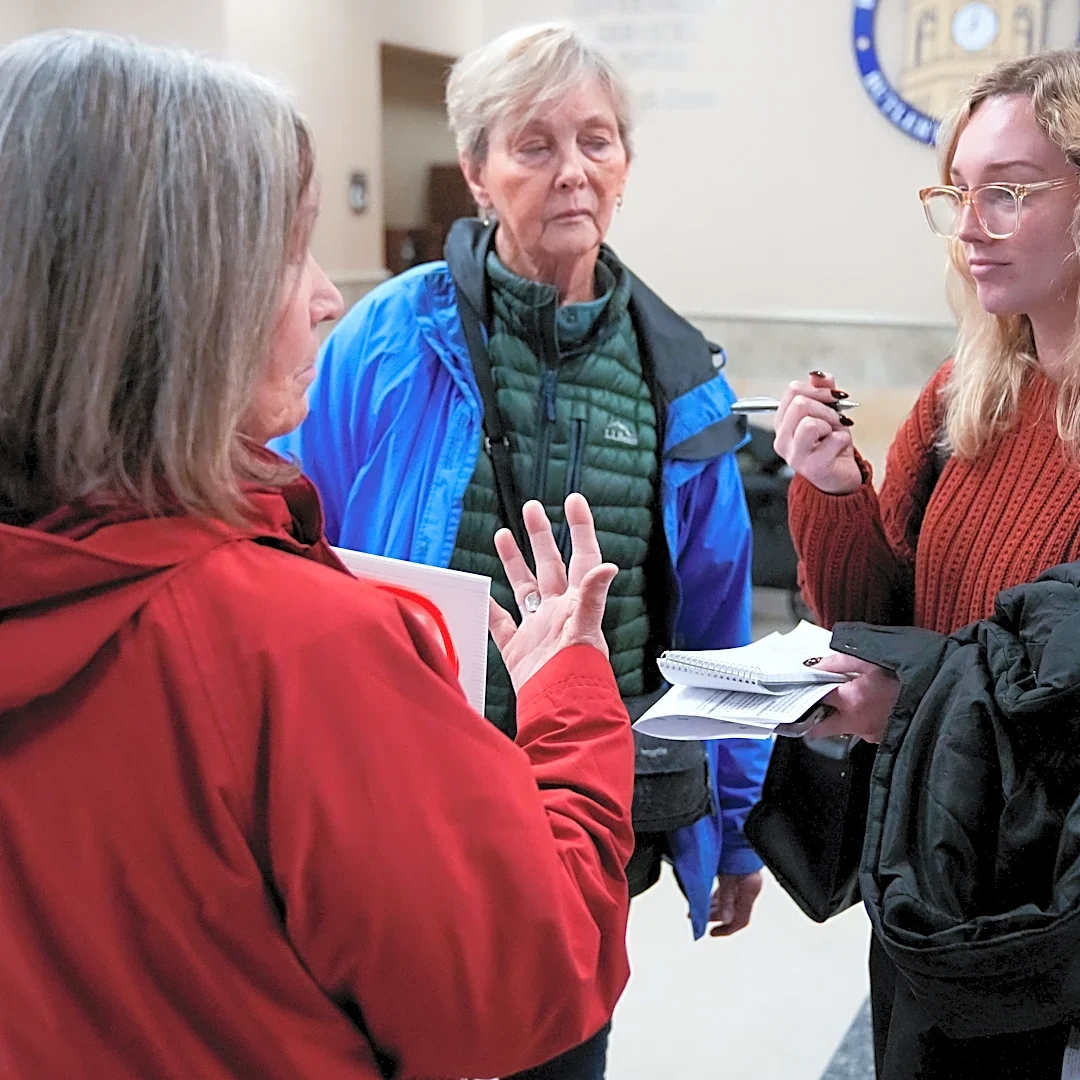
STARR COUNTY, TEXAS — On a 100-degree June afternoon, a few hundred yards from the Mexican border, Clarissa Gonzalez began knocking on doors. Gonzalez, who is running for Starr County commissioner, wore a cowboy hat against the sun. She pointed at an apartment complex across the street.
"People there won't open their doors," she said. "They're afraid of ICE."
She stopped at a trailer set back from the road. A middle-age man stood in the doorway. After a few minutes of talk
in Spanish about drainage and garbage pickup, he glanced at me.
"Who's that?"
"A gringo from Washington."
"What's he doing?"
"He's a journalist."
They talked a few more minutes. Then Gonzalez mentioned she was running as a Republican. Before 2024, that would have been a remarkable thing to say in a county that hadn't voted Republican for president since 1892, the longest such streak in the country.
The man smiled and shrugged, as if to say, so what?
Gonzalez moved from house to house. Each time she said she was running as a Republican, she was met with the same response – indifference.
Starr County sits along the U.S.-Mexico border in the Rio Grande Valley. Nearly all of its 66,000 residents are Hispanic, the highest share of any county in the United States. It is also one of the nation's poorest. About 1 in 3 residents live below the federal poverty line. The median annual household income is $37,639 – less than half the national figure of $80,734.
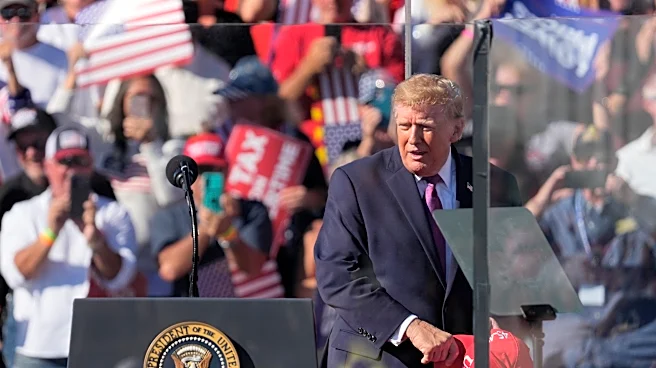
In 2016, Hillary Clinton won Starr County by 60 percentage points. Eight years later, Donald Trump won it by 16. After my visit, I have one question: Will Republicans retain control of a place like Starr County? New polling and data suggest it will be an uphill battle.
This border community rejected a political inheritance by voting Republican

In Starr County, Democratic loyalty was once passed down through families like an inheritance. Gonzalez's Democratic opponent, Roy Peña, holds the seat his father once held. That inheritance broke in 2024. Now comes the hard part for Republicans. It took them nearly 130 years to end Democratic dominance here since the the 1896 election. They'll find out soon enough whether it was a fluke.
When I visited in June, I didn't find a county that had suddenly turned Republican. I found one where many voters had decided the Democratic Party left it behind, especially on cultural issues. I went there at a moment when Trump had won 48% of Latino voters in 2024 – the highest share for any Republican in decades. Four months later, that support has dropped sharply, based largely on the economy.
Starr wasn't alone in 2024. Trump made historic gains with Hispanic voters across South Texas, Miami and the Southwest. The standard explanation for the shift, in Starr and elsewhere, is that voters changed their minds: They embraced Trump and moved right. The people I talked to described almost the opposite.
A few days earlier, I had met Gonzalez at the events center she owns in downtown Rio Grande City. She had voted Democratic all her adult life and lost a race for the same seat as a Democrat eight years ago. In 2024, she voted in her first Republican primary. This year, she filed to run for the seat as a Republican.
She described her politics as a tug of war. "Say the Democrats are here, the Republicans are here, and I'm in the middle," Gonzalez said. "The Democrats went to the left, which by virtue pushed me to the right. But I'm still with my same convictions. I still believe in the same things. I believe in family. I believe in country. I believe in God. I'm in the same place I was in 2010. The Democratic Party changed."
By "the left," she meant the national party's positions on gender and other cultural questions in a deeply Catholic community, "defund the police" rhetoric in a county where her husband is a police officer, and immigration policies she considered too permissive under President Joe Biden – though she also thinks Trump's crackdowns have gone "too far, too fast."
Gonzalez said her neighbors are catching up: "I honestly believe people felt they had to vote Democrat because our roots come from other countries. They felt if they voted any other way, they're betraying their roots."

Benito Treviño told a similar story. Raised in a Democratic family, he voted Democratic into his 50s. About 20 years ago, over dinner at his ranch, his wife, Toni, asked him why. He said it was the only party he knew. She told him all his views were conservative.
"All these years I've been voting for the same party," Treviño recalled telling himself. "My principles have never changed. They're the same. But I haven't realized that those principles are not from this party. They're from this other party. So right there and then I became a Republican. Just a five-minute conversation."
The principles he had in mind were opposition to abortion, distrust of a welfare system he calls "economic slavery," and support for energy and drilling policies he credits with putting his nephews and nieces to work in the oil fields during Trump's first term. Treviño later chaired the Starr County Republican Party for 14 years.
For most of the 20th century, the Democratic Party had room for voters like Treviño. It no longer does.
Jennifer Clarke grew up in a Democratic family in Rio Grande City. Her father, a pipeline worker, voted for Barack Obama, then switched to Trump in 2016 over energy policy. Clarke followed him. She put the shift more simply than the others: "I still say my values are the same."
She sees Trump as a president who delivers on his promises: "As vulgar as he is and doesn't watch what he says, he seems to be a man of his word."
Her values, Clarke said, are faith, her family's safety and the border. Growing up in a house near the river, she used to turn on all the lights when the dogs started barking. She sees the wall as protection for her family and, she added, for the migrants themselves.
"It's not keeping them out," Clarke said. "I see it as something to protect them and us."
What does one-party rule accomplish? Look at Starr County
Another reason Democrats dominated for so long was Texas' old straight-ticket voting system, which let voters back every Democrat on the ballot with a single mark. When the state eliminated the option, effective in 2020, voters had to choose race by race.
Trump received more than 2,000 votes in Starr County in 2016. In 2024, he received nearly 10,000.
"This whole county has been under one-party rule for over a century," Joel Villarreal, the Republican candidate for county judge and a former Democrat, told me. "And, really, what do we have to show for it? We're one of the poorest counties in America."
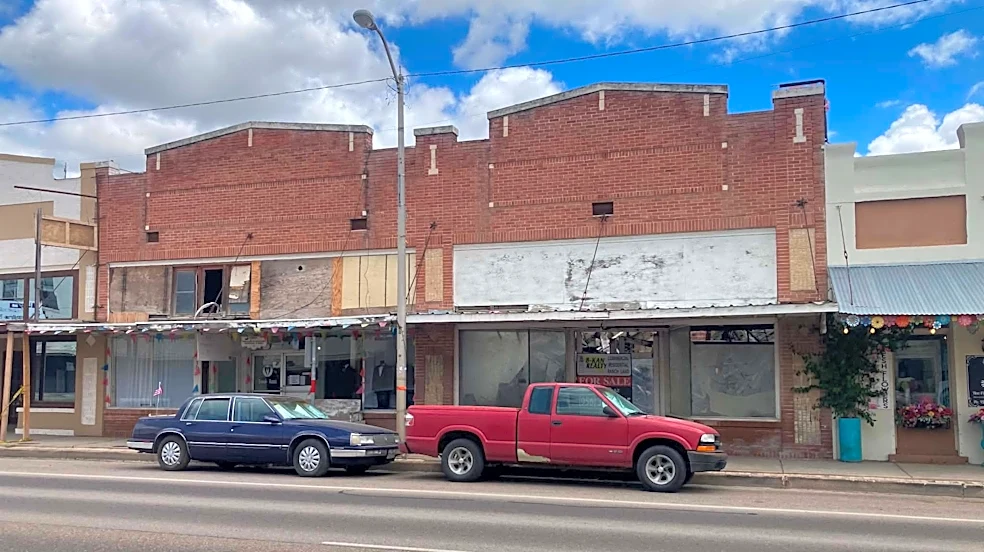
A walk down Britton Avenue in downtown Rio Grande City provides one answer. The historic square is nearly empty. Loan businesses and a pawn shop line the surrounding blocks. Storefronts sit boarded up. Several buildings are for sale. A block away, traffic streams toward Walmart and the fast-food chains along U.S. 83.
Villarreal's critique overstates the case. Texas' refusal to expand Medicaid and a school finance system that leans heavily on local property taxes, which hits property-poor districts like Starr's hardest, have also contributed to the county's problems. Those decisions were made in Austin, where Republicans have controlled state government for more than two decades. Still, a century of one-party local rule did little to encourage accountability. Starr voters are ready for something else.
I had seen a similar dynamic in Robeson County, North Carolina, a poor, rural, majority-minority county that hadn't backed a Republican for president since 1972 before breaking for Trump in 2016. Trump's margins grew in each of the next two elections. In 2025, Republicans took a majority on the county Board of Commissioners for the first time in history after three Democratic commissioners switched parties. Robeson is still poor, with more than 1 in 4 residents living in poverty, but its politics have been transformed.
Starr County is conservative in the same fundamental way. It is overwhelmingly Catholic, with deep roots in law enforcement and the U.S. Border Patrol. Families have lived on the same blocks for generations. Hunting and gun ownership are common.
"Our brothers and sisters are Border Patrol agents," said Toni Treviño, who chairs the Starr County Republican Party. "Our children are Border Patrol."

Villarreal kept coming back to the word "values." When I asked what he meant, he named God, family and country, then ran through a list: law enforcement, the Second Amendment, border security, legal immigration and energy independence. His campaign billboards read: GOD. FAMILY. JOBS.
"My values have not changed," he told me, "and I'm going to go with my value system, not with political expediency. Political expediency would be running under the Democrat flag."
Villarreal blames cultural politics for turning voters here against national Democrats. "Defunding the police, defunding ICE," he said. "Where does that come from? It's not from the conservative base."
Political scientist Alan Abramowitz has documented a sharp leftward shift among Democratic voters from 2012 to 2020, both in how they describe themselves and on issues from abortion to race. The shift was most pronounced among White Democrats. It widened the cultural gap between the party's increasingly liberal base and working-class voters.
In 2025, the centrist Democratic think tank Third Way warned the party that its jargon on race, gender and sexuality – words like "Latinx” and "birthing person" – made Democrats sound like "enforcers of wokeness." The memo asked whether that language helps explain the party's slipping support among non-White voters.

In Starr County, the shift was most obvious on immigration. During the Biden years, migrants crossed into the county by the thousands, often over private property. Residents watched pursuits on local highways and saw an enforcement system struggling to keep up.
Here, national Democrats' habit of portraying border enforcement mainly as an act of cruelty never resonated. Under Trump, illegal crossings have fallen to their lowest level in more than 50 years. Even Rose Benavidez, the Democratic nominee for county judge, conceded the point.
"People are happy that it's under control," she told me in June. But she didn't expect the county to keep moving right.
"Painting Starr County as being red, I think, was an anomaly," Benavidez said. "The Trump effect has faded significantly."
Can the GOP keep the Hispanic voters it gained in 2024?
Benavidez's words from four months ago now look prescient, at least in part.
Trump's approval among Hispanic voters in Texas has dropped to 33%, and a Texas poll this spring found that 1 in 5 Latino Trump voters in the state would not vote for him again. The economy, not the border or cultural issues, is driving them away.
A Cook Political Report survey found Hispanic voters in Texas ranked economic concerns ahead of immigration by a 2-to-1 margin. The voters who left Democrats over border security and gender issues in schools may now abandon Republicans over the cost of feeding their families.
I expect the Republican realignment in Starr County to last, but unevenly. Democratic loyalties still run deep here, and local races turn on practical and personal questions more than party affiliation.
When I checked back in with Gonzalez recently, she said she hadn't met much resistance as a Republican. "I did have one person ask me a lot of questions," the Starr County commissioner candidate told me, "and then she said, 'I'm glad I asked because I was hesitant to vote for you because you said you were Republican, but don't worry. You have my vote.'"
Gonzalez added, "I explained that locally we can't control national politics."
Toni Treviño's measure of success this year is tellingly modest: one Republican winning a local race and Gov. Greg Abbott carrying the county, which he lost by double digits in 2022.
The unexpectedly tight races for governor and U.S. Senate will be the first real test of whether the 2024 gains hold, or whether, as Benavidez believes, they were an anomaly.
It took Republicans nearly 130 years to win here. They could lose it in two.
Daniel Allott is USA TODAY’s conservative opinion editor and author of “On the Road in Trump’s America.”
This article originally appeared on USA TODAY: GOP finally won America's most Hispanic county. Can they keep it? | Opinion