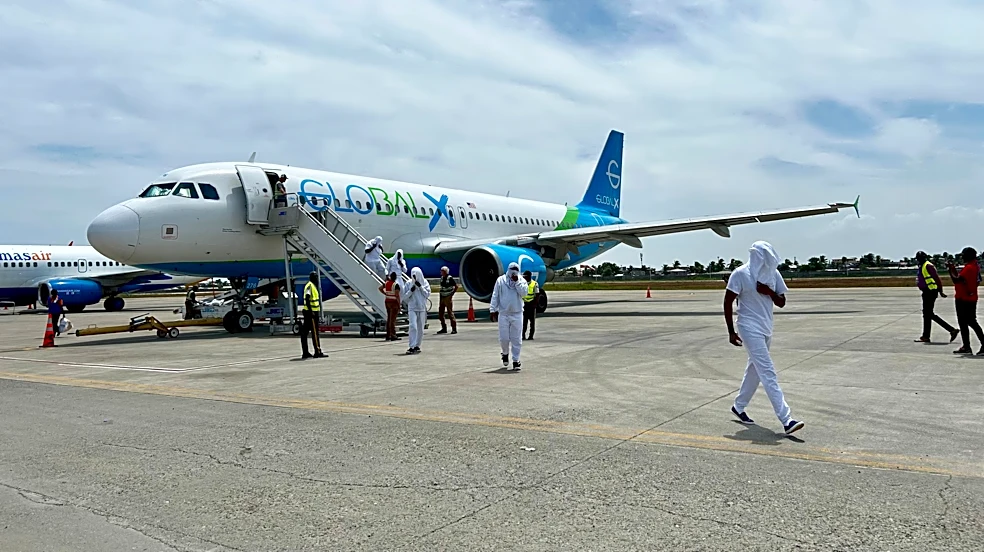








About a dozen detained immigrants with serious medical conditions have been told they will be deported to African countries where they have no family or other ties and, advocates fear, little hope of receiving the care that has kept them alive.
The men, all held in the same unit at the Krome detention center in Florida, were pulled aside by immigration officers over the weekend and told they were headed to the continent this week, though no one told them which country, according to the Workers Circle, a social justice organization in contact with them. Each has a pending court petition challenging their detention, but advocates say that has done little to slow the government down.
All of them are sick, some so gravely ill that Mexico had already
refused to take them, said Noelle Damico, the Workers Circle's director of social justice. Many have spent months inside facilities where the organization says it has documented medical neglect, including Krome itself, where a federal inspector general found that detainees were not getting the care they needed.
"Imagine how we’d report on this if this were taking place somewhere else," Damico said in an interview. "We’d be like, 'Oh, this terrorist state that’s doing these awful things,' but this is the United States doing it."
The Department of Homeland Security pushed back on the accusations.
"No sick detainees are being deported," a DHS spokesperson told USA TODAY, adding that all "are medically cleared before travel and leave with any necessary medications."
'The point is to scare people'
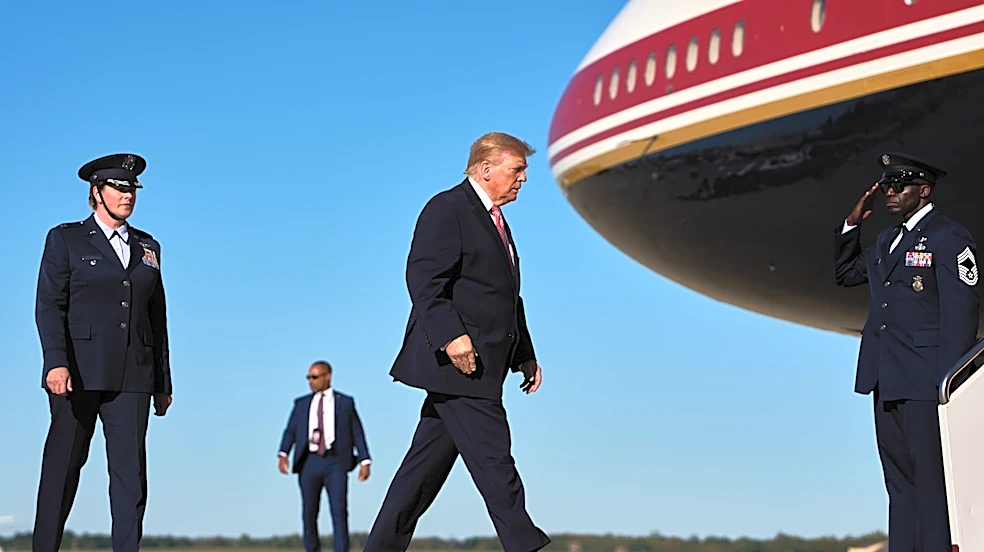
Deportations to third countries, once a rarely used tool, have become a fixture of President Donald Trump's immigration agenda.
Between his return to office and early August, U.S. Immigration and Customs Enforcement sent nearly 28,000 people to more than 50 countries that were not their own, more than 500 of them to Africa, according to a Human Rights Watch analysis of agency data. The Trump administration now has such arrangements with at least 36 countries, including about 14 in Africa.
"The point is that the Administration can threaten people that they will literally be dropped in the middle of nowhere," an unnamed current U.S. official told the Senate Committee on Foreign Relations, according to a committee report. "The point is to scare people."
The policy has set off a legal fight that is now before the nation’s highest court. In September, the Supreme Court allowed the deportations to continue while the justices weigh whether they are lawful, with arguments set for Dec. 9.
In the statement to USA TODAY, the DHS spokesperson defended third-country removals as "an essential public safety tool."
Immigrants sent to a third country "receive notice and assurances prior to their removal, and the Department of State is given diplomatic assurances from destination countries that the illegal aliens being removed there will be safe," according to the spokesperson.
Wife pleads case for Cuban detainee with diabetes
Among the men facing imminent deportation is Noslén Sendra González, a Cuban immigrant with diabetes who depends on insulin and has been rushed to the hospital three times since he arrived at Krome.
Cuba refused to take him back, said his wife, Anisley Cortés, and Mexico turned him away because of his medical condition. So on Oct. 18, deportation officers told him he would be sent to Africa instead.
Cortés said she cannot understand why the government will not release a man no country seems willing to take. "If you can't deport him, let him go," she said in Spanish. "He's very sick."
Sendra González came to the United States in 2015 and was ordered deported that same year. But for nearly a decade, he was allowed to live and work in the country under an order of supervision, an arrangement that lets some immigrants with deportation orders remain in the country as long as they check in with ICE. His application for a green card has been pending for more than a year.
In November 2025, the father of two young children missed a scheduled check-in because he was hospitalized with pancreatitis. When he reported to the agency after he was discharged, he was detained on the spot, Cortés said.
He spent five months at Alligator Alcatraz, the now-shuttered detention camp in the Everglades, where he went without his medications and lost more than 50 pounds, Cortés said. At Krome, the pancreatitis returned.
Each time he was taken to the hospital, Cortés said, his ankle was chained to the bed, and he was barred from calling home, so his family could only wait and wonder whether he was still alive. His most recent lab results showed triglycerides — a type of fat found in the blood — above 2,000, she said, many times the healthy range.
Cortés still keeps his medications at home, every pill and every vial of insulin, because inside Krome, she says, he isn’t allowed to have them all. For nearly a year she has waited for him to come home and take them. Now she fears he never will.
"I'm so afraid he'll end up in Africa, and that he'll die there," Cortés said Oct. 20, her voice shaking as she spoke.
A DHS spokesperson said Sendra González "has been consistently cleared and discharged from the hospital following medical evaluation."
Flights expected to leave for Africa
Two flights are expected to leave for Africa later this week bound for the Central African Republic and probably Burundi, said Shalyn Fluharty, an immigration attorney who represents people facing third-country removal. Passengers are typically shackled at the ankles and waist for a journey that can stretch to 24 hours, she said, and those who protest are sometimes bound in full-body restraints.
The State Department tells U.S. citizens not to travel to the Central African Republic for any reason, citing armed unrest, kidnapping and terrorism. It advises Americans to reconsider visiting Burundi because of political violence and crime.
In both countries, the department warns, medical care is severely limited, and in Burundi even minor health problems can require evacuation. Each has roughly six doctors for every 100,000 people, according to Doctors Without Borders and the Severe Malaria Observatory.
ICE policy requires that medically vulnerable detainees be cleared to fly and that their care continue after they land. Fluharty questioned how anyone could clear a man who has been hospitalized repeatedly in custody, or promise that a country like the Central African Republic has the medicine and specialists to keep him alive.
Because the government’s agreements with receiving countries are kept secret, she said, it is not even clear whether those countries know whom they are taking in or what those people need to survive.
"Do we think a death sentence is appropriate for somebody in these circumstances?" she asked.Deportees sent to several African nations have described similar struggles. People deported to Cameroon told Human Rights Watch they went without medication or specialist care for chronic illnesses, including high blood pressure and HIV, and several came down with malaria. One person with HIV returned to their home country, despite fearing harm there, because treatment wasn’t available.
The Democratic Republic of Congo formally refused to accept one woman because its hospitals couldn’t provide the care she needed, but she was transferred there anyway, according to the Human Rights Watch report.
Arianne Betancourt, the Workers Circle's immigrant rights organizer, has heard much the same since she began speaking with deportees last December. Many have described falling ill with no way to get treatment, she said.
"We are hearing that once they are deported, they are being sent to prison camps," she said. "And they do not have the right to leave. They are being extorted."
In February, U.S. District Judge Brian Murphy in Boston ruled that immigrants facing removal to a third country must receive meaningful notice and a real chance to argue that they reasonably fear persecution or torture there. An appeals court largely upheld that decision in September. But the Trump administration argued the ruling stripped away an essential deportation tool, and the Supreme Court put the order on hold over the objections of the court’s three liberal justices.
Many of the people being sent to third countries had already won protection from being returned to their homelands after a judge found they would likely be persecuted there, Fluharty said. Some received that narrower protection, known as withholding of removal, only because a Biden-era rule barred them from asylum. A federal court struck the rule down in June, but by then many of them were already in Africa, with no clear way back.
At the Broward Transitional Center, a Venezuelan man has also been told he will be deported to Africa this week, said Maria Bilbao of the American Friends Service Committee. As he was shuttled between facilities, she said, he lost his identity documents, his immigration papers, and the medications he needs.
"Imagine what it means to be sent to an unknown country,: Bilbao said in Spanish, pointing to the prospect of arriving with no documents, no one to turn to, and no guarantee that medical care would continue.
This article originally appeared on USA TODAY: 'He'll die there.' Gravely ill detainees face deportation to Africa