






Nepal authorities have called off the search-and-rescue phase of their response to catastrophic flooding that killed at least 1,455 people and left thousands more missing in August.
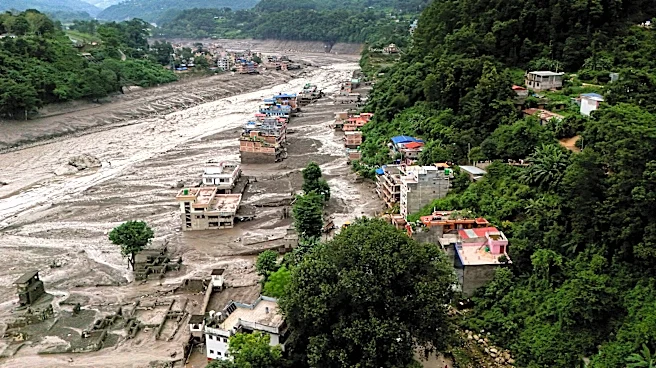
The flooding unfolded the morning of Aug. 26 when a huge flood and flow of debris washed through populated areas, carried along rivers into the region near the Nepal-China border. The flood sent rock, mud and debris hurtling through communities, washing away buildings and infrastructure.
Authorities told Reuters on Oct. 5 that they were moving from the search-and-rescue phase to a rehabilitation phase.
Phanindra Paudel, chief of the National Emergency Operation Center, told the news agency that authorities are figuring out how to declare those who remain missing dead,
so that their families can pursue insurance, banking and other issues that require a declaration of death.
Responders will stop actively searching for bodies but would still carry out recovery if they are found during the rehabilitation process, said Dharam Raj Uprety, chief of the National Disaster Risk Reduction and Management Authority.
There were at least 5,285 missing nearly six weeks after the disaster.
In the wake of the flooding, authorities began to bury remains that were too decomposed to identify while collecting DNA in the hopes families would be able to identify loved ones later.
Nearly 13,800 people were rescued in the aftermath. Some of those rescues happened several days after the flood, including two people who were pulled from a tunnel linked to a hydropower station nine days later.
The flooding was likely caused by the sudden slope failure involving a glacier Lāṅṭāṇ National Park, Nepal, according to the U.S. Geological Survey. The energy generated by the slope failure was the equivalent of a 5.2-magnitude earthquake. Debris was carried for over 60 miles.
Contributing: Reuters
This article originally appeared on USA TODAY: Nepal ends search-and-rescue phase weeks after catastrophic flood