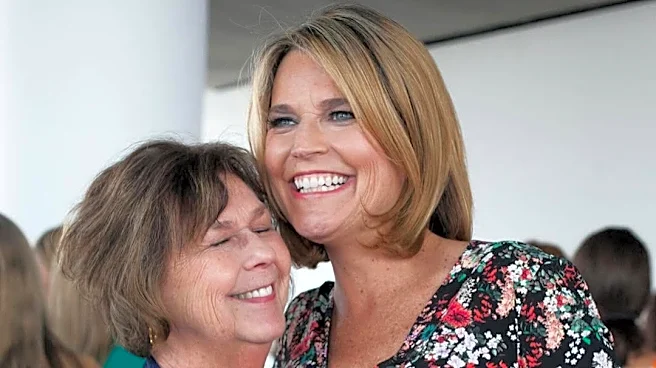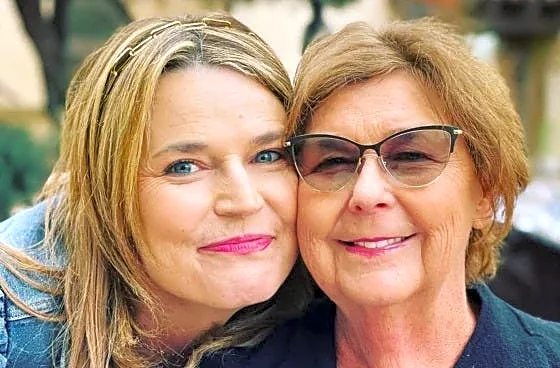








When Nancy Guthrie, the 84-year-old mother of "Today" show co-host Savannah Guthrie, went missing earlier this year, it was a friend expecting her company who first sounded the alarm.
As law enforcement pieced together the timeline before Guthrie went missing, it was her daughter and son-in-law who spent hours with her the night before and then drove her home.
And as Guthrie’s absence continued, her children, former co-workers, book club members, fellow mahjong players and a pastor came out to shed light on the woman they knew and cherished.
In the six months since Guthrie's mysterious abduction, a portrait has emerged of a woman who was highly social and well-connected, even in older age. By all accounts, she was happy, and those who knew her
described her as sharp and witty.
That image stands in contrast to an epidemic of loneliness plaguing older adults that public health experts have sounded the alarm over for years.
"She was kind of the model of how to be engaged and connected during retirement," Frank Infurna, psychology professor at Arizona State University, said.
"It definitely seems like she was on the end of the spectrum that's quite social; that she really did have many activities," said Emily Nabors, associate director of innovation and a gerontologist at the National Council on Aging.
In 2023, the U.S. Surgeon General issued a report titled: “Our epidemic of loneliness and isolation.” It was 82 pages of why social connection matters and how the nation could, and should, improve it.
Experts say social disconnection is tied to depression, cognitive decline and dementia.
And as the nation grapples with a rapidly aging population that experts believe will increase loneliness, experts say Guthrie’s abduction underscores the importance of making social connection a collective priority, not just an individual one.
“When we embed social connection into the places we live, work, learn and gather, we strengthen collective resilience, improve our ability to respond during emergencies, and come together during times of crisis,” said Jillian Racoosin, executive director of the Foundation for Social Connection and a contributor to the 2023 U.S. Surgeon General report.
She added, “Tragedy will sadly still happen from time to time, but connected communities have stronger foundations for supporting one another through life’s most difficult moments.”
Nancy Guthrie’s active social life
Friends who’ve shared tidbits about Guthrie since her abduction have described her social life as highly active, involving frequent get-togethers, meaningful discussion and even gameplay.
Two days before she was taken, Guthrie was around a table with friends playing Mahjong, a strategy game with more than 100 tiles, where players work to build winning hands. Guthrie was known for her competitiveness, but also for teaching younger women to play.
She also attended monthly book club meetings that she apparently never missed, according to reports from the New York Times. She loved Bible study, and friends said she had an acute ability to connect lessons from the gospel to everyday life.
These activities are important because they serve as a safeguard, said Nabors with the National Council on Aging.
"A buddy system with neighbors," Nabors offered as an example. "Say you have a system where you open your curtains every morning and you didn't do that, your neighbor would check up on you. Kind of similar to what had happened with Nancy Guthrie when she didn't show up (for church) and that raised the alarm or indicated that something was really wrong."
The sorts of activities Guthrie engaged in also foster social connection and improve health, Racoosin said. Yet, she added, “some of the drivers of disconnection in our country have been a lot of the dissolution of those structures. People are less likely to go to religious services or to places of worship. They’re less likely to be part of clubs and groups.”
The 2023 U.S. Surgeon General’s report showed the average person spent 24 more hours alone each month in 2020 than 2003. Household family social engagement declined five hours per month. The amount of time spent on social engagements with friends went down 20 hours per month.
People also are less involved in faith organizations, the report says: from 70% in 1999 to 47% in 2020.
Yet, “religious or faith-based groups can be a source for regular social contact, serve as a community of support, provide meaning and purpose, create a sense of belonging around shared values and beliefs, and are associated with reduced risk-taking behaviors,” the report says.
Similar statistics were reported in a 2025 American Time Use Survey, which found people spending less time socializing and more time playing video games or using social media.
These trends appear to acutely affect younger people. A 2025 report from Pew Research Center found adults under 50 were more likely than older adults to feel lonely.
But loneliness and isolation may also be a uniquely American problem. Infurna, with ASU, studies loneliness in adults 40- to 65-years-old.
"When it comes to loneliness, middle-aged Americans are reporting higher levels of loneliness compared to middle-aged adults in England, Germany, France, Sweden ... and most other European nations."
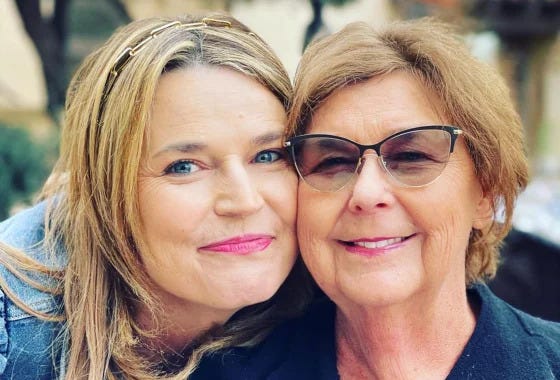
Social connection affects your health
Isolation and loneliness have been found to harm health as much or more than smoking 15 cigarettes a day, Dr. Julianne Holt-Lundstad, director of Brigham Young University’s Social Connection & Health Lab, told federal lawmakers in 2017.
Lacking connection, she explained, can affect someone’s willingness to follow proper health regimens, which can in turn affect things like blood pressure or immune functioning. That can increase the likelihood and progression of a variety of chronic illnesses, Holt-Lundstad said.
These challenges often occur after critical life transitions such as retirement, divorce, the death of a spouse or children leaving the home, experts say.
But experts say loneliness and isolation don’t just result from individual choices, but rather societal conditions.
Leaders at Pima County’s Council on Aging have noted the area is a hot spot for older retirees. U.S. Census Bureau counts say roughly a quarter of the area’s population is 65 or older.
Because many leave behind family and social support in other states to retire in southern Arizona, the aging council functions in-part to provide or facilitate programs to alleviate loneliness. Some of that programming includes the Meals on Wheels program, which in addition to providing food to the public also serves as a vehicle for social interaction.
“We have become, in a very real sense, communities where the garage door is the front door, and many come and go without ever seeing neighbors, except through the car window,” former Pima Council on Aging CEO Dr. W. Mark Clark told federal lawmakers.
Heidi Donniaquo, director of behavioral health at the Area Agency on Aging, which serves Maricopa County, said the agency served 530 older adults the past year through the "Caring Circles" program, where AmeriCorps members visit people in the field. Sometimes the members drive older adults to and from medical visits or grocery shopping; other times, members come and play cards with them.
Donniaquo said there were more than 600 area agencies on aging across the U.S., and that Maricopa County's agency alone offered between 40 to 50 programs. Those have helped older adults expand their activity and social interaction, even connecting them to classes like Tai Chi, she said.
Seniors or families with older adults who are interested should contact their area agency on aging. The Phoenix branch has a 24-hour helpline at 602-264-HELP (4357).
How social connection can be fostered
Strong social connection happens, Racoosin said, when relationships are “meaningful, supportive and high quality.”
Some factors that affect social connection are:
- Structure: referring to the number and diversity of relationships. Things like joining a book club or mahjong group can help add “structure.”
- Function: referring to whether the relationships meet a need, like emotional encouragement or mentorships.
- Quality: referring to whether the interactions make you feel positive and meaningful or negative and harmful.
“When quality is the challenge, the solution isn’t necessarily to build more relationships, but to address what is preventing those connections from being fulfilling,” Racoosin said.
When individuals take steps to improve their connectivity, it helps incrementally shift the culture to value connection, Racoosin said.
Experts stressed engaging in activities that provide purpose and build meaningful connection; volunteering at a food bank or tutoring children was repeatedly recommended. Nabors suggested sites that offer congregate meals, walking clubs, intergenerational mentorship programs and support groups for caregivers or those suffering from loss. Musical theatre and the arts can help with mental stimulation, she added.
Infurna said sometimes the biggest thing an individual can do is simply reach out and diligently pursue connection.
Whether it being joining a club or making friends with the parents of your kid's friends, "I think a big part of it you have to kind of seek out your connection and relationships," he said. It will look different for different people, with some needing more interaction than others to "fill your cup," he said.
As more individuals pursue connection, experts believe the benefits will be far-reaching.
“Social connection is vital not only for our individual health, but also community and societal health,” Racoosin said.
Referencing Guthrie, she said, “I think a lot of the practices that she was embedding in her life was setting her up for a very successful, high-quality way of living,” Racoosin said.
This article originally appeared on USA TODAY: What Nancy Guthrie's life can teach about avoiding loneliness