

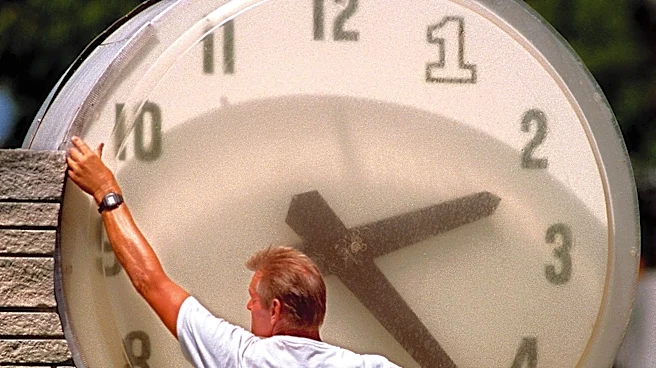

With less than a month remaining before clocks fall back, President Donald Trump is once again pushing to make daylight saving time permanent and end the twice yearly clock change.
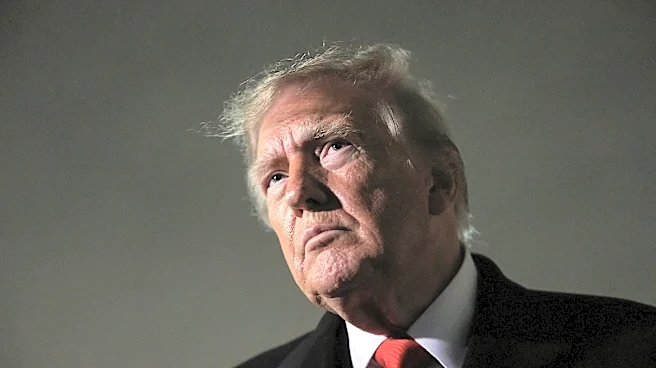
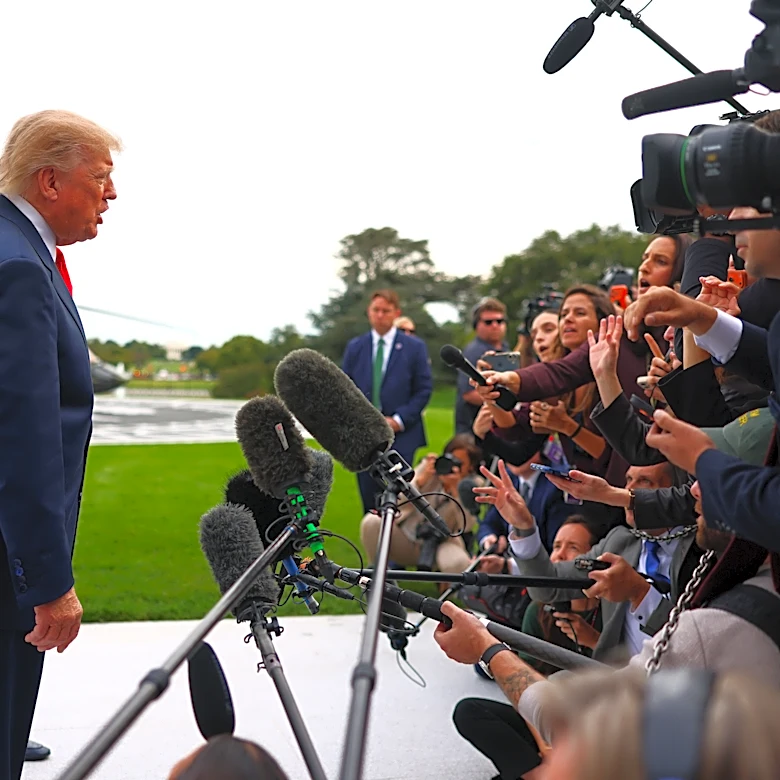
"Republicans in the Senate have to get moving on what I call the 'No More Changing of Clocks Act,' officially known as The Sunshine Protection Act, a ridiculous Clock changing process that takes place twice a year, costs our Country a fortune, is bad for Crime, stress on people, Sports, and just about everything else you can imagine," Trump said in an Oct. 2 post on Truth Social. "People don’t want to go around changing their Clocks anymore and, besides, far and away, most people like having an hour of extra sunlight in the evening, rather than in the morning."
The
Sunshine Protection Act passed the House of Representatives in July with a 301-117 vote, but has since failed to clear the Senate, the last step before landing on Trump’s desk for final sign-off.
Daylight saving time as we know it today, in which clocks are adjusted twice during the year, was signed into law in 1966 by President Lyndon B. Johnson. Known as the Uniform Time Act of 1966, only Congress or the Secretary of Transportation can change this.
What has Trump said about daylight saving time?
Trump has repeatedly called for ending the twice-yearly clock change and keeping the nation on daylight saving time year-round dating back to his first term in office.
In March 2019, when clocks sprung forward, the president said he fully supported making daylight saving time permanent.
“Making Daylight Saving Time permanent is O.K. with me!” Trump tweeted at the time, according to Politico.
And in 2024, shortly before stepping into the White House for his second term, Trump again said he supported eliminating the time change.
"The Republican Party will use its best efforts to eliminate Daylight Saving Time, which has a small but strong constituency, but shouldn’t," Trump wrote on X in December 2024. "Daylight Saving Time is inconvenient, and very costly to our Nation."
However, when asked in March 2025 when he would get rid of daylight saving time, Trump appeared hesitant to back the change, referring to it as a "50-50 issue."
"If something's a 50-50 issue, it's hard to get excited about it," Trump said at the time. "I assume people would like to have more light later, but some people want to have more light earlier, because they don't want to take their kids to school in the dark … It’s something I can do but a lot of people like it one way, and a lot of people like it the other way."
The next month, Trump encouraged the House and Senate to "push hard for more daylight at the end of a day."
While the matter took back seat after, it gained momentum once again in July this year after the House of Representatives voted to allow states to enact year-round daylight saving time. Since then, Trump has aggressively pushed for the legislation to be passed.
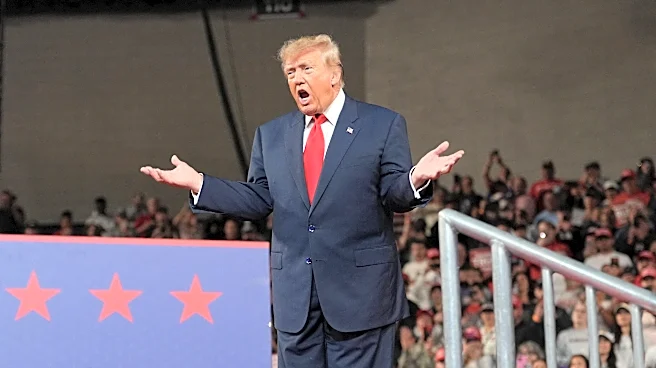
"Let's get rid of daylight saving time stuff, OK?" Trump said July 27 at a rally at a General Motors plant in Michigan. "We have a bill in and hopefully, the Senate is going to approve that one. The House approved it and we're going to get rid of that."
A few days later on Aug. 4, the president in a Truth Social post described changing clocks twice a year as "foolish, inconvenient and, in some cases, very costly."
"People are sick and tired of having to change their clocks twice a year," Trump wrote, arguing permanent daylight saving time would reduce traffic accidents, lower crime, save energy and give families more daylight in the evening.
"In other words, leave it as it is now, and never change again," he wrote. "LET'S PASS THE SUNSHINE PROTECTION ACT, ASAP."
Republican lawmakers split over daylight saving time
While Trump has repeatedly called for making daylight saving permanent, not all Republican lawmakers agree on the matter.
Trump said that Sen. Tom Cotton, R-Arkansas, "for reasons unknown" has "held" the legislation in the Congress and went onto share the senator's personal cellphone number, urging Arkansans to pressurize him into making daylight saving time permanent. "Call Tom on his cellphone," Trump wrote on Truth Social on Oct. 3.
It is unconfirmed if the phone number posted by Trump actually belongs to the senator. USA TODAY attempted to call and text the number, but messages were unsuccessfully delivered.
Cotton, without referencing Trump, defended his position in an Oct. 3 post on X, writing that, "no one likes changing the clock, me included," but that Congress had tried and repealed this previously "once Americans experienced absurdly late sunrises in the winter."

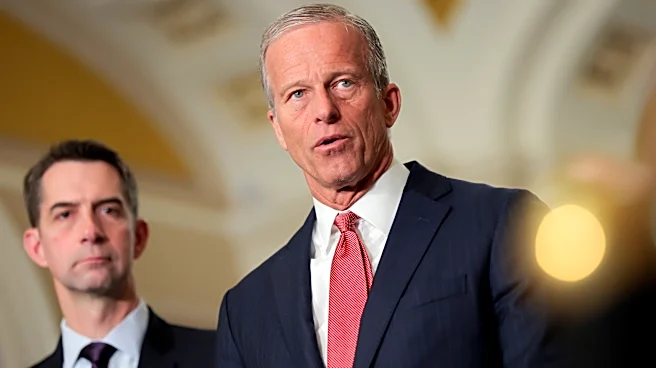
Senate Majority Leader John Thune, in an Oct. 5 interview, said that "there’s no clear path forward" for legislation that would make daylight saving time permanent.
"The president feels strongly on it like he does a lot of issues," Thune told Politico. "It’s something we’re having conversations about, but there’s no clear path forward or consensus on it yet."
Thune added opposition among Senate Republicans extended beyond Cotton.
Sen. Roger Wicker, R-Mississippi, raised concerns similar to those of Cotton's in remarks to reporters on Capitol Hill on Oct. 5, according to Politico. He said he was mindful of "safety concerns in the more northern and rural states where children get on the school bus in very early hours."

When will the Senate vote on the bill?
It's unclear. The Senate is scheduled to be on recess until Nov. 6, which means daylight saving time is on track to end at 2 a.m. local time on Sunday, Nov. 1.
At that time, clocks will move back one hour to 1 a.m., giving most Americans an extra hour of sleep and bringing earlier sunsets during the winter months.
Contributing: Bart Jensen, Zachary Schermele, Jorge L. Ortiz, Fernando Cervantes Jr., Emily DeLetter, Julia Gomez, Kinsey Crowley, Marc Ramirez, and USA TODAY; Reuters
Saman Shafiq is a trending news reporter for USA TODAY. Reach her at sshafiq@gannett.com and follow her on X and Instagram @saman_shafiq7.
This article originally appeared on USA TODAY: Trump keeps talking about daylight saving time. Here's what he said