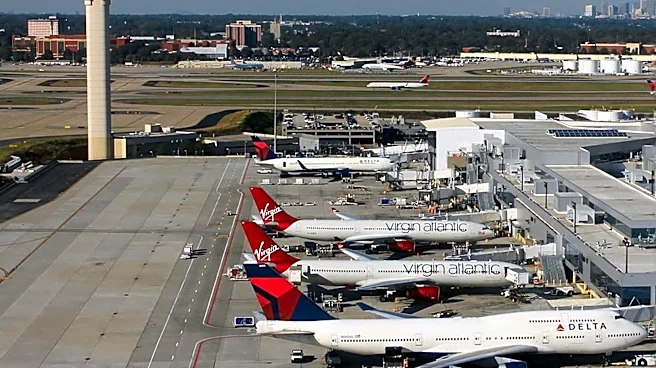





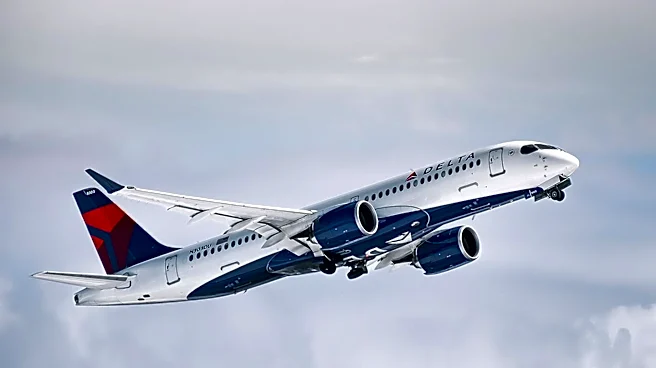


At the busiest airport in the world, thousands of planes full of passengers take off, land and cross runways every day.
Hartsfield-Jackson Atlanta International Airport catered to more than 100 million passengers in 2025, and while it may not be considered the busiest by air traffic (that title goes to Chicago's O'Hare airport), making sure the airport remains a well-oiled machine is not easy.
Pilots know when and where to land thanks to air traffic controllers, a job where every second counts to keep airline passengers safe both on and off the ground.
In Atlanta, this became evident when two large planes were involved in a close call that narrowly avoided a collision.
Close call above Atlanta airport
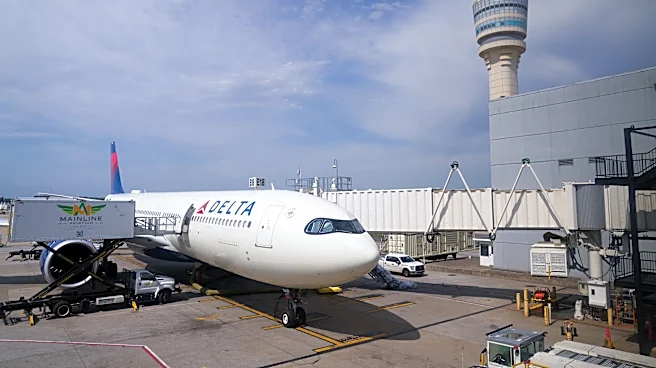
On the evening of July 27, Delta Air Lines flight 2472 was leaving the Atlanta
airport and headed for Rochester, New York when it crossed directly in front of a second Delta flight arriving from Pittsburgh, according to Delta and the Federal Aviation Administration.
The Pittsburgh flight was originally meant to divert to Chattanooga due to weather in the area, but ultimately the flight was cleared for Atlanta, and the pilot started to make an approach. The pilot noticed that another flight was slow to leave the runway, so they needed to loop around the airport.
As the loop began, the Pittsburgh flight's path crossed with the Rochester-bound flight as it took off, sending anti-collision alarms to pilots of both flights, according to CNN. The flights were directed away from one another with the help of the controller.
According to flight tracking data from Flightradar24, the planes were only 1,800 feet away from one another and separated by 600 feet of altitude, much too close for comfort.
“During the go-around, the flight crew maneuvered in accordance with established procedures while maintaining safe operations,” Delta Air Lines said in a statement. “Our crews train extensively to handle uncommon scenarios like this.”
The incident is being investigated by the Federal Aviation Administration. Both flights were able to continue as planned without further incident.
How close can planes be to one another in the air?
For commercial aircraft flying in airspace controlled by the United States, pilots are expected to maintain at least 1,000 feet of vertical separation when flying below 29,000 feet in altitude.
That distance expands to 2,000 feet when flying at higher altitudes, unless in a specialized airspace. At 60,000 feet in altitude, flights should be 5,000 feet apart.
In radar-controlled space, like the area around airports, planes are supposed to maintain a horizontal distance of 5 nautical miles, or just over 30,000 feet. This number obviously decreases as planes are taking off and landing around airports, where air traffic controllers are able to maintain safe distances between flights.
Irene Wright covers Hartsfield-Jackson Atlanta International Airport as the Atlanta Connect reporter with USA TODAYS's Deep South Connect team. Find her on X @IreneEWright or email her at ismith@usatodayco.com.
This article originally appeared on USA TODAY: How close were Delta planes to crashing at Atlanta airport?