



WASHINGTON − A judge postponed a decision on whether to permanently prevent President Donald Trump's name from going on the Kennedy Center or its grounds, while a member of the U.S. House of Representatives and the federal government continue battling over the issue in court.
U.S. District Judge Christopher Cooper said at an Aug. 27 hearing he will allow both sides to share evidence and file more arguments. But he declined to extend his previous block of Trump's name being added to the center's official name, despite the government saying the venue's board approved restoring Trump's name in a different capacity as soon as Sept. 8.
Cooper said he hoped the government will extend their initial deadline plans to put up Trump's name, giving the court
more time, and that if they don't "there will be a temporary holding pattern."
"I'm not going to decide this today obviously," Cooper told the Department of Justice and plaintiff attorneys. He later added that the decision has a lot of statutory considerations, saying "we put a lot of care into this" and "these things don't happen overnight."
The battle in federal court is about whether Cooper will permanently block Trump from putting his name on the building's façade and whether to prevent the venue's board from closing the building for two years of construction.
Cooper scheduled the hearing because plaintiff Rep Joyce Beatty, D-Ohio, who serves on the Kennedy Center's board, asked the judge to prevent Trump from putting his name back on the building in a capacity other than officially renaming the center. But Justice Department lawyers argued that "the Kennedy Center is in terrible trouble" and that without Trump's help, "the Center cannot survive, either structurally or financially."
The administration has argued that a massive renovation of the building can’t be completed without his fundraising – and recognition for it with his name on the building and grounds – even though Congress appropriated $257 million for the project.
"Even if that's true, if it's unlawful, they can't do it," Cooper said to Department of Justice lawyer Brantley Mayers when he made this point.
Cooper suggested under the government's perspective the garage could be named after former President Barack Obama and another part of the facility after former President George W. Bush. "The whole place would be for sale," Cooper said.
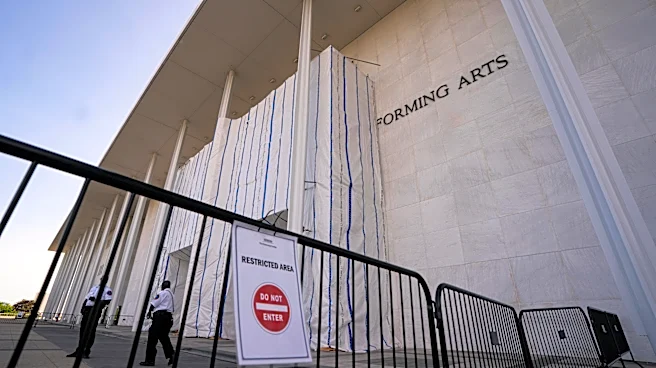
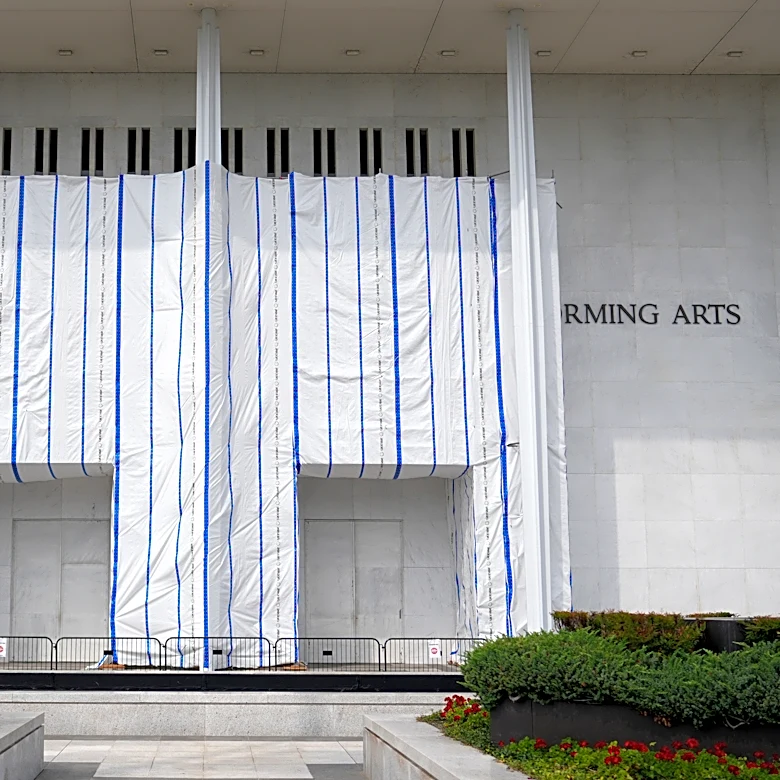
Cooper previously ordered Trump’s name removed from the façade June 13 because the 1964 statute that created the John F. Kennedy Center for the Performing Arts. Scaffolding and a tarp continue to shroud the front of the building where the name was removed, which government lawyers say is necessary for the renovation work.
Cooper also previously temporarily prevented the administration from closing the venue for the renovation project by ruling that the board’s decision was too hasty.

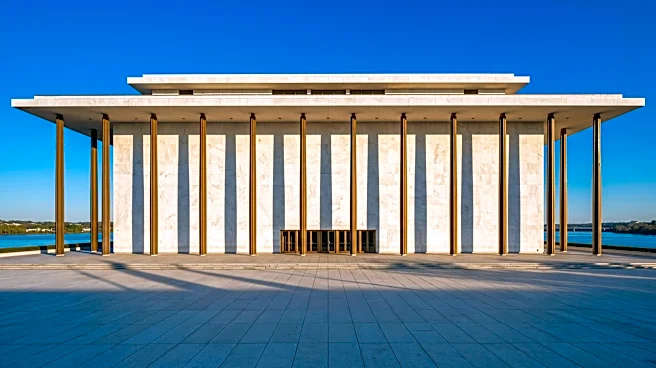
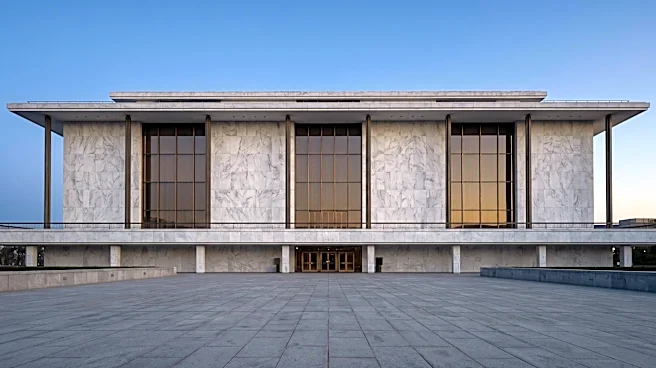
In response, the board of mostly Trump allies voted Aug. 13 to approve a plan to close for two years while holding performances of the National Symphony Orchestra, the Kennedy Center Honors and Mark Twain Prize for American Humor at other locations. The board estimated that a two-year project would cost $280 million while a four-year project would cost $580 million. At that same meeting, the board also voted to rename the building: “The John F. Kennedy Memorial Center for the Performing Arts Restored and Renovated by President Donald J. Trump.”
Justice Department lawyers previously said unless the renovation project and recognition for Trump are approved, the building could be torn down and replaced with an open-air amphitheater.
"Without those efforts, the Center will deteriorate further into an unsafe, decrepit structure that will be required to be taken down, with a determination to follow on what to build on the site, such as a large outdoor amphitheater overlooking the Potomac River that has been proposed, by some, for many years," government lawyers said.
Commerce Secretary Howard Lutnick, who attended the hearing, told reporters beforehand that chunks of concrete fell off the ceiling of the parking garage, which would have been a “unmitigated disaster” if arts patrons had been there. The secretary's wife, Allison Lutnick, sits on the Kennedy Center Board of Trustees from a presidential appointment, according to the center's website.
“It’s had decades of financial neglect,” Lutnick said. "If we walk into it inow, it feels like we’re going back in time. It’s just not beautiful, it’s just not extraordinary so the president set out to solve that.”
If Trump’s fundraising for the project reaches $100 million, the façade would read: “The John F. Kennedy Memorial Center for the Performing Arts Restored and Renovated by President Donald J. Trump Endowed by the Trump Kennedy Center Fund.”
And the board voted to name the grounds beneath the venue “President Donald J. Trump Plaza.”

Lutnick said Trump’s goal is to raise $500 million to endow the Kennedy Center so that it can manage its operating expenses. In exchange, Trump wants his name on the façade crediting him with the restoration, which Lutnick said would happen after fundraising for a hospital or university building.
“This is a proper board decision to make the determination to put an acknowledgement to say renovated and restored by Donald J. Trump,” Lutnick said. “Only he has the power and the expertise to renovate this building in a spectacular fashion during the next two-year period.”
But Beatty's lawyers called those moves a "breathtaking" and "jawdropping" defiance of Cooper's previous order. The lawyers also called Trump "delusional" for arguing that the renovation could only succeed with Trump's fundraising and recognition.
"We view this as outright defiance" of the court's prior order to remove Trump's name, lawyer Nathaniel Zelinsky said.
This article originally appeared on USA TODAY: Kennedy Center clash resumes in court but Trump's name stays off venue for now