




LONDON − If you aren’t winning a war, does that mean you’re losing it?
Washington and Tehran are both wrestling with that question six months into their fight: one side is struggling to turn military superiority into lasting political gains, while the other may need only to survive to claim victory.
Neither side can ultimately win, some veteran Iran analysts say, because the United States and Iran are trapped in a pattern in which Washington believes that overwhelming force and sanctions will eventually compel a weaker country to submit. Iran, meanwhile, has proved as resilient and willing to endure an open-ended war as many seasoned Iran-watchers predicted before hostilities erupted in February.
in Iran.
"This war can't be assessed like other wars. It's very unconventional. It's not about who's winning and who's losing. The two sides are creating costs for each other on different fronts," said Omid Memarian, a senior Iran-born analyst at DAWN, a think tank based in Washington, DC, that watchdogs U.S. foreign policy in the region.
"The U.S. is far stronger than Iran militarily, but Iran has asymmetric capabilities that have created problems and costs for the U.S. − and we haven't seen all of those capabilities yet," he said.
The war in Iran is now one of endurance and economic leverage. It has no obvious outcome.
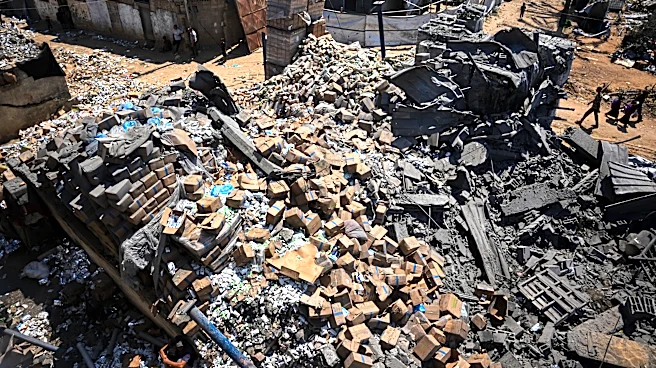
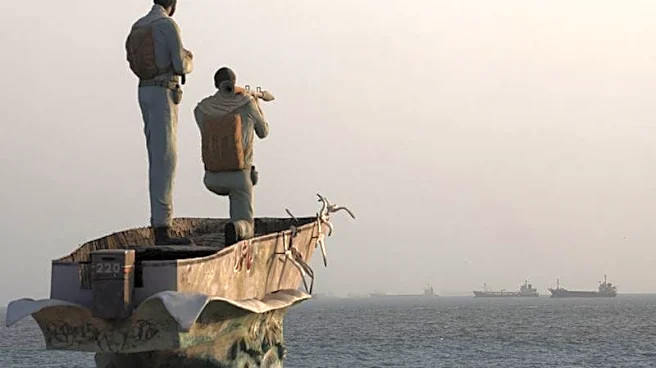
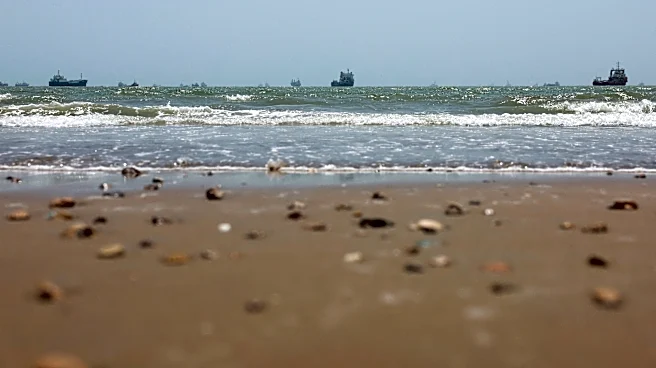
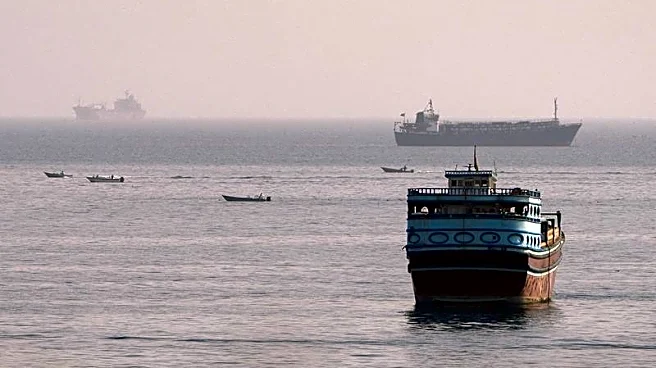
The initial strikes were ordered by President Donald Trump in coordination with Israel, which had already been exchanging strikes with the Middle Eastern country after Tel Aviv launched a surprise attack on Iranian military and nuclear facilities. They decapitated Iran's leadership without collapsing it. They set back Iran's nuclear and missile programs without fully destroying them. Maritime traffic in the Strait of Hormuz, a strategic chokepoint for the world's supply of oil and natural gas, remains blocked by Tehran, though U.S. Navy patrols appear to be making some progress in enabling more shipping traffic to pass through the area.

Clionadh Raleigh, a professor of conflict at the University of Sussex, England, who created the Armed Conflict Location and Event Data Project, which analyzes war-related data, said the United States is turning to economic pressure because its military campaign has failed to break the stalemate.
"Iran is doing much the same thing from the other side: using the Strait of Hormuz, threats to shipping, cyberattacks and disruption to make this conflict increasingly expensive for the U.S. and its allies."
The salient question is: What happens now?
US hits Iran's 'economic lifeline'
Mediation efforts by Qatar, Turkey and Egypt have stalled over the past six weeks, though Pakistan has sought to revive them in recent days. Trump has even threatened to bomb Oman, another Middle East country trying to act as a diplomatic bridge to find a way out of the war. Iran has issued a series of warnings that any vessels that violate its arrangements for transiting the Strait of Hormuz could face fines, detention, or even confiscation.
U.S. Treasury Secretary Scott Bessent on Aug. 24 unveiled a fresh round of tough sanctions that he said would "sever every economic lifeline” that sustains Iran. They target any country that seeks to do business with Iran's aviation, shipping and tech sectors. Tehran vowed to retaliate and is concurrently rebuilding its military and, according to reports, may be planning on expanding the war, including escalation into Europe.
"If these sanctions bite the Iranian economy hard, I would not be surprised if the Iranians decide to escalate again by sending more drones and cruise missiles to the Gulf States. Because the Iranians are not going to sit back and let their economy get squeezed in perpetuity. They've got to respond in some way," said Daniel DePetris, a fellow at Defense Priorities, a Washington, DC, think tank that seeks a smaller global U.S. military footprint.

DePetris said he didn't think Iran would pursue a traditional kinetic war in Europe, but could attempt to retaliate through cyberattacks because "they're sort of deniable and the cost is not necessarily significant in terms of loss of life and even the economic damage is usually limited depending on the target."
The British government blamed hackers linked to Iran for a cyberattack in late August that caused a British power plant to be temporarily shut down. It came after British officials said they gave permission for the United States to launch "defensive" operations against Tehran from British military bases.
Iran war disrupts global markets
As the conflict has morphed into a stalemate with neither side able to win, it's had major implications for the international security and economic order. This has been costly for everyone involved, including global consumers.
The war caused major disruptions to global energy markets. Six months later, oil prices remain high. Inflation has surged. Economic growth has slowed.
In Iran, transportation costs have quadrupled, Memarian said. He described a sandwich shop in Tehran where prices change so rapidly that the menu is displayed near the cashier on a digital ticker, with prices updating in real time like stock-market quotes.
"Inflation in Iran is very scary," Memarian said.

More broadly, the United States and Israel have found themselves isolated from allies who don't support the war, even if they want to see a change to Iran's theocratic government and destabilizing activity across the region because it supports militant groups in Gaza, Iraq, Lebanon and Yemen. Iranian missile and drone attacks have inflicted damage on U.S. intelligence posts and surveillance hardware in the Middle East.
At least 18 U.S. military personnel have been killed, according to the Pentagon's latest data. The United Nations estimates that at least 3,375 Iranian civilians, including nearly 500 women, have been killed in the war.
Iran war unpopular in US
Then there are the political costs for Trump's White House in launching and sustaining a war that poll after poll shows Americans don't want, don't fully understand and that has deeply damaged the president's popularity.
"The administration didn't explain why this war was necessary," said DePetris, who added that Trump's "original sin" on Iran occurred in 2018, during his first term, when he pulled the U.S. out of an Obama administration-era nuclear deal. The United Nations' nuclear watchdog repeatedly said the deal was limiting Iran's enriched uranium stockpile.
"The American people are looking at this and saying, 'Look, my food prices are going up, my gas prices are going up. And every one of the goals that you said we would accomplish have not been accomplished. Whether it's getting the Iranians to hand over their nuclear enrichment capabilities or opening the Strait of Hormuz,'" DePetris added.
The war has also had, from the U.S. perspective, a somewhat counterproductive impact, according to Memarian.
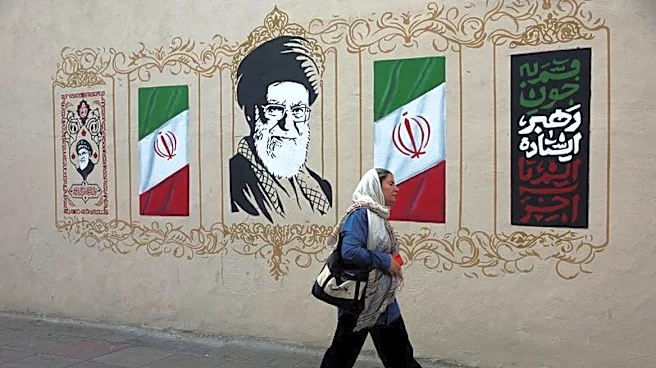
Critics of Iran's clerical rulers hoped initially that Iran's government would collapse amid a bombing campaign that killed Iran's most senior military and religious officials, including its supreme leader.
In fact, early on in the war, Trump floated the possibility of "regime change" in Iran before walking that back.

But when that didn't happen, and the number of Iranian civilian deaths escalated into the thousands and more and more homes and infrastructure were destroyed, many Iranians lost faith in U.S. leadership and Trump's intentions.
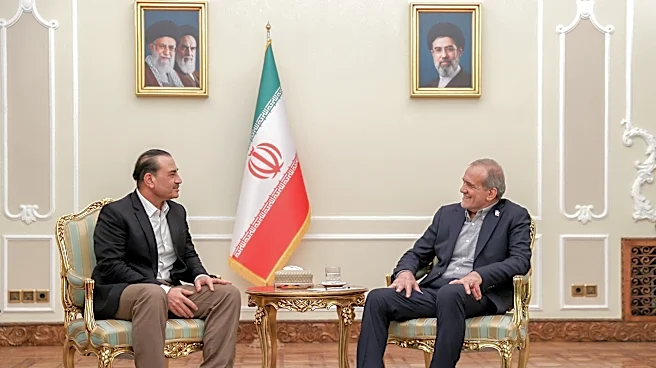
"Aggression and siege warfare have wrecked the image of the U.S. in a way that could have never been accomplished by the Iranian government," said Seyed Mohammad Marandi, a Tehran-based Iranian American academic and political analyst who is close to Iran's government. Marandi served as an adviser to Iran’s negotiating team during the Obama-era nuclear talks and remains involved in Iran's overseas diplomatic efforts.
"Iran is winning this war," he said.
Kim Hjelmgaard is an investigative journalist covering global stories for USA TODAY, from living rooms to conflict zones. Follow him on X and Instagram: @khjelmgaard.
This article originally appeared on USA TODAY: Who's winning the war in Iran? Nobody. Here's why.