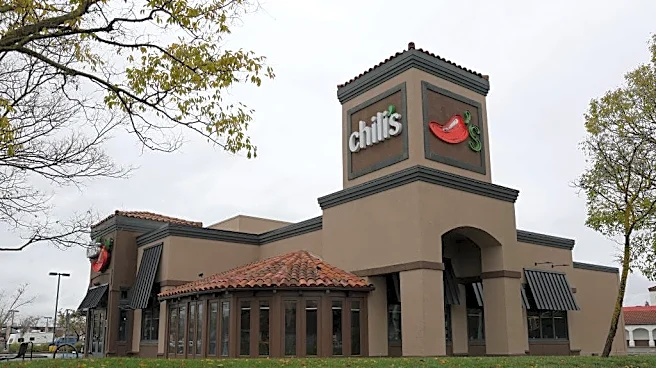







Chili’s is ready to bring its burgers, fajitas and baby back ribs to more communities across the United States as the restaurant chain builds on a major sales turnaround.
Brinker International, Chili’s parent company, plans to add 20 to 30 restaurants a year through fiscal 2029 as part of a broader growth strategy. The company expects its restaurant count to increase 2% to 3% annually and, according to The Independent and Restaurant Drive, which cites Brinker Chief Financial Officer Mika Ware, it has identified as many as 300 potential sites for future locations.
The expansion comes after five consecutive years of sales growth. Sales at Chili’s restaurants open for at least a year have climbed 71% over that period, Chili's leadership announced
at Brinker International’s 2026 Investor Day presentation on Sept. 17.
Customers are also visiting Chili’s more often. Weekly visits increased from about 3,400 per restaurant in fiscal 2023 to 4,200 in fiscal 2026, while average annual sales per restaurant rose from about $3.3 million to $5 million, Ware said, according to the Independent.
USA TODAY reached out to Brinker International on Sept. 23 for additional comment and information, but has not received a response.

Where is Chili’s expanding?
Chili’s is looking beyond its traditional markets as it searches for opportunities to add restaurants.
The chain has identified California, Texas and Florida as some of its strongest markets; however, it is also targeting the Carolinas, Georgia, Virginia, Washington, D.C., and Ohio, according to Restaurant Dive.
Washington state is one example of a market where Chili’s sees room to grow. The company has just one streetside restaurant there, while its closest competitors have roughly 35 to 40 locations, Ware said.
Ohio is another target. Brinker CEO Kevin Hochman said during the Sept. 17 Investor Day presentation that Chili’s has fewer restaurants in the state than its two closest competitors, which together have about four times as many locations there.
The company is also pursuing a “small town strategy,” looking beyond major suburbs and metropolitan areas, Restaurant Dive reported. In expensive markets such as the Northeast, Chili’s could convert existing restaurants or acquire smaller chains to gain access to real estate.
Why is Chili’s growing?
Brinker has attributed Chili’s turnaround to changes in value, food and service, including its “Better Than Fast Food” campaign.
The company has invested about $180 million in front-of-house improvements, brought back bussers, added handheld ordering devices and updated kitchen screens, Aaron White, Brinker's chief people officer, said, per Restaurant Dive.
Chili’s also reported a 5.6% increase in same-store sales during the fourth quarter of fiscal 2026.
“Chili’s has never been more relevant,” Hochman said in a Brinker statement announcing the company's long-term growth targets.

Chili’s is giving restaurants a retro makeover
The expansion is happening alongside a nationwide redesign of existing Chili’s restaurants.
The company plans to remodel about 10% of its roughly 1,200 U.S. locations each year, eventually bringing the new look to its entire domestic footprint.
The redesign draws on Chili’s 1990s-era appearance, including its signature red booths, Southwest-inspired tile tabletops, nostalgic artwork, and refreshed bar areas. Some locations also feature memorabilia such as the original 1975 menu and sheet music from the chain’s famous baby back ribs jingle.
Brinker expects to invest in remodeling existing restaurants and opening new ones. New Chili’s restaurants cost about $5 million to $6 million to build, while newer locations are generating more than $5 million in annual sales, Ware said.
Reporter Anthony Thompson can be reached at ajthompson@usatodayco.com or on X @athompsonUSAT.
This article originally appeared on USA TODAY: Chili’s to open dozens more US locations. See where it plans to expand