



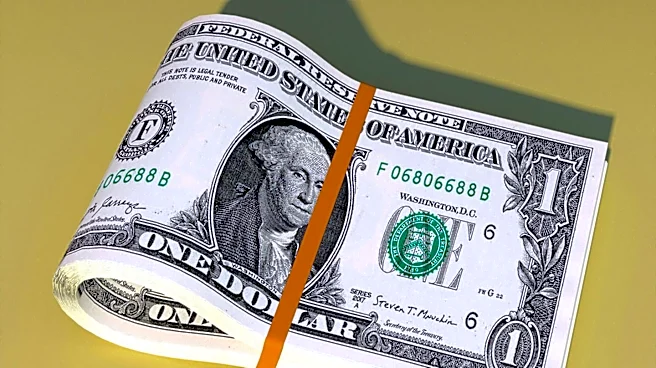
A recent CBS News poll found that 75% of Democrats, 62% of independents and 54% of Republicans support price controls, or government-imposed limits on how much a particular good can cost.
Price controls are an old, bad idea that resurfaces whenever inflation spikes and Americans start looking for someone to blame. Their renewed popularity is evidence that free marketeers are losing the argument. Voters in both parties, independents included, have absorbed the logic of economic populism. They're winning on message, and free marketeers need a new approach to fight back.
Price controls barely registered in political debate through the 2010s, a decade of low inflation. Post-pandemic price spikes dragged the idea back into the mainstream, first pushed
by progressive economists, now embraced by candidates on both sides of the aisle looking to court voters.
Mamdani and Trump are riding this bad idea to victory

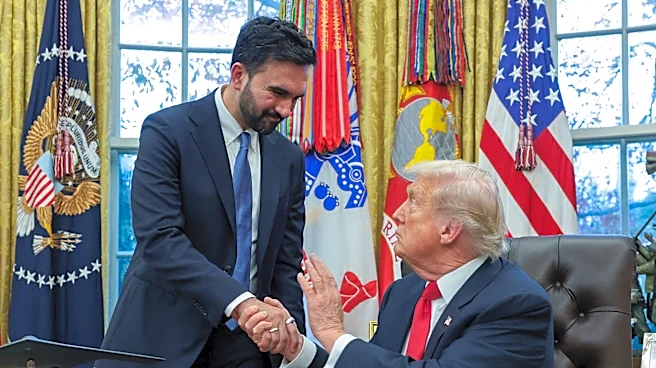
Populists are riding these ideas to victory. New York City Mayor Zohran Mamdani's “freeze the rent” scheme is one version. President Donald Trump's is another: Amid his push to address the "affordability crisis," he's proposed capping credit card interest rates at 10%.
None of this popularity is surprising. Who doesn't want cheaper stuff? The trouble is that markets don't hand out cheaper stuff just because a politician demands it.
Price is not an arbitrary number set by whoever's selling. It's a signal, reflecting supply and demand. When demand for a good rises, buyers bid the price up. Higher prices, in turn, give producers a reason to make more of it. More supply eventually pulls the price back down. That interplay is what keeps prices stable over time.
Price controls interfere with this mechanism. Cap the price and you cap the signal: producers no longer see a reason to expand supply when demand rises, because the price telling them to do so has been switched off. Demand keeps climbing, supply doesn't follow, and the result is a shortage.
When local governments cap how much rent can rise, or freeze it outright, landlords lose the incentive to maintain or upgrade units, and developers lose the incentive to build new ones. The housing shortage that caused rents to rise in the first place gets worse.
Interest rate caps work the same way. They reduce the supply of available credit and push lenders to stop taking chances on riskier borrowers who are less likely to pay them back.
Nixon tried it. It made inflation worse.
America's past offers a preview of how this plays out. In 1971, President Richard Nixon announced "a freeze on all prices and wages throughout the United States."
The freeze was popular: Polling at the time found that nearly half of Americans thought it did more good than harm, versus a quarter who said the opposite. Economists have since concluded it worsened the inflation of the 1970s and helped cause lines at the gas pump.
As economists Daniel Yergin and Joseph Stanislaw wrote in "Commanding Heights," farmers "drowned their chickens" and consumers "emptied the shelves of supermarkets."
The economic damage wasn't felt until after Nixon had already ridden the populist message to a landslide reelection in 1972. By then, it had done its job.
Now, the banking industry itself estimates that Trump's proposal of capping interest rates would cut off as many as 159 million Americans from credit cards, and it's still wildly popular. Mamdani's rent freeze will worsen a New York City housing market that's already crippled, and he's held up as a cornerstone of the new Democratic Party brand.
Americans now look to government to solve their economic problems as if it's a genie that can grant any wish. Both parties think they can bribe their way out of the affordability problem, and that leaves free marketeers with plenty of work to do. The movement's failure to build support for free markets is exactly what drives Americans toward the con artists promising prosperity in exchange for power.
Free-market advocates are fighting an uphill battle. It's easy for populists to tell voters how they'll make things cheaper. It's much harder to sell people on trusting a process instead of a promise. Free-market messaging can sometimes sound like religious faith: Americans are asked to believe markets will fix everything, without being shown how.
The free market needs to be sold as what it actually is: a machine that allocates resources efficiently, at the price people are willing to pay. Voters can grasp that the real answer to high prices is more supply. Pro-building rhetoric – cutting the zoning and permitting rules that choke off new construction – is the answer to rent control, if free marketeers would just make that case.
As it stands, people default to price controls because nobody's selling them anything better.
Free-market advocates need to reckon with why so many Americans are frustrated with being told to "trust the process." That means changing how the movement talks about these issues: explaining how free-market policies deliver lower prices and better goods, not just attacking the people promising free stuff.
Dace Potas, a law student, is an opinion columnist for USA TODAY. Follow him on X: @DacePotas
This article originally appeared on USA TODAY: A popular idea to control inflation will make it much worse | Opinion