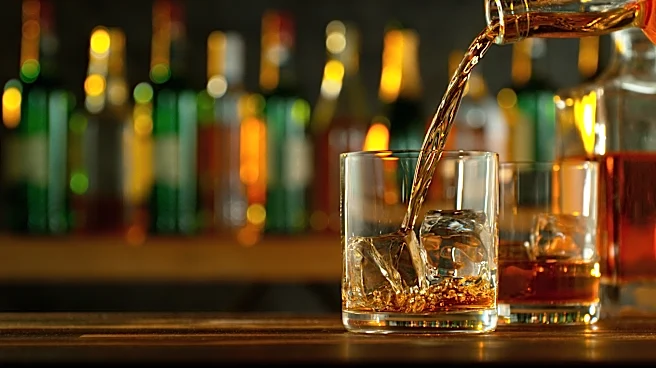






For the first time since the COVID-19 pandemic, alcohol consumption has dropped among adults in the United States, according to researchers in California and Philadelphia.
Researchers from the University of Southern California (USC) in Los Angeles and Thomas Jefferson University in Philadelphia found that while alcohol use has decreased, rates are still higher than before the COVID-19 pandemic, which lasted from 2020 to 2023.
The study was published in the peer-reviewed journal “Annals of Internal Medicine” on Monday, Sept. 21.
"It’s encouraging to see alcohol use decline for the first time since the start of the pandemic,” said Dr. Brian P. Lee, hepatologist and liver transplant specialist with Keck Medicine of the University of Southern California,
in a university news release.
Lee, a principal investigator of the study, added that “certain groups continue to have concerning trends.”
The new study is a follow-up on Lee’s previous findings that alcohol use increased during the COVID-19 pandemic and continued for another two years, the university said.
Here’s what the research team found.
Researchers looked at survey responses taken over a six-year span
To carry out the study, the researchers observed National Health Interview Survey responses from 114,352 U.S. adults between 2018 and 2024.
The researchers grouped the respondents by generation:
- Generation Z - Born between 1997 and 2012
- Millennials - Born between 1981 and 1996
- Generation X - Born between 1965 and 1980
- Earlier generations - Born before 1965
Respondents were also grouped based on whether they drank alcohol and whether they met the National Institute on Alcohol Abuse and Alcoholism’s heavy drinking criteria:
- Men who drink heavily have 5-plus drinks per day or 15-plus drinks per week.
- Women have 4-plus drinks per day or 8-plus drinks per week.
Older adults have been drinking at higher rates, study finds
After analyzing the data, the researchers found a nearly 2% decline in any alcohol use and a more than 8% drop in heavy drinking between 2022 and 2024, the university wrote in its news release.
Men typically showed a larger decline in alcohol use than women, while women showed a larger decline in heavy alcohol use than men, the team found.
The research team found differences in alcohol consumption across generations, including a decline in alcohol use among Generation Z and millennials.
For adults ages 50 to 64, there was an increase in any alcohol use by nearly 4% compared to pre-pandemic data. Heavy drinking increased by more than 36% compared to pre-pandemic numbers, the university said in its news release.
Lee said the increase among older adults is alarming because the risk of alcohol-related conditions like liver disease and cardiovascular disease increases as people age.
“This age group faces some of the greatest risks of harm from alcohol, including cirrhosis and alcohol-related cancers,” Lee said in a statement.
He added that alcohol causes half of all liver-related deaths.
And the group with the largest decline in alcohol use was Generation Z, whose alcohol consumption dropped over 5%. Millennials had the largest decrease in heavy drinking, with researchers noting a 17% drop between 2022 and 2024.
Researchers stress screening and prevention
While the team did not look at why younger adults have stopped drinking so much, they believe social attitudes on alcohol are changing, the university said.
Lee added that drinking behaviors differ among age groups, which is a sign that prevention and treatments need to be approached differently.
“Understanding those differences could help us develop more effective prevention and treatment strategies,” Lee said.
“The decline in alcohol use is a positive development, but we cannot assume alcohol-related harms will decline automatically. Continued attention to screening, prevention and treatment will be critical,” he added.
Saleen Martin is a reporter on USA TODAY’s trending team. She is from Norfolk, Virginia – the 757. Email her at sdmartin@usatoday.com.
This article originally appeared on USA TODAY: Alcohol use dips for the first time since COVID pandemic, study finds